Goodbye Drones? China’s Snake Robots Are Crawling Into the Future of Power Grid Control
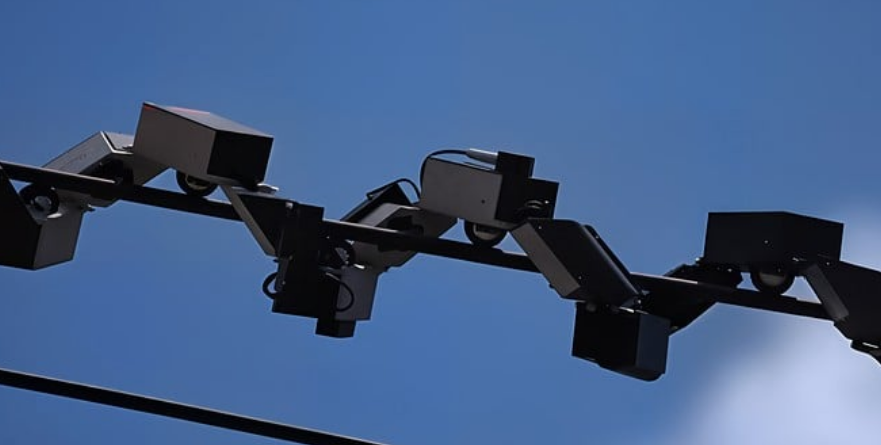
High above cities and landscapes, stretched across mountains and airports, lies one of the most critical—and overlooked—systems of modern civilization: the power grid.
Maintaining it has always been dangerous, expensive, and increasingly complex. For years, drones promised a safer, faster alternative to human inspection teams. But now, even drones are being challenged.
China’s latest answer?
Robotic snakes.
And they don’t just fly over problems.
They crawl directly into them.
From Sky to Steel: The Shift Away from Drones
In the southwestern city of Kunming, power grid operators have quietly deployed a new breed of inspection machine—articulated, snake-like robots that wind themselves along high-voltage transmission lines.
Unlike drones, these robots don’t hover near cables. They embrace them.
Equipped with cameras and sensors, they scan insulation, detect overheating components, and identify structural defects—while physically gripping the infrastructure they inspect.
It’s a subtle but radical shift in philosophy:
from remote observation to direct contact.
And that difference matters.
Why Drones Are Losing Ground
Drones were supposed to revolutionize grid inspection. In many cases, they did. But high-voltage environments are far from friendly skies.
Electromagnetic interference disrupts navigation systems, distorts sensor readings, and introduces unpredictable flight risks. Close proximity to transmission lines further complicates stability.
Add restricted airspace—especially near major airports—and the limitations become obvious.
Snake robots eliminate those constraints entirely.
They don’t fly. They don’t hover. They don’t depend on GPS stability.
They move with the grid itself.
Powered by the Grid They Inspect
Perhaps the most elegant feature of these machines is also the most disruptive.
They don’t need batteries.
Using electromagnetic induction, the robot draws power directly from the live transmission line it is inspecting. No recharging. No downtime. No logistical support vehicles.
It’s a closed operational loop—
a machine powered by the system it protects.
In industries where maintenance costs can skyrocket due to access challenges, this alone is transformative.
Engineering for the Edge
The robots’ segmented design allows them to navigate real-world complexity—bypassing physical obstacles such as insulators, joints, and uneven cable surfaces.
This is not laboratory robotics.
This is infrastructure robotics.
And according to engineers on the ground, the results are compelling: inspections are reportedly up to three times more efficient than traditional manual methods.
At the same time, human workers are removed from high-risk environments—no climbing towers, no exposure to live wires.
Precision in Critical Moments
The timing of the technology’s deployment in Kunming was no accident. It was strategically used during Gaokao—the country’s national college entrance exam.
In China, Gaokao is more than an exam. It is a pressure test for national infrastructure, where even minor disruptions can have severe consequences.
The message is clear:
When reliability is non-negotiable, automation takes over.
Not a Replacement—Yet
Despite the excitement, the technology is not without limitations.
These systems have been developed for specific domestic grid environments, with little information available about scalability, cost, or export potential.
Meanwhile, drones remain dominant globally due to their flexibility and broader availability.
The future, at least for now, is hybrid.
Snake robots for precision, continuous monitoring.
Drones for rapid, wide-area inspection.
Ground crews for intervention and repair.
Add robotic dogs for inaccessible terrain and fixed sensor networks for constant monitoring—and a new ecosystem begins to emerge.
The Bigger Picture: Infrastructure Goes Autonomous
What we are witnessing is a shift that goes far beyond power lines.
Inspection is becoming autonomous.
Infrastructure is becoming intelligent.
Maintenance is becoming predictive.
And increasingly, machines are being designed not just to observe—but to integrate directly into the systems they serve.
Snake robots are just the beginning.
They may look unusual—almost unsettling—but their logic is undeniable.
In a world where complexity grows faster than human capacity to manage it, the future will belong to systems that can crawl, adapt, and survive—right where the risk is highest.
And in that future, the sky is no longer the limit.
The grid itself is.