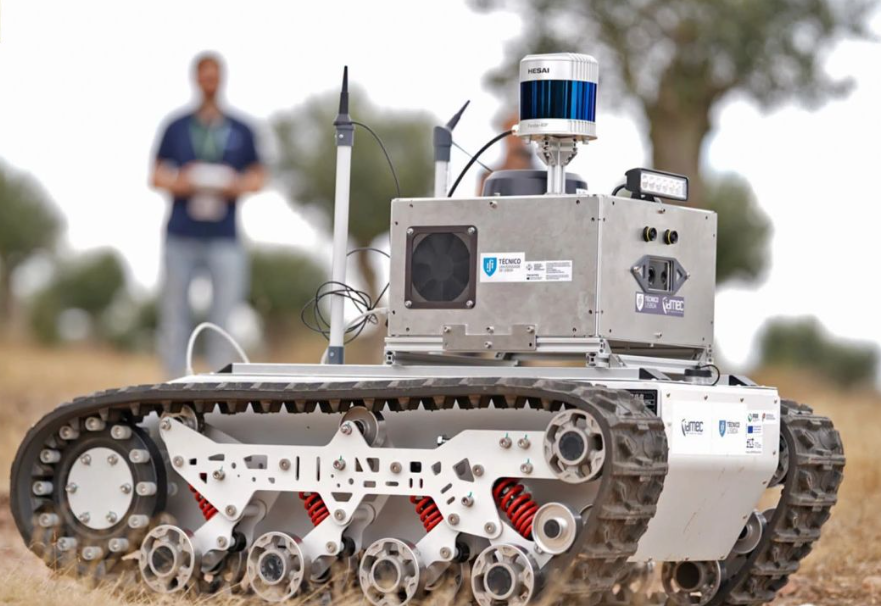
The Robot War, Made in China
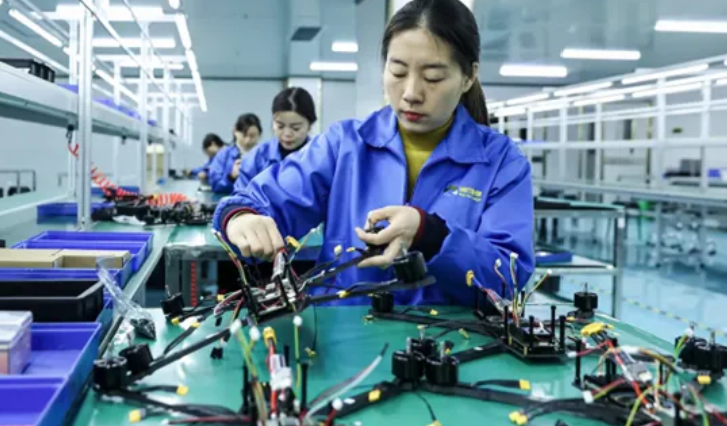
The text makes a blunt argument: in today’s “robot war,” logistics is strategy—and for autonomous systems, logistics increasingly runs through Chinese supply chains. The most provocative claim is not simply that China manufactures critical components, but that Russia and Ukraine are effectively fighting with parts drawn from the same industrial base, paying into the same factories and platforms while competing against each other for scarce inputs. That turns a commercial ecosystem into a geopolitical lever and creates a dynamic in which the only actor learning from both sides at scale is Beijing.
What makes the argument compelling is that it ties supply dominance to two outputs that matter in software-driven warfare: capacity and data. The piece suggests that China is uniquely positioned to receive “battlefield telemetry” about how its components perform under jamming, electronic warfare, stress, and iterative adversarial adaptation. Even if components are “dumb,” their performance characteristics become a learning pipeline for the ecosystem that supplies them. This logic mirrors the text’s historical analogy: industrial advantage is not merely a wartime input—it can become a durable advantage that shapes the pace of innovation. The analogy is rhetorical, but the strategic point stands: when autonomy becomes ubiquitous, component supply becomes a form of power.
The strongest empirical anchor in the text is the fibre‑optic drone supply chain, presented as a single, vivid case study of what dependency looks like at scale. Multiple reports describe how demand for standard fibre rose sharply and how price dynamics followed predictable “captive customer” logic: the price of G.652D fibre in China is described as rising from 16 yuan/km in early 2025 to 40 yuan/km by January 2026, alongside claims of multi‑fold price hikes for certain buyers. The same reporting also links the spike to wartime consumption and notes that Russia’s domestic production was disrupted after strikes, leaving it reliant on imports for a component central to fibre‑guided systems. Whether every battlefield detail in the narrative generalises, the underlying mechanism is coherent: when a consumable input becomes strategically decisive and is concentrated in one geography, price, access, and prioritisation become political variables.
The text also argues that “awareness” in the West has not translated into industrial action at the speed required. It points to a policy pattern: certification programs, sanctions, and strategy papers are real steps, but they do not create factories unless they create binding demand. That critique is reinforced by U.S. reporting on procurement reality: even platforms intended to reduce reliance on adversary supply chains can still contain critical Chinese-made components, including motors, batteries, and electronic speed controllers—precisely the “boring” parts that become existential in a surge. In other words, the piece reframes “trusted supply chain” as something determined less by checklists and more by production capacity and assured access.
Where the argument becomes most actionable is in its treatment of Ukraine as a live industrial laboratory. The text highlights rapid localisation under wartime pressure: examples include domestic scaling of drone motors and claims of meaningful monthly output and market share by a Ukrainian producer. Independent reporting describes Motor‑G reaching 200,000 motors per month and supplying a broad set of manufacturers, while acknowledging ongoing reliance on Chinese supply for the remainder of demand. This matters not because any single firm “solves” dependency, but because it demonstrates the pathway: when there is urgent demand, tight feedback loops, and the willingness to invest, localisation can move from aspiration to throughput—though not instantly, and not without continued shortfalls.
The text’s data argument also points toward a second-order risk: if China supplies both sides of a major drone war, it is positioned to become the default beneficiary of real-world iteration, learning which designs fail under EW conditions and which component tolerances hold up. That logic aligns with developments like the creation of secure environments for training military AI on frontline data (in Ukraine’s case, via Brave1 Dataroom) where the underlying premise is that modern autonomy improves through continuous learning cycles. If the West wants to compete, it must replicate not only manufacturing but also the data-to-production pipeline—secure datasets, test ranges, rapid contracting, and predictable procurement.
Ultimately, the text is less about drones than about industrial mobilisation. Its central recommendation—move from documentation to mandates—implies that Europe’s problem is not knowledge but coordination. If procurement remains fragmented and demand signals remain optional, capital will not move fast enough to build non‑Chinese capacity at scale. The piece therefore frames the “robot war” as a policy choice: treat supply-chain resilience as an emergency industrial priority, or accept a future where a strategic competitor sits upstream of your autonomy stack.

.jpg)