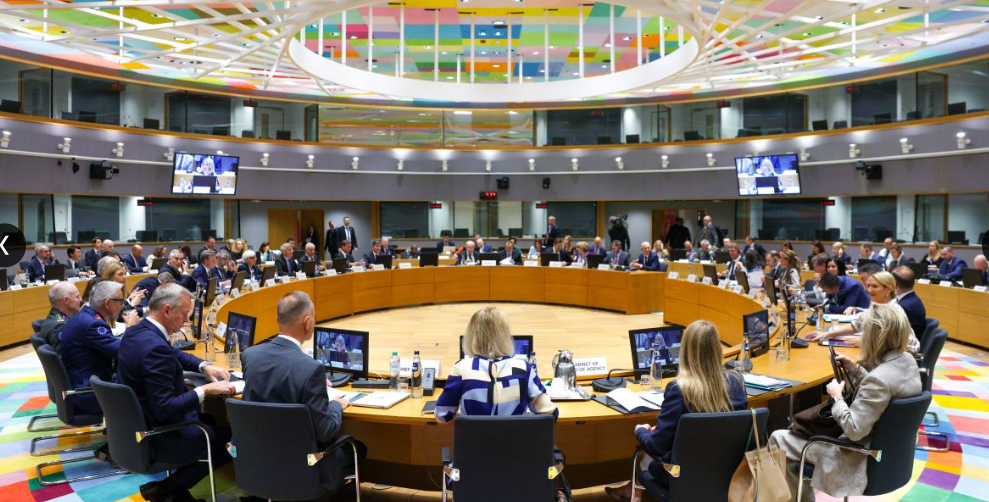
NATO Without Spain? Leaked Pentagon Talk Exposes Cracks in the Alliance
A leaked Pentagon email suggesting that Spain could be suspended from NATO has ignited a political and strategic debate that goes far beyond a single country’s position on a specific conflict. While the idea itself may appear extreme—and legally questionable—it reveals deeper tensions within the transatlantic alliance at a time of mounting geopolitical pressure.
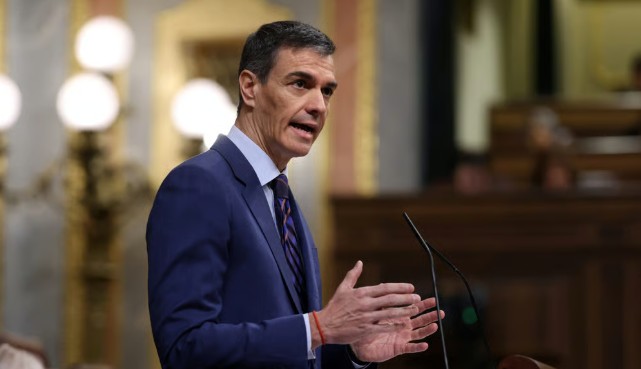
At the center of the controversy is Pedro Sánchez, who quickly moved to downplay the significance of the leak. Speaking at a European summit, he dismissed concerns, emphasizing that Spain continues to meet its NATO obligations and remains committed to cooperation with allies—within the framework of international law.
The leaked document, reportedly originating from the U.S. Department of Defense, outlines potential retaliatory measures against NATO members deemed “difficult” or insufficiently supportive of U.S. military actions in Iran. Spain, which has openly opposed the conflict and restricted the use of its territory for operations, appears to have become a focal point of frustration in Washington.
Yet the proposal itself raises immediate legal and institutional questions. NATO, formally known as the North Atlantic Treaty Organization, operates under a founding treaty that does not include any mechanism for suspending or expelling members. The only exit предусмотрed is voluntary withdrawal, requiring a one-year notice period. In other words, the idea of suspending Spain is not just politically sensitive—it is structurally incompatible with the alliance’s rules.
This disconnect highlights a broader issue: the gap between political rhetoric and institutional reality. While individual administrations may seek leverage over allies, NATO’s consensus-based decision-making model limits the extent to which unilateral pressure can translate into concrete action. Any significant change—such as revisiting command structures or altering membership status—would require unanimous agreement among all member states.
That makes the notion of suspension highly unlikely. But the fact that it was even considered, even informally, is telling.
The episode underscores growing strains within NATO, particularly as member states diverge on key foreign policy issues. Spain’s position reflects a broader European hesitation to align fully with U.S. strategies in certain conflicts, especially when questions of international law and regional stability are at stake. This divergence is not new, but it is becoming more visible—and more consequential.
At the same time, the leak reveals how geopolitical disagreements can spill into economic and military domains. Reports that the U.S. administration has considered cutting trade ties or limiting cooperation with non-aligned allies suggest a more transactional approach to alliance management. This marks a departure from the traditional view of NATO as a values-based partnership grounded in mutual defense and shared principles.
For Spain, the situation is as much about sovereignty as it is about strategy. By refusing to allow its bases or airspace to be used for operations it does not support, Madrid is asserting its right to independent decision-making within the alliance framework. Sánchez’s response—calm, measured, and focused on legality—signals an effort to de-escalate tensions while maintaining that autonomy.
Observers, including former NATO officials, have been quick to caution against overinterpreting the leak. Some have described it as ideological posturing rather than a concrete policy proposal. Still, even as a hypothetical scenario, it raises important questions about the future cohesion of the alliance.
Can NATO remain unified in an era of increasingly divergent national interests? How should disagreements be managed without undermining collective security? And to what extent can political pressure reshape an institution designed to operate by consensus?
These are not abstract questions. They go to the heart of NATO’s identity and resilience.
Ultimately, the controversy may fade, as many such diplomatic flare-ups do. But it leaves behind a clear signal: unity within NATO cannot be taken for granted. It must be continuously negotiated, reinforced, and adapted to a changing geopolitical landscape.
In that sense, the real story is not about whether Spain could be suspended. It’s about how far the alliance can stretch before its internal tensions begin to redefine it.