A Patriot Launcher Without Missiles Is Just a $1 Billion Target

Ukraine’s air-defense problem is no longer only about acquiring more Patriot systems.
It is about keeping the launchers already in the country supplied with missiles.
Reports from Ukraine describe Patriot units operating under severe interceptor shortages, while President Volodymyr Zelenskyy says the United States has supplied an average of only 12 Patriot interceptors per month during 2026. At the same time, Ukraine faces a much larger ballistic missile threat. Zelenskyy has said the country may need to intercept around 150 ballistic missiles in a single month.
That gap is enormous.
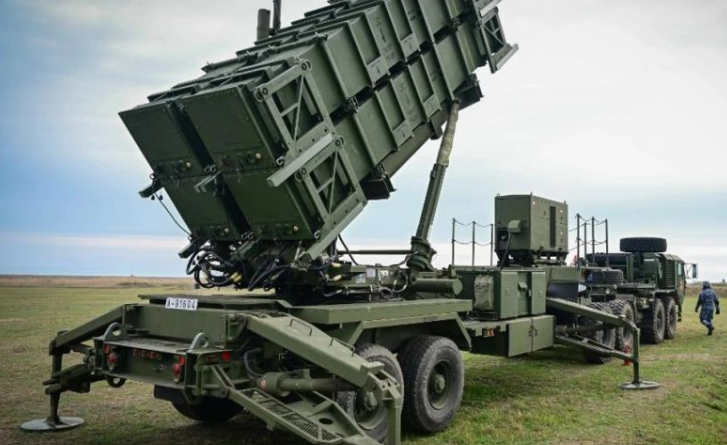
A Patriot battery can be one of the most sophisticated air-defense systems in the world, but without interceptors its military value collapses quickly.
The problem is especially severe because Patriot is one of the few systems available to Ukraine that can reliably engage modern ballistic missiles. Other air-defense weapons can handle drones, cruise missiles and aircraft, but the high-speed ballistic threat leaves far fewer options.
That makes every PAC-3 interceptor strategically valuable.
Ukraine’s stocks reportedly fell to critically low levels again in October. One Ukrainian official told the Washington Post that only a small number of Patriot missiles remained after a batch delivered earlier in the month was consumed during Russian attacks. Other reporting suggested that some locations had exhausted their available interceptors entirely.
The imbalance illustrates one of the defining problems of modern air defense.
The defender may own an extremely advanced system, but the attacker controls the tempo.
Russia can launch repeated waves of ballistic missiles, cruise missiles and drones, forcing Ukraine to decide which threats justify the use of its most scarce and expensive interceptors.
That creates a brutal cost and inventory equation.
Every missile fired from a Patriot battery reduces an already limited stock. If replenishment takes weeks or months, the attacker does not necessarily need to destroy the battery itself.
It can exhaust it.
This is why the current debate around Patriot cannot be reduced to the number of launchers supplied to Ukraine.
Launchers matter.
Radars matter.
Command systems matter.
But ammunition is what determines whether the system can actually fight.
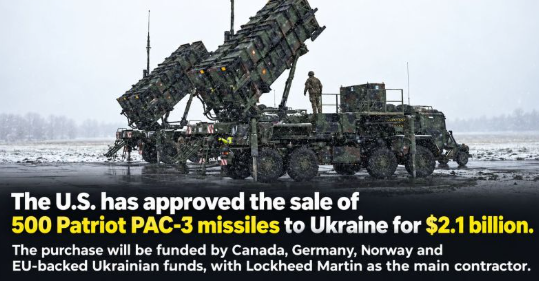
The U.S. has recently approved a potential $2.1 billion sale of 500 PAC-3 interceptors to Ukraine, a significant long-term step. But there is a major catch: those missiles still need to be manufactured, and reporting suggests deliveries under the new sale may not begin until years into the 2030s unless existing inventories are transferred earlier and replaced later.
That is the difference between strategic procurement and battlefield urgency.
Five hundred interceptors could dramatically strengthen Ukraine’s air defense in the future.
They do not solve an empty launcher today.
The shortage also exposes a broader industrial challenge for NATO.
Modern high-intensity warfare consumes precision weapons at a rate that peacetime production systems were never designed to sustain. Patriot interceptors are complex, expensive and slow to manufacture. Demand is also rising from the United States and other allied countries.
The result is competition for a limited industrial output.
Lockheed Martin has committed to expanding PAC-3 production significantly, but scaling sophisticated missile manufacturing cannot happen instantly.
This may be one of the most important lessons of the war.
Air-defense effectiveness is not determined only by how advanced the interceptor is.
It depends on how many can be produced, how quickly they can be delivered and whether political approval arrives before the stockpile reaches zero.
For Ukraine, the threat is immediate.
For NATO, the lesson is structural.
A launcher without missiles is not air defense.
It is infrastructure waiting for ammunition.