X-12 Wants to Hunt the Drones That Are Becoming Too Fast to Catch

The drone race has entered an uncomfortable new phase: what happens when the attacker simply becomes too fast for the interceptor hunting it?
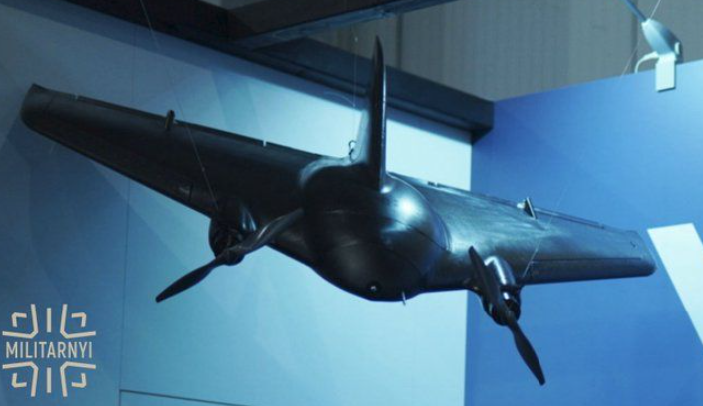
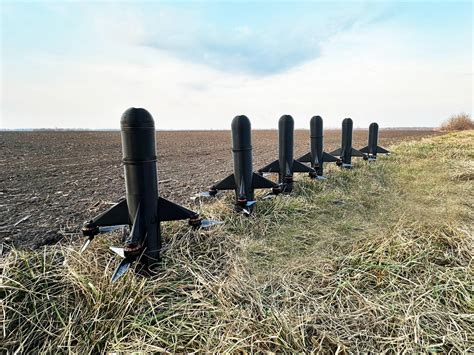
That is the problem the X-12, unveiled by the Strategic Defense Alliance at a presentation in Lithuania on October 22, is supposed to confront. According to information provided by the developers, the slender, turbojet-powered interceptor is designed for fast aerial threats, including jet-powered Shahed/Geran variants.
And its headline number is difficult to ignore: 700 km/h.
SDA representative Ričardas Savickas says the X-12 can reach that maximum speed, cruise at about 350 km/h, operate over a range of up to 126 kilometers, and reach an altitude of 10 kilometers. SDA also says the system has been tested under wartime conditions in Ukraine.
There is an important caveat. These are developer claims supplied in the material provided for this article, not independently published performance-test results.
And that distinction matters.
The Shahed problem is getting faster
The logic behind an interceptor such as the X-12 is increasingly clear.
Interceptor drones have emerged as a less expensive alternative to using sophisticated air-defense missiles against relatively low-cost unmanned aircraft. But rising target speeds threaten that advantage. Jet-powered Geran variants create a particularly difficult problem for slower, propeller-driven interceptors. Public reporting has cited jet-powered long-range strike drones capable of roughly 400 to 500 km/h and beyond. [
Lithuania, meanwhile, is already building a broader counter-drone capability. Earlier this year Defence Minister Robertas Kaunas said the country was working to train at least 100 anti-aircraft drone operators, while Lithuania's developing approach involves connecting radars, interceptors and other defensive tools into one management system. It is the environment into which the X-12 arrives.
Lithuanian launch, regional supply chain
The interceptor is also an interesting example of how defense manufacturing is spreading across Europe's eastern flank.
According to SDA's account supplied by the user, the X-12 is not purely Lithuanian. Its engines are assembled in Lithuania using components from Latvia and Ukraine. The development partnership includes Lithuania's ShieldCore Innovations, Latvia's ViCtec and Ukraine's Bulava.
SDA additionally claims the aircraft contains no Chinese components. That assertion remains a developer statement on the evidence available here.
The international structure is significant because the counter-drone race is no longer simply about designing a clever aircraft. The winning systems will also have to be producible in meaningful numbers.
700 km/h is the sexy number. It isn't the whole story.
This is where the X-12 becomes more interesting.
Pure speed makes for a fantastic headline, but an interceptor is not a racing drone.
An effective system must first get close enough to the target to make that speed useful. The information supplied about the X-12 does not publicly document its target-cueing method, terminal engagement process or demonstrated interception reliability.
That is not a minor omission. Those questions separate a fast aircraft from a proven air-defense weapon.
The same problem applies to economics.
A counter-drone system only makes strategic sense at scale if the cost of defeating the incoming threat is sustainable. Existing interceptor drones illustrate the attraction of that approach. Some systems have been reported at only a few thousand dollars, far below the cost of high-end air-defense weapons.
There is no verified X-12 cost-per-interception figure in the material available here.
And that may ultimately matter as much as 700 km/h.
The X-12 therefore deserves attention, but not because a specification sheet says it is fast.
If independently documented trials eventually show it detecting, pursuing and repeatedly destroying fast targets at an economically sustainable cost, the X-12 could become part of the emerging answer to the jet-drone problem.
Until then, 700 km/h is a promise. A successful interception is proof.