The Medevac Had No Pilot: Ukraine Just Pulled a Wounded Soldier Out by Heavy-Lift Drone

For almost 500 days, a Ukrainian soldier was reportedly trapped at a frontline position that had become brutally difficult to reach.
The terrain was mined. Russian drones were active overhead. Sending rescuers in on foot risked creating more casualties, while an unmanned ground vehicle could not safely reach the position.
So Ukraine tried something different.
It sent an aircraft with nobody inside.
Ukraine's military says it has carried out what appears to be the first known frontline medical evacuation of a wounded soldier using a heavy-lift aerial drone. The October 19 announcement was accompanied by video showing the casualty securing himself to an external carrying system before being lifted away.
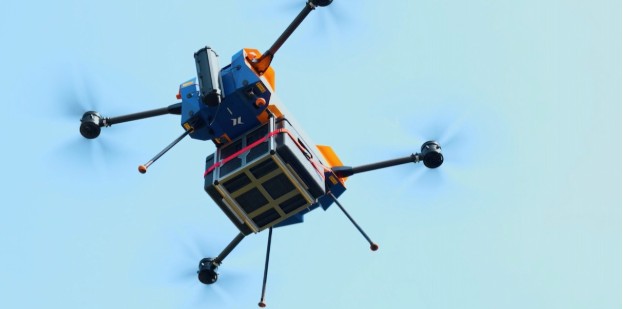
The aircraft was a Ukrainian-made Heavy Shot Ayudag-6, a heavy hexacopter produced by Gurzuf Defence. The Ukrainian military did not disclose when or exactly where the evacuation occurred.
This was not a laboratory demonstration with a mannequin.
According to the Ukrainian military and Gurzuf Defence, the passenger was an actual wounded infantryman from Ukraine's 30th Separate Mechanized Brigade. He had reportedly spent nearly 500 days at the position, with supplies including food, water and medicine delivered by drone.
After he was seriously wounded, the problem changed from keeping him supplied to getting him out.
When the ground route disappears, go vertical
A conventional evacuation was judged too dangerous because of Russian drone activity and mined terrain. The forces involved also determined that the usual robotic alternative, an unmanned ground vehicle, could not make the rescue.
The solution demanded more than simply attaching a person to a cargo drone.
The 92nd Separate Assault Brigade said its specialists worked with Gurzuf Defence to modify the aircraft so it could carry a human without excessive swinging or instability. The configuration was tested before the rescue.
The wounded soldier was first supplied with specialized securing equipment. A drone equipped with a winch was then sent to the position, and the soldier attached himself while remaining in remote contact with Ukrainian forces.
A 30th Brigade operator piloted the aircraft.
According to the Ukrainian account, the operation involved the 92nd and 30th brigades, with other Ukrainian formations supporting the mission. CBS News reported that preparation took seven days. The actual operation lasted roughly one hour and 15 minutes, and the aircraft covered almost 40 miles.
The soldier reached a safer position, where personnel continued his evacuation to medical care. Ukraine says he is undergoing treatment and rehabilitation and that his life is no longer in danger.
A breakthrough, but not an airborne ambulance revolution
The temptation is to look at this operation and declare the birth of drone medevac.
Even the drone's manufacturer is more cautious.
Pavlo Feldbloom, co-founder of Gurzuf Defence, told CBS News that the company had developed a heavy-duty modular platform rather than a drone specifically for evacuation. He also warned that the risks of carrying a wounded person through the air were too high for him to expect this kind of evacuation to become routine.
His description is more revealing than the "world-first" headline.
He called aerial transport a last resort, to be used when no other way exists to save someone's life.
That is precisely what makes this operation significant.
Drones have already changed reconnaissance, attack, logistics and casualty evacuation by ground robot in Ukraine. This mission suggests that heavy-lift aircraft can potentially fill one more niche: extracting a person from terrain that neither rescuers nor ground robots can safely cross.
There are precedents for testing the concept. In May 2026, U.S. Army personnel in Poland participated in experiments with the Flowcopter FC-100 for medical evacuation, using a test dummy rather than a real casualty.
Ukraine appears to have crossed a different threshold: according to multiple reports and the Ukrainian military, an actual wounded soldier was flown out of a frontline position.
In the age of drone warfare, that is a striking reversal.
The same class of technology transforming how soldiers are hunted may also be learning how to bring them home.