Brave Griffin 26-II and Parrot Anafi UKR. Tactical Decision-Making for Poland and Lithuania
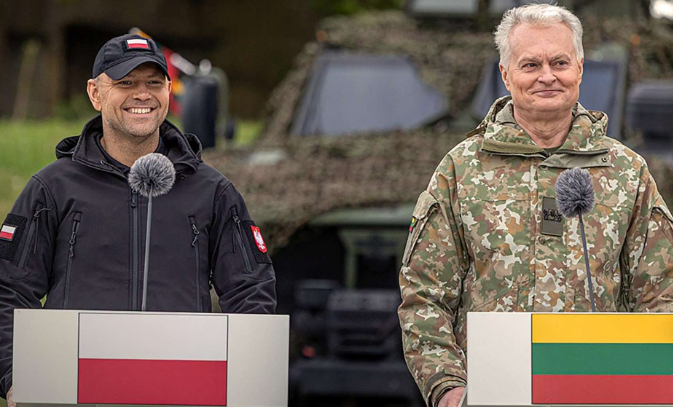
At the latest NATO field maneuvers, Brave Griffin 26-II, watched closely by the Presidents of Poland and Lithuania, the spotlight was not on tanks, artillery, or fighter jets. Instead, it was on something far less visible, but vastly more transformative: micro-drones operating under intense electronic warfare pressure.
These were not experimental gadgets. They were operational proof of a new doctrine.
The deployment of Parrot ANAFI UKR ISR micro-UAVs during the exercises signals a decisive shift in how modern militaries perceive reconnaissance, situational awareness, and risk. In contested environments where communication networks are disrupted and GPS signals are jammed or spoofed, the ability to collect, process, and act on intelligence in real time can mean the difference between operational success and failure.
And that is precisely where micro-UAVs are rewriting the rules.
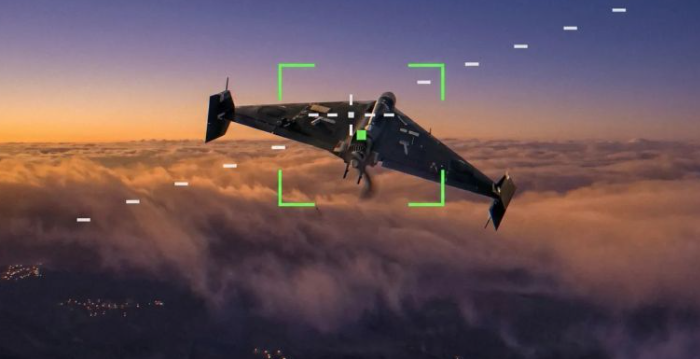
Designed to operate in harsh electromagnetic conditions, the ANAFI UKR drones demonstrated their ability to gather aerial intelligence, identify troop movements, and transmit coordinates to ground units—even when electronic interference attempts to blind and silence them. This capability is no longer a technological luxury; it is becoming a battlefield necessity.
The implications are profound.
Traditional ISR (Intelligence, Surveillance, Reconnaissance) platforms—manned aircraft, large UAVs, satellite systems—offer scale and persistence, but often come with vulnerabilities: high cost, detectability, and limited flexibility in contested environments. Micro-UAVs, by contrast, offer agility, redundancy, and survivability through numbers.
They are small enough to evade detection, flexible enough to deploy quickly, and affordable enough to operate at scale.
But the real disruption lies not just in their physical design, but in their resilience.
The exercises highlighted a critical point: the future battlefield is as much electromagnetic as it is physical. Jamming, spoofing, and cyber interference are no longer supporting actions—they are core components of modern warfare. Systems that cannot operate within this contested electromagnetic spectrum risk becoming irrelevant.
The ANAFI UKR platform addresses this challenge with secure communication architecture and resistance to electronic warfare techniques, ensuring that data integrity and operational continuity are maintained even under sustained interference.
This is where the concept of “cyber-secure by design” becomes operational reality.
Embedded secure elements, encrypted data storage, and protected communication channels ensure that even if signals are disrupted, the system retains integrity. In practical terms, this allows operators to maintain trust in the data they receive—a critical factor when decisions must be made in seconds.
Equally important is the impact on human operators.
Micro-UAVs reduce risk by extending the battlefield beyond the physical presence of soldiers. Instead of exposing personnel to direct observation or engagement, drones act as forward sensors, providing real-time intelligence from positions that would otherwise be inaccessible or too dangerous.
“Reduced risk, increased awareness”—this is not just a marketing slogan; it is a doctrinal shift.
The presence of high-level political observers during the exercise underscores the strategic importance of these capabilities. For Poland and Lithuania—frontline NATO nations—the lessons are immediate and urgent. The ability to maintain situational awareness in contested environments is not theoretical; it is directly tied to national and regional security.
And this is not an isolated development.
Across NATO and Europe, defence investments are increasingly focused on systems that can operate in degraded or denied environments. The emphasis is shifting from technological superiority in ideal conditions to resilience in the most challenging ones.
Micro-UAVs like ANAFI UKR fit precisely into this paradigm.
They are not designed to dominate the battlefield—they are designed to survive it, understand it, and enable others to act decisively within it.
In that sense, they represent a quiet revolution.
Because the future of warfare will not be defined solely by firepower, but by information—who collects it, who protects it, and who can act on it fastest under pressure.
At Brave Griffin 26-II, that future was already in the air.