Lithuania’s SkyWiper Wall: The Drone Killer Is Not the Revolution. The Kill Chain Is.
The next revolution in drone warfare may not be another drone.
It may be the system that turns a drone into a weapon at exactly the right moment.
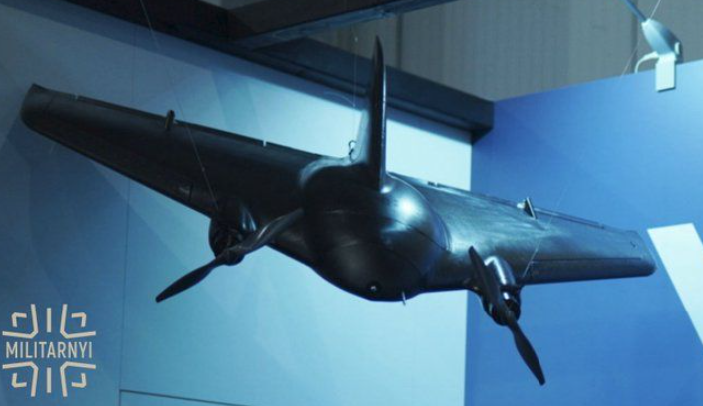
Lithuania’s SkyWiper Wall interceptor has reportedly been tested under combat conditions in Ukraine. Developed by VYTIS TECH, part of Lithuania’s NT Service group, it represents an increasingly important category of counter-drone technology: small, fast aircraft designed specifically to hunt other unmanned aircraft.
On paper, the numbers attract attention.
According to the information attributed to Militarnyi, the interceptor weighs approximately four kilograms, can reach speeds of up to 300 km/h and has a reported range of 25 to 35 kilometres.
Impressive.
But those numbers may actually be the least interesting part of the story.
Because SkyWiper Wall is not presented simply as a fast drone.
It is presented as part of a complete counter-UAS architecture combining 4D radar, optical sensors, electronic warfare and a kinetic interceptor.
And that changes the conversation.
Modern drone defence has a deceptively difficult problem. Destroying a hostile drone is only the final act.
First, you have to find it.
Then identify and track it.
Then determine where it is going.
Then guide an interceptor into the right area of sky.
Finally, the interceptor must acquire the target and complete the engagement.
If any link fails, having a 300 km/h interceptor does not matter very much.
That is what makes the reported SkyWiper Wall concept interesting.
Radar reportedly guides the interceptor toward the target before camera-based guidance takes over during the final approach, at roughly 100 to 200 metres.
In other words, different technologies handle different parts of the engagement.
Radar finds. Sensors track. Software connects. The interceptor finishes.
This is where counter-drone warfare starts looking less like traditional air defence and more like a highly compressed digital kill chain.
And Ukraine is arguably the most demanding environment imaginable for discovering whether that chain actually works.
The battlefield is forcing counter-UAS developers to confront a fundamental economic and technological challenge: there is little value in developing a spectacular interceptor if the complete system cannot repeatedly detect, classify, pursue and engage real targets under operational conditions.
That is also why caution is essential.
Reported combat testing is important, but it is not the same thing as demonstrated operational maturity.
The publicly available information cited here does not establish interception success rates, effectiveness against different classes of drones or how consistently the whole architecture performs under battlefield conditions.
Those figures matter enormously.
Perhaps more than the headline speed.
Because the emerging counter-drone competition will not simply be a race to create the fastest interceptor.
It will be a race to build the fastest and most reliable decision-to-interception chain.
A brilliant radar with a poor interceptor is insufficient.
A brilliant interceptor without reliable detection is equally insufficient.
And electronic warfare, optical identification, command-and-control and kinetic interception increasingly have to behave not like separate products, but like parts of one machine.
That may be the bigger lesson from SkyWiper Wall.
The first generation of the drone revolution was about putting cheap aircraft into the sky.
The next generation is about figuring out how to remove them from it.
And that creates an entirely new technological battlefield.
Drone versus drone.
Sensor versus signature.
Algorithm versus maneuver.
Detection versus reaction time.
The winner might not be the company that builds the most impressive interceptor.
It could be the one that builds the best system around it.
Because in the next era of air defence, the weapon is no longer just the thing that flies.
The weapon is the entire kill chain.