Why Europe’s Defence Future is Being Written in Ukraine and Europe is Still Reading the Manual
Europe likes to talk about the future of warfare. Ukraine is living it.
Last week, Ukrainian unmanned systems platoon commander Oleksandr Yabchanka said the quiet part out loud: Europe’s security now depends on Ukraine’s ability to keep fighting. Not as a sacrificial buffer, but as the most combat-tested, technologically adaptive military force on the continent.
It’s an uncomfortable statement - and that’s exactly why it matters.
Ukraine is not fighting “the last war plus drones.” It is fighting the next war in real time: a war of mass-produced unmanned systems, rapid iteration, software dominance, and constant tactical adaptation. Every six months, sometimes every six weeks, the battlefield changes. Sensors, frequencies, countermeasures, autonomy levels - everything evolves under fire.
Meanwhile, much of Europe is still preparing for a conflict that exists mostly in PowerPoint (read Helsing case).
A Growing Mismatch
The gap Yabchanka points to is no longer theoretical. We already see its symptoms across Europe:
Airports shut down by hobby-grade drones.
Million-euro interceptors fired at decoys costing a few hundred euros.
Ground-based air defence systems struggling with low-altitude, slow, autonomous threats that were never part of their original design envelope.
Europe’s defence model remains rooted in static systems, long certification cycles and procurement timelines measured in years. Modern warfare runs on months.
Deterrence today is not about how much hardware you stockpile. It’s about how fast you can adapt when that hardware fails.
Ukraine’s Lesson: War as a Development Environment
Ukraine has turned war into a brutal but effective R&D loop. Systems are deployed, observed, broken, modified and redeployed continuously. Success is not defined by compliance with pre-war specifications, but by survival and effectiveness under pressure.
This is precisely why Ukrainian forces have become so proficient with unmanned systems - aerial, ground and maritime. Not because they started with better technology, but because their systems were forced to evolve.
European defence companies often ask:
How do we test this safely?
How do we certify it properly?
How do we integrate it into existing doctrine?
Ukraine answers differently:
Does it work today? And if not, can we fix it by next week?
The Industry Blind Spot
Europe does have companies engaging with this reality. But they are still treated as exceptions, pilots or edge cases - not as the new baseline.
And that is the real blind spot.
GermanDrones: Reconnaissance Built for Reality, Not for Trade Shows
GermanDrones offers a clear example of what happens when systems are designed for endurance and adaptability rather than peacetime checklists.
Together with partners like Perun, GermanDrones has delivered hundreds of long-range, long-endurance reconnaissance UAVs to Ukrainian forces. These drones are operating in dense electronic warfare environments, under constant jamming, GPS disruption and kinetic threat. They are not flying scripted missions. They are surviving chaos.
What matters is not just the platform, but the feedback loop. Ukrainian operators adapt flight profiles, communications links and operational concepts continuously. Lessons learned at the front are fed back into system improvements far faster than any traditional European certification process would allow.
The uncomfortable question is this:
If German reconnaissance drones only prove their true value under Ukrainian battlefield conditions, why are European forces still relying on sterile test environments to define “combat readiness”?

Helsing: When Software, Not Steel, Becomes the Weapon
Helsing represents a different but equally critical shift. Its focus is not airframes, but software - AI-driven situational awareness, sensor fusion and decision support designed to function under combat stress.
This reflects a hard truth Ukraine has already internalised: modern warfare is increasingly a data problem before it is a firepower problem. Who sees first, understands faster and adapts quicker wins.
Helsing’s systems are being shaped by real operational needs, not abstract doctrine. They are built to ingest messy, incomplete battlefield data and still support decisions in minutes, not hours.
So the question for Europe becomes uncomfortable again:
If Ukraine is already fighting algorithmic warfare, why are European militaries still structured around platforms first and software second?
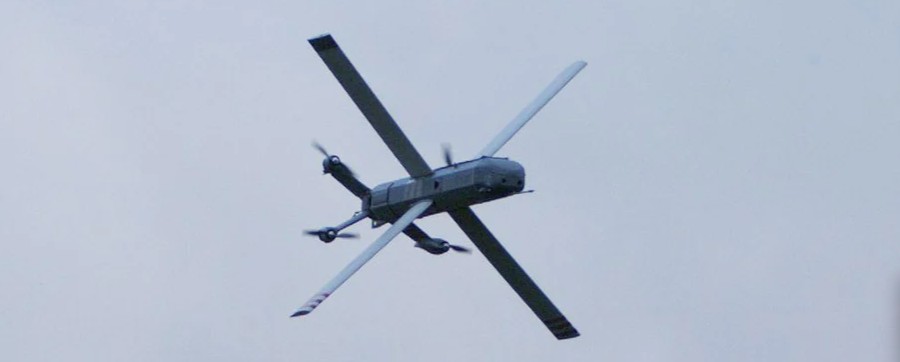
Alpine Eagle: Rethinking Counter-Drone Economics
Counter-drone defence exposes Europe’s weaknesses most clearly. And this is where Alpine Eagle stands out.
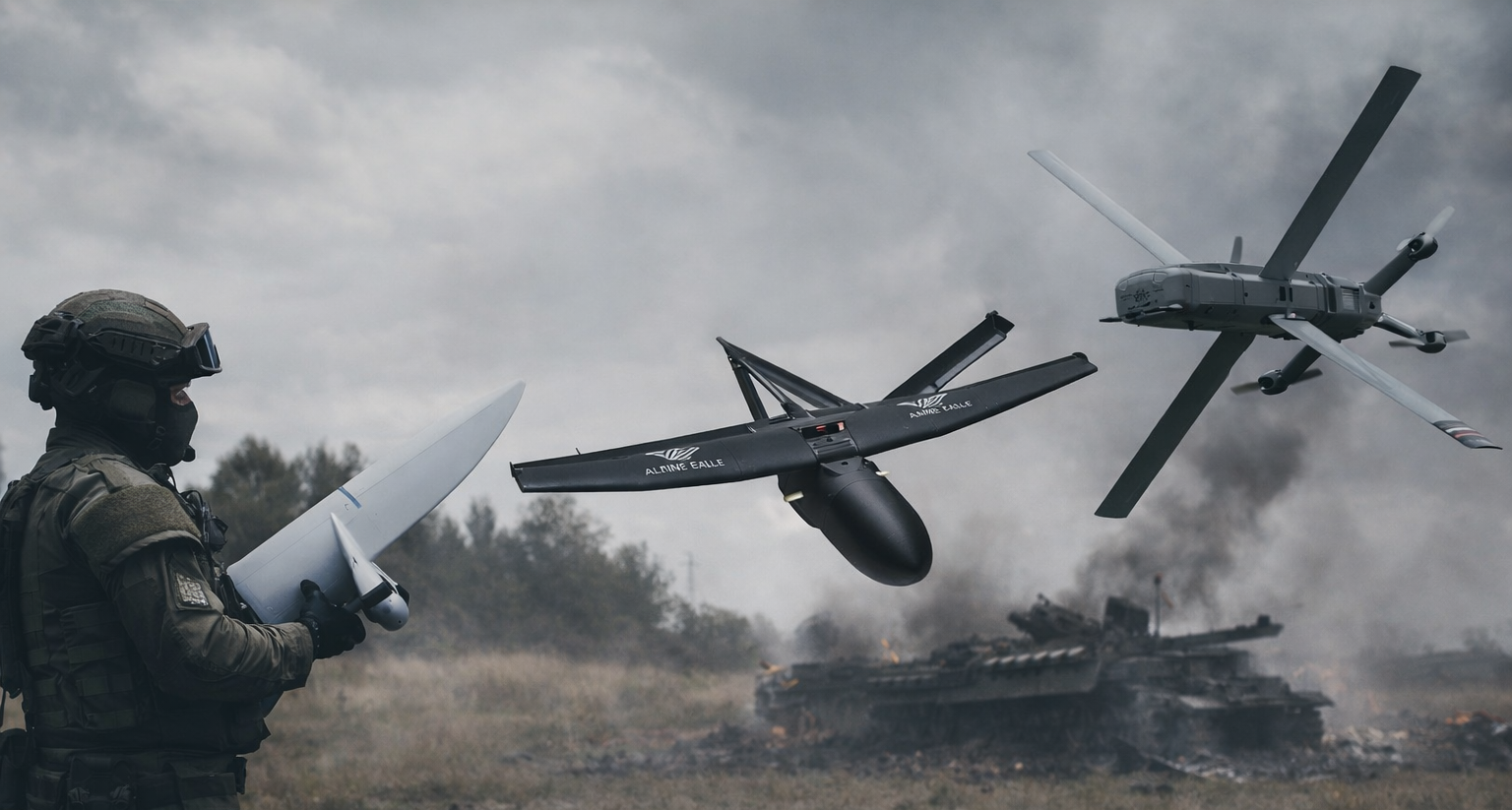
The German startup recently raised €10.25 million to develop a software-driven, air-to-air counter-drone system using machine learning, advanced sensors and computer vision. Its purpose is explicit: detect, classify and neutralise hostile drones, including loitering munitions, at a cost and speed that actually makes sense.
This is not about firing expensive missiles at cheap targets. It is about matching the economics of the threat. Alpine Eagle is building systems meant to scale, adapt and evolve in the field. Its leadership openly predicts automated drone-on-drone engagements becoming routine within five years.
The question writes itself:
If Europe understands this future, why is counter-drone defence still treated as a niche add-on instead of a core capability?
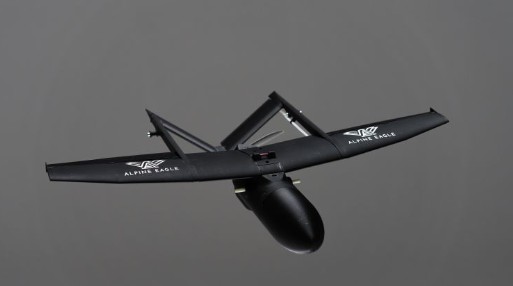
Quantum Systems: From Ukrainian Battlefield to European Doctrine
Quantum Systems may be the most revealing case of all.
Its Vector ISR drones have been flying in Ukraine since 2022, continuously updated and adapted based on frontline feedback. To keep pace, the company expanded production capacity inside Ukraine itself, compressing supply chains to meet wartime tempo.
This battlefield credibility flowed straight back into Europe. In 2025, the Bundeswehr selected Quantum Systems’ Twister drone to replace the ALADIN system - a decision shaped directly by combat performance, not theoretical specifications.
And then comes the inversion that should unsettle every defence planner: through the joint venture Quantum Frontline Industries, Ukrainian battlefield-proven drone designs are now being mass-produced in Europe. Germany buys them - and donates them back to Ukraine.
When did Europe last allow a live war to shape procurement this directly?
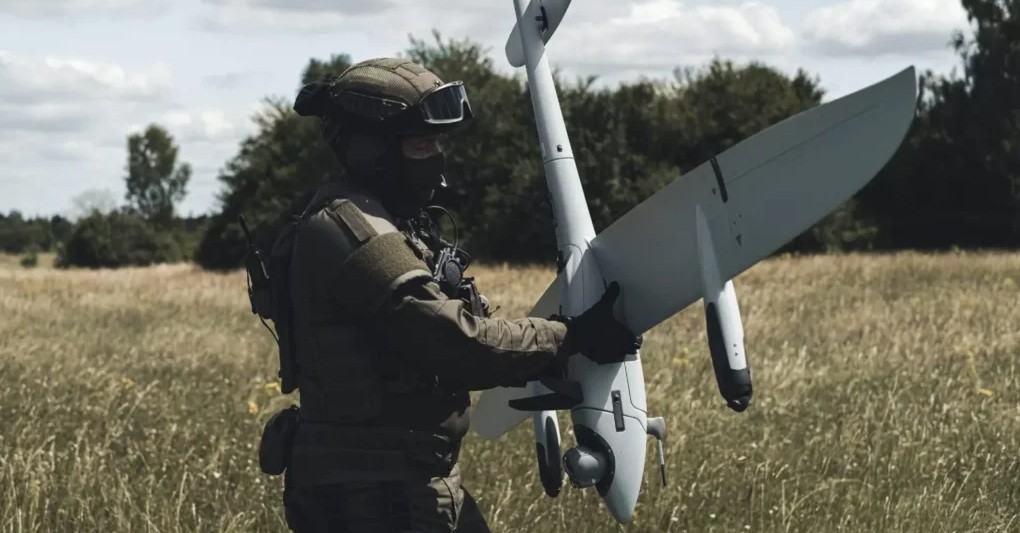
Stop Watching, Start Building
Ukraine is not a preview of some distant future. It is the present state of warfare on Europe’s borders.
Europe can continue to observe, fund and comment - or it can accept the deeper implication of Yabchanka’s warning: security today is earned through adaptation, not intention.
The war is already rewriting Europe’s defence playbook.
The real question is whether Europe intends to read it - or keep preparing for a war that no longer exists.
%20(1)%20(1).png)
.png)