I watched The Purge. Thanks to Helsing HX-2, I didn't expect to live in it
%20(1)%20(1).png)
I remember watching The Purge (2013) and feeling deeply unsettled. Society agrees to something monstrous: one night a year where anything goes. Murder. Rape. Torture. No consequences. The horror is not just the violence. It is the normalization of it. The paperwork. The legal framework. The calm explanation that this is necessary, efficient, and good for society.
We watch and think: This could never happen.
But look closer.

Today, we do not need a single night of lawlessness. We have something far more civilized. We call it defense procurement.
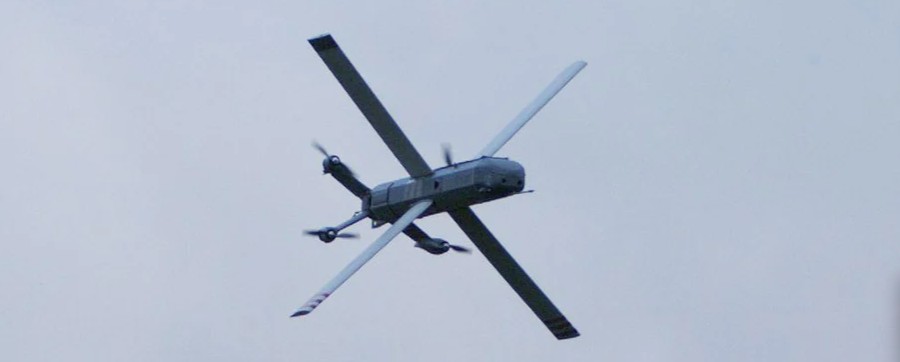
Consider the controversy around Helsing’s HX-2 combat drone and reports that only 25% of tested units successfully launched in Ukrainian frontline trials. Whether the number is exactly right or not almost misses the point. What matters is that a system marketed as cutting-edge, AI-powered, and “immune to electronic warfare” apparently struggled with basic functionality under real combat conditions.
And yet, money flows. Contracts continue. Press releases stay optimistic.
Where is the outrage?
In The Purge, the protagonist designs home security systems for a living. Ironically, when violence arrives at his own door, his technology fails. He sold safety. He bought illusion.
The parallel should be uncomfortable.
Helsing sells “AI-powered battlefield advantage.”
Governments buy “technological superiority.”
Ukraine receives hardware that may or may not even start.
The marketing language is sleek. The reality is muddy. The cost of failure is not a dented reputation.
It is dead people.
War Is Not a Tech Demo
In Silicon Valley, a buggy product is “iterated.”
In war, a buggy product is a funeral.
Drones in Ukraine are not lifestyle gadgets. They are not startup experiments. They are not investor pitch slides.
They are flying tourniquets.
They are aerial medics.
They are disposable shields that scout so humans don’t have to.
Every high-quality drone that works can mean a squad survives.
Every drone that fails to launch may mean a squad walks blind into artillery fire.
Yet we seem willing to treat frontline testing like beta software.
Why?
Because distance anesthetizes responsibility.
European taxpayers do not see the crater.
They see quarterly reports.
The Immorality of Overpromising
If a company genuinely does not know how its system performs under heavy electronic warfare, it should say so.
If a company knows its system struggles, it should stop selling it as “immune.”
Anything else is not optimism.
It is deception with plausible deniability.
And deception in wartime is not marketing malpractice.
It is moral malpractice.
The moment a company’s branding promises battlefield superiority, it accepts responsibility for battlefield consequences.
You do not get to hide behind “early version,” “missing components,” or “misunderstood data” when human lives are the integration test.
Boutique Warfare Kills
There is an ugly truth nobody likes to say:
Wars today are won by cheap, numerous, good-enough systems, not exquisite masterpieces.
Ukraine’s drone success has largely come from mass-produced, iterated, imperfect platforms that can be repaired, modified, and replaced quickly.
Yet European defense culture still worships the shrine of the premium system.
Gold-plated hardware.
Proprietary ecosystems.
Vendor lock-in.
It feels sophisticated.
It feels serious.
It also scales terribly.
A €5,000 drone that works is infinitely more valuable than a €100,000 drone that sometimes doesn’t.
But procurement systems reward paperwork elegance, not battlefield resilience.
Who Pays for Failure?
Not Helsing’s executives.
Not procurement officials.
Not politicians at press conferences.
The payment is extracted in Ukrainian blood.
And nobody goes to jail.
Nobody resigns.
Nobody is personally liable.
This is the real Purge.
A system where catastrophic consequences occur, but accountability never does.
“Better Than Nothing” Is a Lie
Some will argue: “Even imperfect drones are better than nothing.”
No.
A drone that fails at launch creates false confidence.
False confidence gets people killed.
A soldier who believes he has aerial eyes behaves differently than one who knows he is blind.
Bad equipment is worse than no equipment.
At least with nothing, expectations are honest.
The Question Nobody Wants to Ask
Why are we ordering boutique European AI drones at all when:
- Commercial-grade drones improve faster
- Open-source ecosystems adapt quicker
- Mass production wins wars
Is it about effectiveness?
Or about prestige?
Is it about Ukraine’s survival?
Or Europe’s industrial self-image?
Final Thought
In The Purge, the true horror is not the masked killers.
It is the society that decided this was acceptable.
If we accept a defense system where experimental hardware is shipped into active war zones, celebrated in press releases, and excused when it fails - then we have already normalized something monstrous.
Not in one night.
But permanently.
And unlike the movie, there is no siren to signal when morality switches off.
It just quietly disappears behind procurement forms, marketing slogans, and phrases like “early operational capability.”
Ask yourself:
If your child’s life depended on a drone taking off…
Would you accept a 25% success rate?
If not,
Why is Ukraine expected to?