Why Europe Must Stop Renting Its Air Defense and Start Building It With Ukraine
For decades, Europe's security strategy rested on a simple assumption: when a serious threat emerged, the United States would fill the gaps.
That assumption no longer looks safe.
Russia's war against Ukraine has exposed a hard truth about European defense. The continent may possess world-class technology, enormous industrial capacity, and advanced military expertise, but when it comes to modern air defense, Europe still lacks the production scale needed for a prolonged high-intensity conflict.
The challenge is no longer technological.
It is industrial.
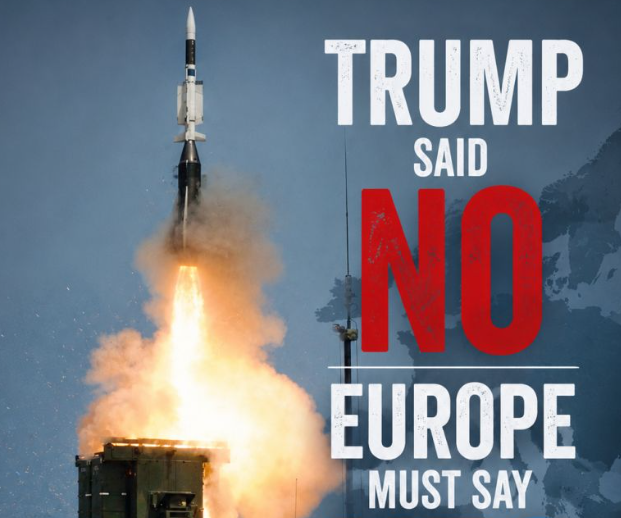
And that is why a controversial idea is gaining traction among defense observers: Europe should rapidly expand production of advanced air-defense missiles and involve Ukraine directly in manufacturing.
The logic is difficult to ignore.
Ukraine faces the world's most intensive missile and drone campaign. Every day it confronts threats ranging from cruise missiles and ballistic weapons to swarms of attack drones. No nation on earth currently possesses more practical experience in integrated air defense under combat conditions.
At the same time, European countries are scrambling to replenish inventories and strengthen their own defenses.
The result is a paradox.
Ukraine needs more interceptors.
Europe needs more interceptors.
Yet production remains limited compared to demand.
This is where advocates see an opportunity.
Rather than treating Ukraine solely as an end user of European weapon systems, they argue that Europe should increasingly view Ukraine as a defense-industrial partner capable of accelerating production, improving designs, and scaling manufacturing far beyond current levels.
The broader principle has already been proven elsewhere in Ukraine's defense sector.
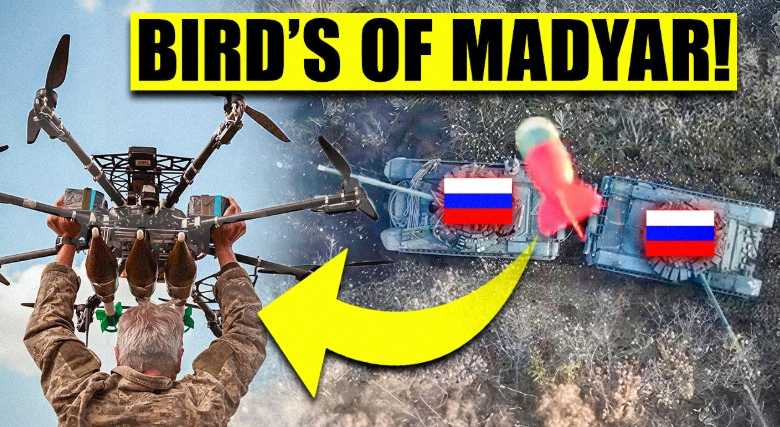
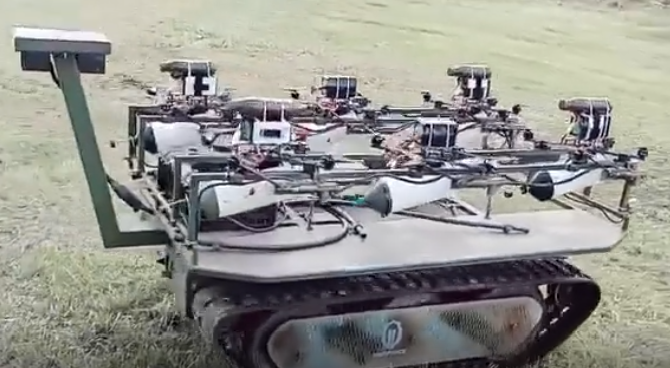
Since 2022, Ukrainian engineers have transformed drone warfare. Systems that once took years to develop now evolve in months or even weeks. Frontline feedback rapidly reaches manufacturers, creating a cycle of continuous improvement that traditional procurement systems often struggle to match.
That ecosystem has become one of Ukraine's greatest strategic assets.
The same approach could influence other defense technologies.
Supporters of deeper industrial cooperation argue that Europe is sitting on an untapped resource: a country with wartime innovation culture, experienced engineers, motivated manufacturers, and direct operational insight into modern combat.
The stakes extend well beyond Ukraine.
Europe is entering an era where strategic autonomy is becoming a recurring theme in defense debates. Governments increasingly discuss supply-chain resilience, industrial sovereignty, and reducing vulnerabilities created by dependence on foreign suppliers.
The lesson from recent years is clear.
Security is not only determined by the quality of military equipment. It is also determined by the ability to produce enough of it when crisis strikes.
Wars are won not simply by technology, but by sustained industrial capacity.
This reality is reshaping defense planning from Warsaw to Paris and from Helsinki to Rome.
The question facing Europe is therefore larger than any single missile system or defense contract.
Can the continent build a defense-industrial base capable of responding to prolonged strategic competition?
And can it do so fast enough?
Ukraine may be uniquely positioned to help answer both questions.
Its defense companies operate under conditions that force constant adaptation. Its engineers solve complex technical problems with urgency rarely seen in peacetime environments. Its manufacturing sector has learned how to innovate despite resource constraints and continuous threats.
These are not theoretical advantages.
They are battlefield-tested capabilities.
Critics warn that defense manufacturing decisions involve political, legal, industrial, and security considerations that cannot be resolved overnight. They are right.
But the larger strategic debate is unlikely to disappear.
Russia is increasing military production.
European governments are expanding defense budgets.
Demand for advanced air-defense capabilities continues to grow across the continent.
The real danger may not be moving too quickly.
It may be moving too slowly.
History tends to reward nations and alliances that recognize industrial realities before they become emergencies. Europe now has an opportunity to rethink how it produces, develops, and scales critical defense technologies.
Whether policymakers seize that opportunity remains uncertain.
What is increasingly clear, however, is that Ukraine is no longer merely defending Europe.
It may also become one of the key countries helping Europe defend itself.