When Analysis Becomes Reality: Argentina’s 24 F-16s and the Responsibility of Strategic Analysts / by Diego Bavio
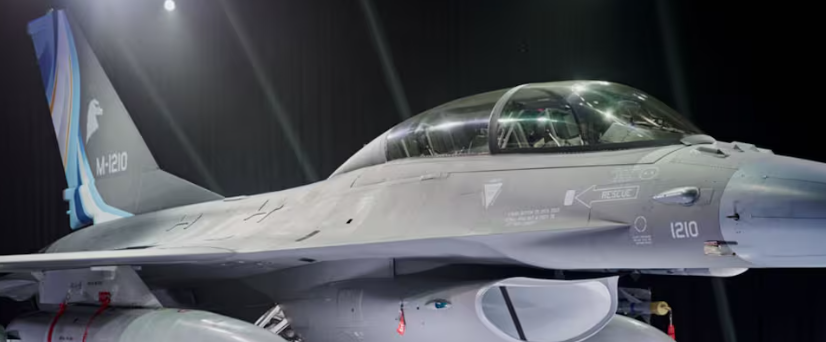
Why are Argentina’s 24 F-16s causing so much concern? The question seemssimple, but it may conceal a problem. Since Argentina announced the purchase of24 F-16s from Denmark in 2024, analyses, warnings and claims about a supposedshift in the regional military balance have emerged in Chile and the UnitedKingdom. Some have even raised the prospect of a new arms race.
The issue deserves serious consideration. But to examine it properly, weneed to begin with a more fundamental question: 24 compared with what?In strategic affairs, an isolated figure can tell us exactly what we want it totell us. It can also tell us something entirely different once it is placed incontext.
A snapshot can be misleading
A recent paper by France’s Centre d’Études Stratégiques Aérospatiales(CESA), devoted to Argentina’s Peace Cóndor programme, describes theacquisition of the F-16s as a capability breakthrough for Argentina and usesthe case to explore the limits of its strategic autonomy. The underlyingquestion is legitimate. What is more debatable is how deeply such a complexissue can be examined when the analysis focuses primarily on acquisitionhistory and political, financial and industrial constraints.
Before asking what 24 F-16s mean, we should ask a more basic question:what air force did Argentina have when the story we are now analysing began?The answer significantly changes the picture.
Argentina before the Falklands War
In the early 1980s, Argentina possessed more than one hundred jet combataircraft if the Argentine Air Force and Naval Aviation are considered together.These were not one hundred identical aircraft. The inventory included MirageIII, Mirage 5 Dagger, A-4B and A-4C aircraft in the Air Force, as well as A-4QSkyhawks operated by Naval Aviation. During the 1982 conflict, the Air Forceemployed Mirage IIIEA, Dagger and A-4B/C aircraft, alongside Canberra bombersand Pucará ground-attack aircraft.
Yet one component is often left out of the picture when Argentina’s airpower during that period is reconstructed: Naval Aviation. The Navy hadacquired 16 A-4Q Skyhawks, of which approximately ten remained in service by1982. Above all, Argentina had begun receiving an aircraft that deservesparticular attention.
The Super Étendard: when Argentina bought new
In 1979, Argentina contracted for 14 Dassault-Breguet Super Étendardaircraft. The first five arrived between 1980 and 1981, each accompanied by anAM39 Exocet anti-ship missile. All five were employed during the Falklands War.
This deserves a moment of reflection. We are accustomed to discussingthe Super Étendard as part of the history of the Falklands War, but we do notalways remember what the aircraft represented when it entered Argentineservice. It was a new aircraft, specifically designed for modern naval strikeoperations and associated with one of the most sophisticated anti-ship weaponsystems available at the time: the AM39 Exocet.
On 4 May 1982, two Super Étendards launched two Exocets at HMS Sheffield.One missile struck the ship. On 30 May, two more Super Étendards took part,alongside four A-4C Skyhawks, in the attack on HMS Invincible.
Therefore, if we want to understand what Argentine combat aviation meantin the early 1980s, we should look beyond numbers. We must also consider therelative technological position of the systems being acquired. Here, anuncomfortable historical comparison emerges.
The Super Étendards Argentina was receiving were new aircraft, based ona recent design and representing the state of the art in naval strike aviationat the time. The F-16s Argentina is now introducing are used aircraft,originally manufactured decades ago and subsequently upgraded through theMid-Life Update (MLU) programme.
This does not mean that the F-16 is an inferior aircraft. Quite theopposite: as a multirole platform, with its sensors, avionics, interoperabilityand air-to-air capabilities, it represents a major qualitative leap over thesystems Argentina operates today. But the historical comparison raises adifferent question: when did Argentina move from acquiring new combatsystems that were technologically advanced for their time to relying on a usedfleet as the centrepiece of its air-combat capability recovery?
That question is far more interesting than simply debating whether theF-16 is a good aircraft.
From more than one hundred aircraft to 24
This is the point that should be at the centre of any serious analysis.Around 1982, Argentina had more than one hundred jet combat aircraft across itstwo services. Today, it is introducing a planned fleet of 24 F-16s. Even if all24 were available, that would represent less than a quarter of the approximatenumber of jet combat aircraft Argentina had four decades ago. Including theSuper Étendards and A-4Qs operated by Naval Aviation makes the comparison evenmore significant.
We are not witnessing an expansion from a non-existent force. We arewitnessing the partial reconstruction of a capability that has suffered fourdecades of erosion. That distinction is fundamental. A recovered capability canlook like a new capability if the analysis ignores the period during which itwas lost.
The regional context
Now let us do something that should be mandatory in any strategicassessment: look at the surrounding region. Brazil maintains a substantial jetcombat force and is transitioning towards the Gripen. Chile operates a largerF-16 fleet than Argentina’s planned force and also retains its F-5s. Perumaintains a combination of MiG-29s, Mirage 2000s and Su-25s while movingtowards the renewal of its combat aviation. Venezuela retains its Su-30s andF-16s, although the actual availability of part of that fleet is much moredifficult to establish.
Of course, counting aircraft is not the same as measuring air power. Anair force is not simply the sum of its airframes. Availability, flying hours,pilots, weapons, sensors, electronic warfare, maintenance, infrastructure,command and control, intelligence, and the ability to generate sorties are allfundamental variables. But that is precisely why the analysis should go deeper.
At the very least, the regional comparison suggests that 24 F-16s donot, by themselves, constitute a quantitative or qualitative revolution inSouth American air power.
And it is not even 24
There is another detail that frequently disappears from the discussion.The contract covers 24 aircraft, but by the end of September 2026 Argentina hadreceived 12. On 30 September, the Argentine Air Force confirmed the arrival ofthe second batch of six, bringing the number of F-16s in the country to 12.
Moreover, receiving an aircraft does not automatically mean having afully operational capability. The Peace Cóndor programme began flying in April2026, and the first Argentine pilots achieved their first solo-flightcertification in July. We must therefore distinguish between three differentconcepts: 24 aircraft contracted, 12 aircraft received, and an effectiveoperational capability that is still being developed.
The difference matters. Much of the strategic debate already discussesthe 24 aircraft as though they represented a consolidated operationalcapability. They do not.
Where must they operate?
Another variable often disappears from the discussion. Argentina hasapproximately 2.8 million square kilometres of continental territory, inaddition to a maritime space of comparable dimensions. The challenge is notsimply to defend an extensive area. It is to establish surveillance, response,interception and presence across enormous distances.
The question should therefore not be, “Does Argentina have 24 F-16s?” Itshould be: what air-defence capability can Argentina generate with 24 F-16sacross that territory and maritime space? And then: how long can it sustainthat capability?
That is where genuinely strategic analysis begins.
The problem is not the F-16
My concern, however, is not really about the F-16s. It is about how weanalyse them. Many years ago, when I began working as a consultant, my businesspartner gave me a warning that seemed at the time to be no more than a matterof professional prudence: “Be careful what you recommend, because it may becomecompany policy.”
Over time, I realised he was right. Some recommendations that initiallybegan as working hypotheses eventually became concrete decisions. Thatexperience taught me something I believe should also apply to strategicanalysis: an analysis does not necessarily end when the reader closes thereport. Sometimes, that is where it begins.
A decision-maker may use it to define a policy. A policy may lead to anacquisition. An acquisition may provoke a reaction. And that reaction may alterthe very environment we originally intended to analyse. In other words:
Data → analysis → perception → decision → policy → reality.
In defence, that chain has very tangible consequences.
When a snapshot becomes policy
A data error can be corrected. An error of judgement is different. If ananalyst overestimates a military capability, a state may acquire systems itdoes not need, change its doctrine, increase its defence budget or interpret anaction as offensive when it was not intended to be. If the capability isunderestimated, the problem can run in the opposite direction.
These are decisions that can involve hundreds or thousands of millionsof dollars and, under certain circumstances, human lives. Context is thereforenot an embellishment to analysis. It is part of the data itself.
The 24 F-16s mean one thing when viewed in isolation. They meansomething else when we know that Argentina once possessed more than one hundredjet combat aircraft. They mean something else when we consider that the countrywent years without an effective supersonic fighter capability. They meansomething else when compared with the air forces of Brazil, Chile, Peru andVenezuela. And they mean something else again when we know that only 12 of the24 aircraft had arrived in Argentina.
The number has not changed. The context has.
The second danger: analysing the analysis
There is another, less visible problem. An analyst receives an earlierreport, considers it a valid source and builds upon it. Another analystsubsequently uses both studies. A third finds three documents supporting thesame conclusion. The original hypothesis begins to look like an establishedfact.
But we may not have three independent analyses. We may have a singleinterpretation reproduced three times. This creates a dangerous cascade effect:an assessment becomes an assumption, the assumption becomes a consensus, andthe consensus is eventually used as evidence.
The problem becomes even more complex when the analysis is also used tojustify a decision. In corporate security, there is a dynamic I have personallyobserved. Executives may hire major international consultancies not onlybecause they need a better understanding of a problem, but also because theywant to reduce their own exposure if a decision goes wrong. If the decisionfails, they can always say: “We hired one of the world's leadingconsultancies.”
Their backs are covered. But that does not guarantee the decision wasright.
This is not an argument that major consultancies produce poor work. Theproblem is deeper. A system may be designed to reduce the individual risk facedby a decision-maker while simultaneously increasing collective risk if everyonereproduces the same assumptions without examining them again.
Everyone may have acted professionally. Everyone may have followed thecorrect procedures. And yet the collective outcome may still be wrong.
The analyst also changes the board
This brings us back to the F-16s. If a state interprets Argentina'sacquisition as a significant military expansion, it may respond by increasingits own capabilities. Another state observes that response and interprets it asa reaction to Argentina. It then responds in turn. And so a dynamic of actionand reaction begins.
The initial perception may have been correct. It may also have beenexaggerated. But once decisions begin to follow, perception can become one ofthe causes of the reality it was supposed to describe. That is the point weoften forget.
The strategic analyst does not merely observe the board. Under certaincircumstances, the analyst becomes part of it.
Professional responsibility therefore extends beyond finding data,organising it and producing a conclusion. It also requires asking: What wouldhave to be true for our conclusion to be wrong? What information contradictsour hypothesis? Are we using independent sources, or citing the same analysisthrough different intermediaries? Are we comparing capabilities, or merelycounting platforms? Are we observing an expansion, a modernisation, or therecovery of a lost capability? And finally, what might happen if adecision-maker accepts our analysis as correct?
24 compared with what?
Perhaps the most important question about Argentina's F-16s is notwhether 24 is a large or small number. It is: 24 compared with what?
Compared with the approximately one hundred or more jet combat aircraftArgentina could field around 1982, it is a small number. Compared with an AirForce that spent years without operational supersonic fighters, it represents asignificant recovery. Compared with Chile and Brazil, it is a small force.Compared with Peru and Venezuela, the number is comparable or even lower,depending on how inventories are counted. Compared with the territory Argentinamust monitor and defend, it is a limited number. Compared with Argentina'sair-combat capability only a few years ago, it represents a qualitative leap.
All these statements can be true at the same time. That is precisely thepurpose of strategic analysis: not to select one of them, but to explain howthey can coexist.
A serious assessment should not merely ask, “What has Argentinapurchased?” It should also seek to answer: what capability did Argentina have,what did it lose, what is it recovering, what capability can it actuallygenerate with the new system, and how does that recovery alter—or fail toalter—the strategic balance?
Then it should ask one final question, perhaps the most important ofall: what consequences might our own analysis have if decision-makersbelieve we have answered the previous questions correctly?
Once strategic analysis enters the decision-making process, it ceases tobe merely a description of reality. It can become one of the forces thatchanges it.
That is why one question should accompany every strategic assessment:
Who analyses the analysts?
This is not about establishing a tribunal of experts or demanding thatevery analysis be infallible. That would be impossible. It is about somethingmuch simpler and, at the same time, much more uncomfortable: who challenges ourassumptions before they become decisions?
The problem is not making a mistake. A serious analyst can be wrong. Theproblem is being wrong without having subjected one's own hypothesis tosufficient challenge beforehand.
In defence, security and geopolitics, the analysis does not end when areport is delivered. It may begin there. A conclusion can become a perception,a perception can become a decision, a decision can become policy, and policycan ultimately alter the reality we originally intended to describe.
Data → analysis → perception → decision → policy → reality.
Perhaps the most important responsibility of an analyst is not to provethat they are right. It is to demonstrate that they have made a serious effortto discover why they might be wrong.
Because when nobody analyses the analysts, a hypothesis can become aconsensus, the consensus can become policy, and policy can become reality. Bythen, it may be too late to revisit whether the original snapshot was accurate.
Who analyses the analysts?
Perhaps that is the question we should ask before asking how good theanswer is.