Ukraine’s Drones Have Reached Russia’s Arctic Fortress. Now Moscow Is Paying Citizens to Shoot Them Down.
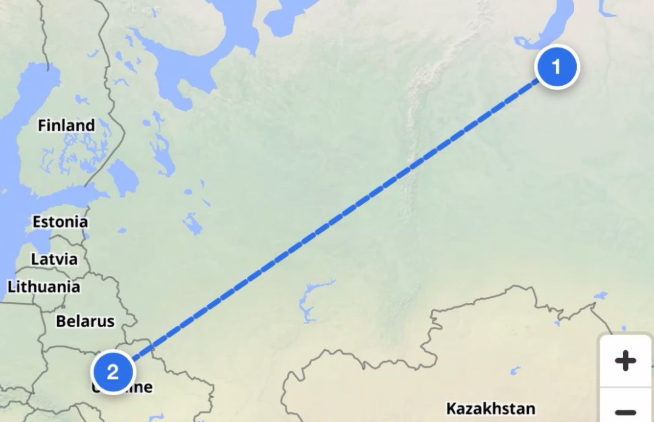
For decades, Russia's far north was considered untouchable.
Protected by distance, harsh weather, sparse population, and thousands of kilometers from most military threats, the Arctic energy heartland was viewed as one of the country's safest strategic regions. Massive natural gas fields, critical export infrastructure, and globally important LNG projects operated in an environment that seemed largely insulated from conflict.
That assumption is beginning to collapse.
According to reports from Russia's Yamalo-Nenets Autonomous Okrug, authorities are now offering substantial financial rewards to mobile fire groups tasked with defending critical infrastructure against drone attacks. The reason is simple and unprecedented: Ukrainian long-range drones are reaching Russia's Arctic energy empire.
The numbers reveal just how seriously the threat is being taken.
Teams that successfully destroy an incoming drone can receive the equivalent of approximately $12,000, with the payment divided among the members of the group. However, there is a critical condition attached to the reward. The defended facility must remain undamaged. Shooting down a drone is no longer enough. The infrastructure itself has to survive.
The region is also offering recruitment incentives. Employed citizens who join the defense units can reportedly receive around $1,200, while unemployed recruits can obtain approximately $1,800. Membership requires signing a contract with Russia's Ministry of Defense.
That may sound like a local security initiative.
In reality, it reflects something much larger.
It is a public acknowledgment that the battlefield continues to expand.
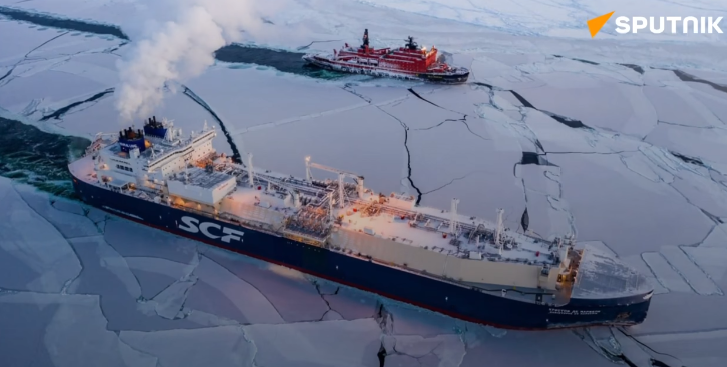
The Yamalo-Nenets region is not just another administrative territory. It sits at the center of Russia's energy economy. The area contains some of the country's most important oil and natural gas assets, while globally significant LNG facilities, including Yamal LNG and Arctic LNG 2, are located in its northern reaches.
These facilities are not merely industrial sites.
They are strategic assets.
They generate revenue, support exports, attract international investment, and play a vital role in Russia's position as one of the world's leading energy producers.
Historically, geographic isolation served as their protection.
Today, range matters more than geography.
Modern drones have fundamentally altered the mathematics of defense. Targets once considered too distant, too remote, or too inaccessible are increasingly within reach. The cost of projecting power over long distances has fallen dramatically, while the challenge of defending vast territories has become more complicated.
This is especially true for critical infrastructure.
An oil refinery can be hardened.
A military base can be fortified.
But protecting thousands of kilometers of energy infrastructure, pipelines, terminals, processing plants, and support facilities is an entirely different challenge.
Every successful long-range drone strike creates uncertainty.
Every new attack forces defenders to deploy additional resources.
Every threat increases costs.
The decision to establish incentivized mobile fire groups reflects this reality. Rather than relying exclusively on traditional military air defense systems, authorities appear to be expanding the defensive network by involving local residents in the protection effort.
That alone would have been difficult to imagine a few years ago.
The symbolic significance may be even greater than the military impact.
For much of the war, discussions about drone strikes focused on regions closer to the front lines or near major military facilities. The emergence of concerns in Russia's Arctic energy heartland suggests that the operational reach of drone warfare continues to grow.
It also demonstrates a broader transformation in modern conflict.
Distance no longer guarantees security.
Infrastructure no longer enjoys sanctuary simply because it is remote.
And strategic assets are increasingly vulnerable to relatively inexpensive unmanned systems capable of traveling extraordinary distances.
The most revealing aspect of the story may not be the drones themselves.
It may be the rewards.
When a state begins paying citizens thousands of dollars to help defend energy infrastructure from aerial threats, it signals more than a security measure.
It signals that a threat once considered distant has become immediate.
Russia's Arctic gas empire was built to withstand extreme cold, isolation, and unforgiving geography.
The challenge now is different.
The threat comes from above.
And it keeps getting closer.
%20(1)%20(1).jpg)