What Happens If HHLA Sky Gets Sold? Impact on German Drone Industry
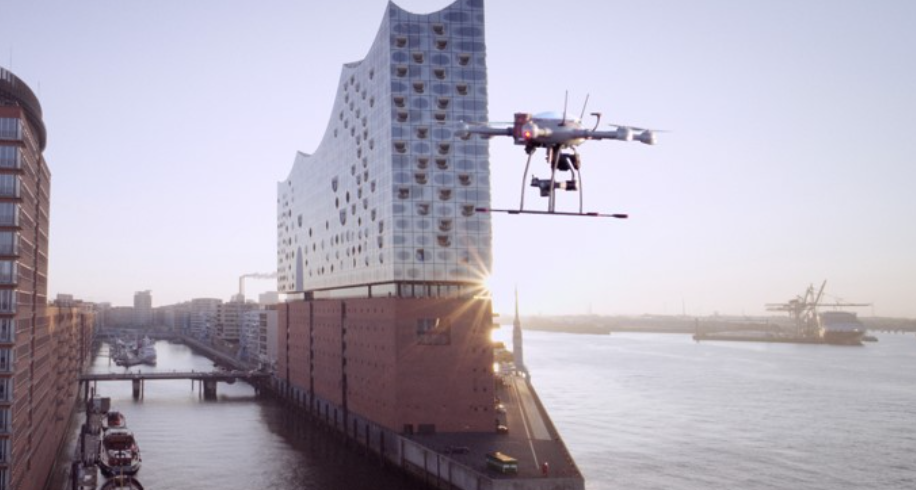
DroneNews24 is trying to get responce from Wiebke Kropp-Büttner, CEO of HHLA Sky, and Dieter Küsel, Business Solutions Expert at HHLA Sky GmbH, regarding news of a potential sale of HHLA Sky.
In the outskirts of Hamburg, far from Silicon Valley headlines, something far more consequential than another “drone startup” is quietly taking shape.
HHLA Sky is not building drones. It is building control over the systems that will define how drones operate at scale.
And that distinction changes everything.
At first glance, HHLA Sky may look like just another player in the expanding drone ecosystem. But that’s a surface-level misunderstanding. The company operates at a deeper layer—the layer that determines how machines communicate, coordinate, and move within shared airspace.
Its flagship platform, the Integrated Control Center (ICC), is less about flying drones than about orchestrating them. It handles mission planning, execution, maintenance, compliance, and integration into enterprise workflows. This is not aviation—it is full-scale automation infrastructure.
One operator supervising over 100 autonomous drones simultaneously is not theoretical—it is operational.
And that is precisely the inflection point.
Because when drones stop being individual tools and start behaving like coordinated fleets, the value shifts away from hardware. It moves into software, orchestration, and systemic control.
HHLA Sky has positioned itself exactly at that intersection.
But the true backbone of its strategic significance lies in something even less visible: airspace management.
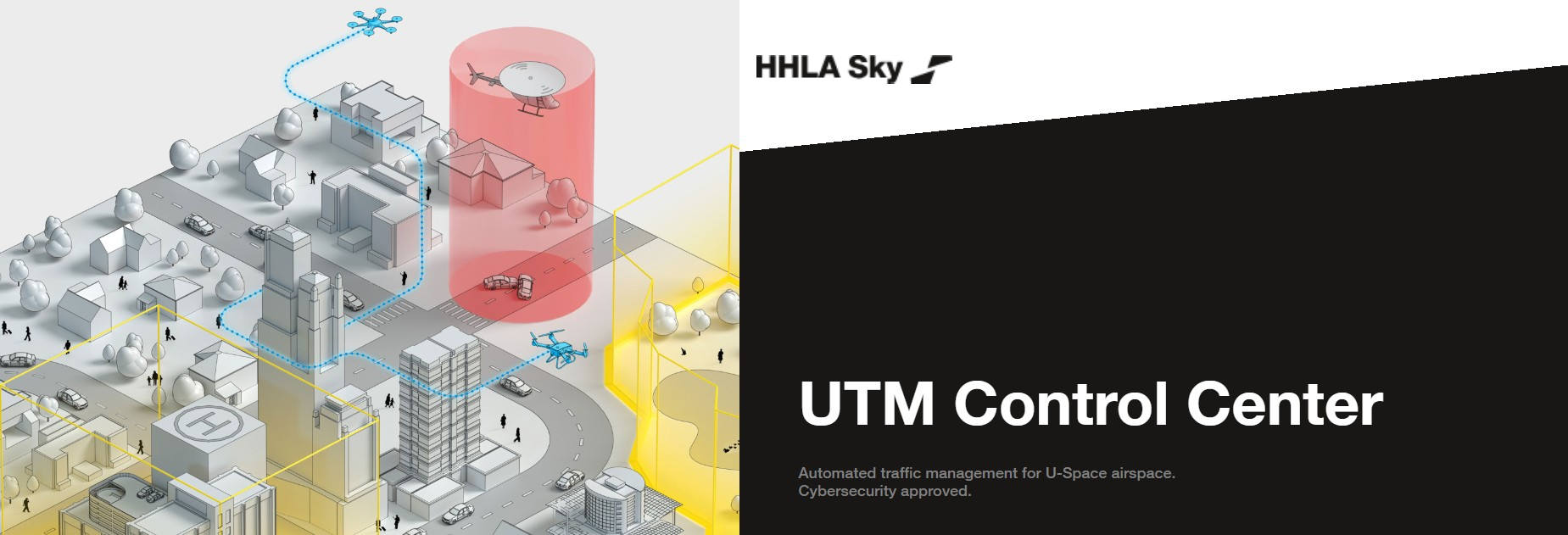
With its UTM (Unmanned Traffic Management) Control Center, HHLA Sky is effectively building a digital air traffic control system for drones. Flight approvals, real-time tracking, integration with aviation authorities, and conflict avoidance are all automated. What would otherwise become chaotic airspace is transformed into a structured, rule-based environment.
Without systems like this, large-scale drone deployment simply does not work.
No UTM, no drone economy.
And this is where things get provocative.
Because infrastructure—especially invisible infrastructure—is never just technical. It is political, economic, and strategic. Whoever controls it defines the rules of the system built on top of it.
Which brings us back to the question that triggered DroneNews24’s inquiry:
What if HHLA Sky is sold?
There is no confirmed public information suggesting a sale, and any discussion about valuation or buyers remains speculative. But the scenario itself is worth examining—not because it is confirmed, but because of what it would represent.
If such a transaction were to happen, it would not be about acquiring a drone business. It would be about owning the coordination layer of future autonomous mobility.
Different types of players would see this opportunity through different lenses.
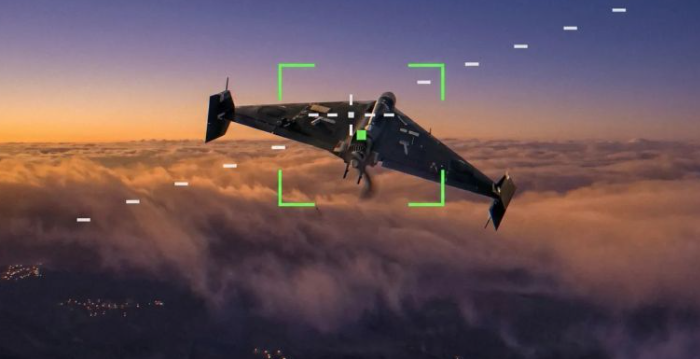
Big technology companies might view it as an extension of cloud infrastructure—expanding their reach from data centers into physical space. Aerospace primes could secure their foothold in unmanned aviation. Logistics giants might close the gap between warehouse automation and last-mile aerial delivery. Defense and infrastructure stakeholders would recognize its dual-use implications immediately.
Each would not be buying product.
They would be buying control.
Speculative valuations—from a few hundred million euros to potentially over one billion—highlight the uncertainty. But they also reveal something more important: this is an asset whose strategic value may far exceed its current financial metrics.
Because the real question is not what HHLA Sky earns today.
It is what it enables tomorrow.
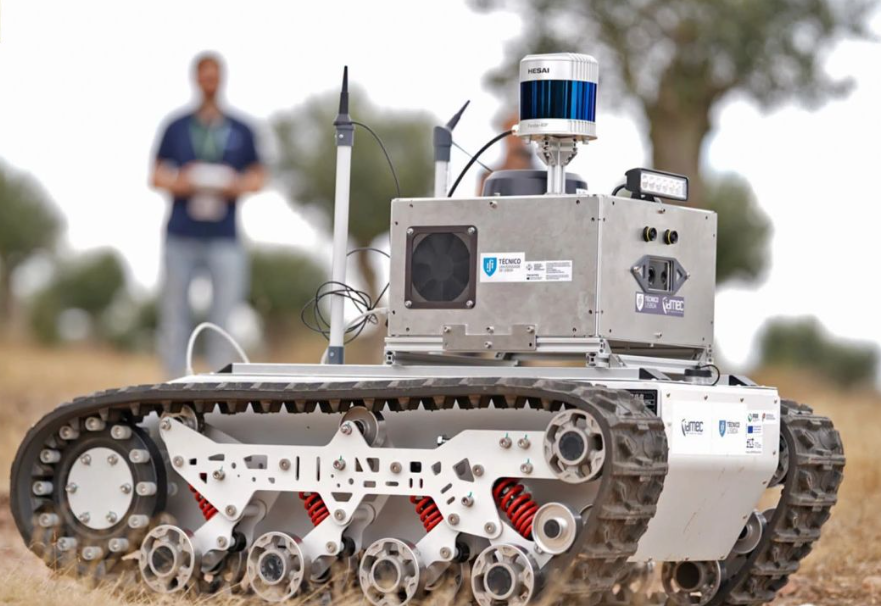
Autonomous systems are not just about drones. They include ground robots, logistics networks, and integrated industrial flows. HHLA Sky already connects these domains, acting as a multi-robot orchestration platform. In sectors like healthcare logistics, its systems are enabling real-world drone operations transporting lab samples—reducing time, increasing efficiency, and redefining service delivery.
This is not experimental. It is operational reality.
And it hints at something larger: a future where movement—of goods, data, and machines—is centrally coordinated by digital platforms.
The same way cloud providers control how data flows, companies like HHLA Sky are beginning to control how physical systems move through space.
That is why this story matters.
Not because a company might be sold.
But because it forces a fundamental question:
When the skies fill with autonomous systems, who decides how they move?
If HHLA Sky remains independent, it continues to shape that answer from Hamburg.
If it is acquired, the answer may belong to someone else entirely.
Either way, the conclusion remains the same:
This is not about drones.
It is about owning the infrastructure of the future.
Potential Buyers (Speculative)
- Big Tech (Alphabet, Microsoft, Amazon)
Why? Because whoever controls drone traffic control could own the “cloud of the skies.” - Aerospace giants (Airbus, Thales)
They already dominate traditional aviation—and would want a stake in unmanned airspace integration. - Logistics empires (DHL, UPS)
For them, HHLA Sky is the missing link to scale last-mile drone delivery globally. - Defense & infrastructure players
The dual-use nature of drone control systems makes it geopolitically strategic.
Price Tag (Speculative)
There is no public valuation disclosed. However, based on comparable robotics platforms and strategic importance:
- Conservative strategic acquisition: €150–300 million
- Competitive bidding scenario: €300–700 million
- “We can’t afford to lose this” strategic premium: €1B+
Because what you’re buying is not revenue today.
You’re buying control over how machines move tomorrow.
.jpg)