What Happens If HHLA Sky Gets Sold? Impact on German Drone Industry
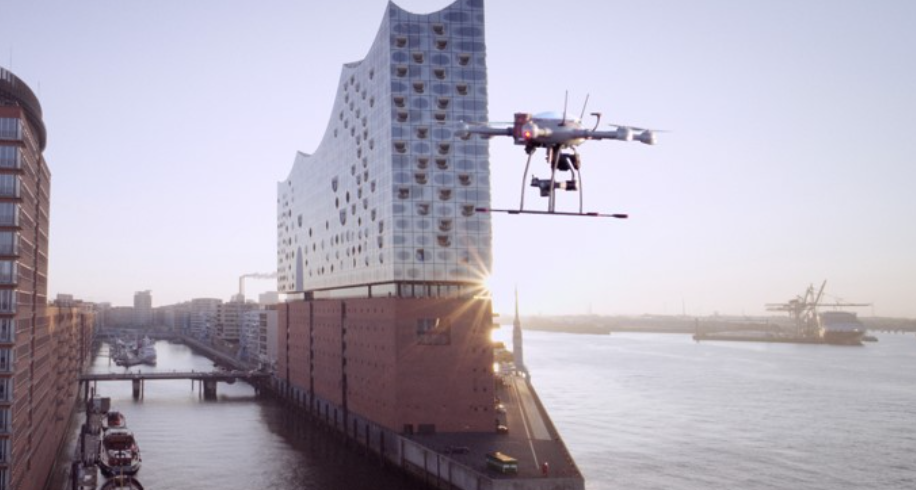
In the outskirts of Hamburg, far from the noise of Silicon Valley hype cycles, a quiet revolution is already airborne.
HHLA Sky is not a drone company in the usual sense. It doesn’t just build flying machines - it builds the digital nervous system that makes fleets of autonomous drones actually work.
Think of it less as a manufacturer, and more as an airspace operating system—a platform capable of controlling, coordinating, and scaling drone operations across industries, cities, and eventually, entire countries.
The Core: A Software Brain for the Sky
At the center of HHLA Sky’s universe sits its Integrated Control Center (ICC)—a platform that automates the entire lifecycle of drone operations.
It doesn’t just fly drones. It plans routes, executes missions, manages maintenance, and integrates with enterprise systems—from SAP workflows to logistics chains.
One operator can oversee 100+ autonomous drones simultaneously, across multiple locations, in real time.
This is not hobby aviation. This is industrial-scale automation.
And it goes further. HHLA Sky integrates not only aerial drones, but also ground robots and automated cargo flows, making it a true multi-robot orchestration platform.
Medical Logistics: Where Seconds Matter
If you want to understand why this matters, look at healthcare.
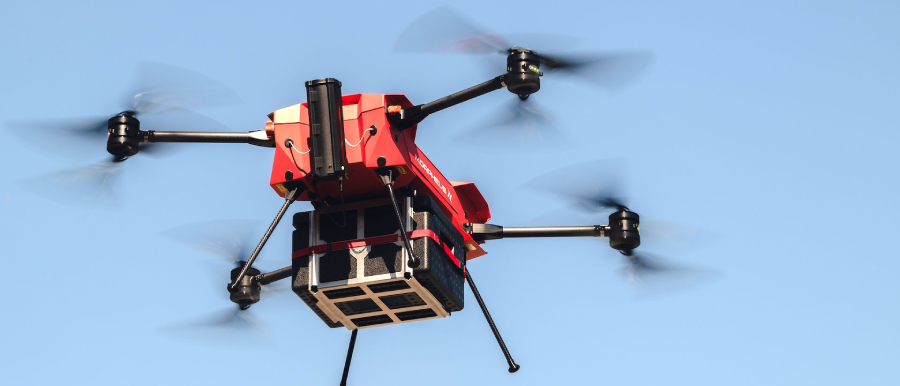
In 2025, HHLA Sky technology began powering real-world drone deliveries of medical lab samples between hospitals and central labs in Germany.
These aren’t demos. These are regular operations, where drones transport critical diagnostic materials faster than traditional logistics.
The Integrated Control Center enables automated routing, monitoring, and safety compliance—turning what used to be courier logistics into a real-time airborne network.
The result? Faster diagnoses, fewer delays, and a preview of what healthcare logistics will look like in the next decade.
The Invisible Layer: UTM Control Center
But coordinating drones is only half the battle. The real challenge is managing airspace itself.
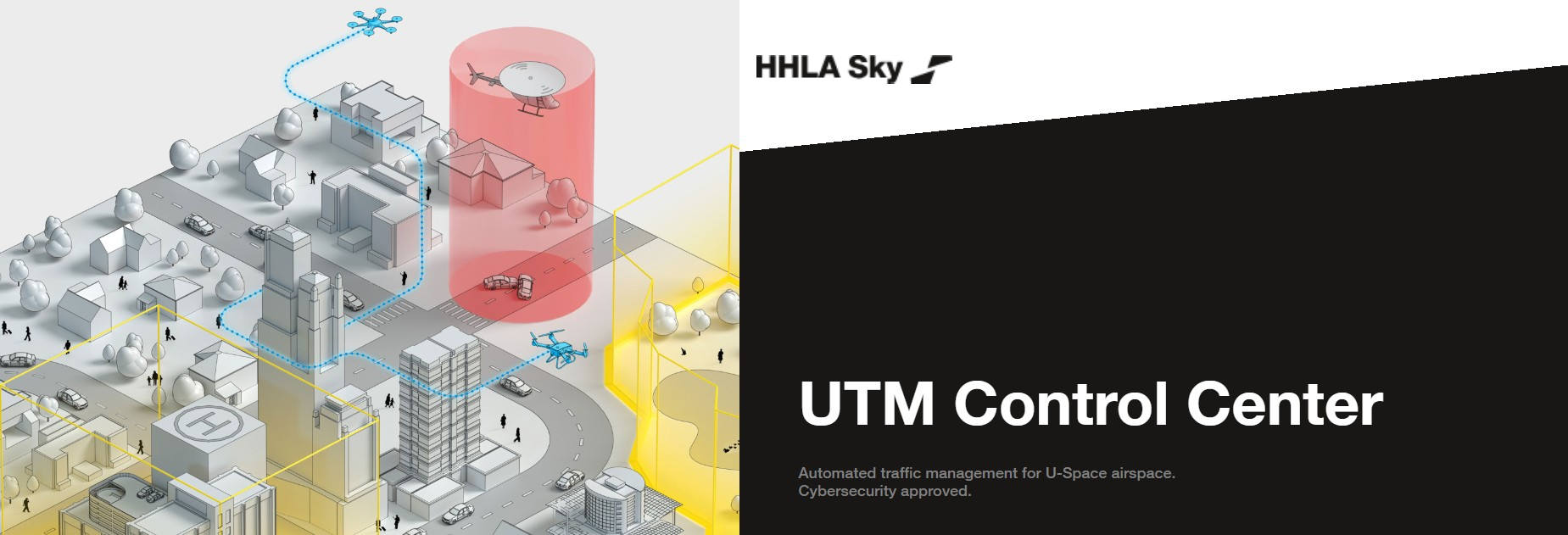
This is where HHLA Sky’s UTM (Unmanned Traffic Management) Control Center comes in—a kind of digital air traffic control for drones. [hhla-sky.com]
The system automates flight approvals, tracks drones in real time, integrates with aviation authorities, and ensures that drones safely coexist with helicopters and commercial aircraft.
In crowded urban environments, this isn’t optional—it’s foundational.
The UTM platform effectively transforms chaotic drone activity into structured, rule-based, scalable infrastructure.
In other words: no UTM, no drone economy.
Now the Provocation: What If HHLA Sky Is Sold?
There is no confirmed public information about a sale or valuation of HHLA Sky in the available sources. Any acquisition discussion below is therefore informed speculation and opinion, not fact.
But let’s imagine.
If HHLA Sky were on the market, it wouldn’t just be selling drones. It would be selling control over a critical layer of future infrastructure—the management of autonomous systems in the air.
Potential Buyers (Speculative)
- Big Tech (Alphabet, Microsoft, Amazon)
Why? Because whoever controls drone traffic control could own the “cloud of the skies.” - Aerospace giants (Airbus, Thales)
They already dominate traditional aviation—and would want a stake in unmanned airspace integration. - Logistics empires (DHL, UPS)
For them, HHLA Sky is the missing link to scale last-mile drone delivery globally. - Defense & infrastructure players
The dual-use nature of drone control systems makes it geopolitically strategic.
Price Tag (Speculative)
There is no public valuation disclosed. However, based on comparable robotics platforms and strategic importance:
- Conservative strategic acquisition: €150–300 million
- Competitive bidding scenario: €300–700 million
- “We can’t afford to lose this” strategic premium: €1B+
Because what you’re buying is not revenue today.
You’re buying control over how machines move tomorrow.
Conclusion
HHLA Sky operates in a space that most people don’t yet see:
the invisible infrastructure of autonomous systems.
Control centers. Airspace platforms. Integrated automation.
If it gets sold, the question won’t be who bought a drone company.
It will be:
Who just bought a piece of the future?
.jpg)