Ukrainian Flamingo FP-5 Missile Striking the Supply Chain. Ukraine Takes the Drone War Deep into Russia
Wars used to be fought at the front. Today, they are fought in factories.
When Ukrainian Flamingo FP-5 cruise missiles crossed more than 1,000 kilometers into Russian territory to strike the Progress plant in Cheboksary, the target was not symbolic infrastructure or logistics hubs. It was something far more strategic: the industrial backbone of Russia’s drone warfare capability.
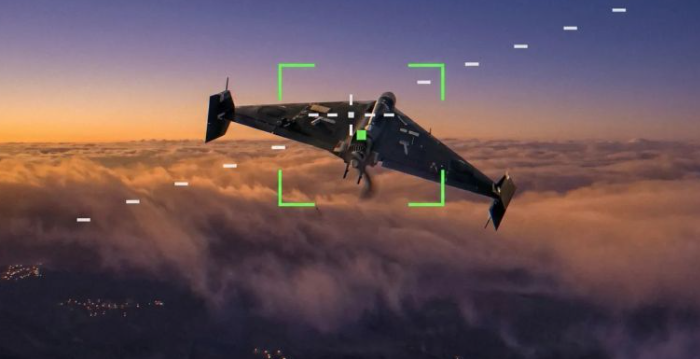
The Progress facility manufactures Kometa antennas—critical components that allow Russian drones and missiles to bypass Ukrainian air defenses. These systems have become a defining feature of Russia’s long-range strike operations, enabling drones to survive electronic warfare environments that would previously have rendered them ineffective. By targeting this plant, Ukraine is not just responding to attacks. It is trying to dismantle the mechanisms that make those attacks possible in the first place.
This is a profound shift.
Instead of intercepting drones in the sky, Ukraine is now striking the supply chain on the ground. The logic is simple: if you can’t stop every drone, stop the production of the technology that makes them work.
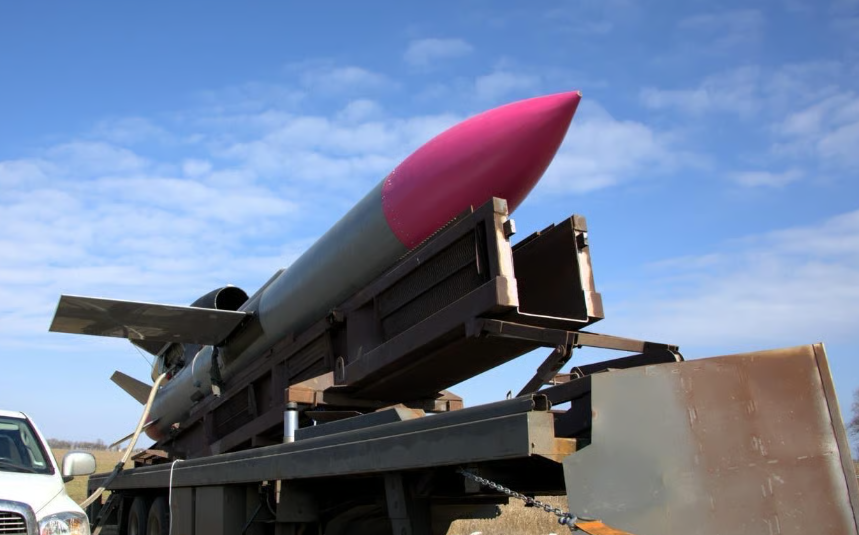
The Flamingo FP-5 missile itself reflects this escalation. With a reported range of up to 3,000 kilometers and the ability to carry around a ton of explosives, it represents a new generation of Ukrainian long-range strike capability. Low-flying, precise, and capable of penetrating deep into Russian territory, it enables Kyiv to reach beyond the battlefield and into the industrial geography of the war.
And that geography matters.
Modern drone warfare does not depend on a single factory or a single supply route. It is an ecosystem—one that combines design, electronics, software, and manufacturing across multiple nodes. Components like antennas, navigation modules, and processors often determine survivability more than the airframe itself. The Kometa antenna, for example, is not just another part. Its anti-jamming enhancements, introduced in upgraded versions over the past year, have posed significant challenges to Ukrainian defenses, forcing engineers to develop increasingly sophisticated countermeasures.
In that context, the strike on Progress is not just tactical—it is technological.
Ukrainian engineers have already been working to “crack” and spoof these systems through electronic warfare. But physical destruction offers something electronic countermeasures cannot: interruption. If production is halted or slowed, systems never reach the battlefield. And in a war defined by scale and repetition, even temporary disruption can create operational gaps.
Yet the implications go further.
This strike signals a broader evolution in how both sides understand vulnerability. The front line is no longer defined by geography—it extends into factories, supply chains, and even the global market for dual-use technology. Western-made components have repeatedly been found in systems on both sides of the conflict, highlighting how deeply interconnected the modern defense ecosystem has become.
Ukraine’s strategy aligns with a growing global realization: supply chains are targets.
And as long-range strike capabilities improve, those targets become increasingly accessible. What was once protected by distance or location is now exposed to precision attacks. Industrial facilities that support drone and missile production are no longer safe simply because they are far from the frontline.
For Russia, this creates a new layer of pressure. Protecting factories becomes as important as deploying weapons. Investment must shift not only into production but into dispersal, concealment, and defense of industrial assets. For Ukraine, it opens a path to asymmetry—using targeted strikes to offset numerical disadvantages in battlefield systems.
But there is a deeper message in this escalation.
The war is no longer about individual strikes or individual systems. It is about cycles: detection, production, deployment, and destruction. Each side is not only trying to win engagements—they are trying to break the other’s ability to sustain those engagements over time.
By targeting the Progress plant, Ukraine is attacking that cycle at its source.
And in doing so, it highlights the defining reality of modern warfare:
The most important battles are no longer just fought where weapons land.
They are fought where those weapons are made.