The Tank Is Not Dead. It’s Evolving KNDS and Rheinmetall - Inside Europe’s MBT Vision 2032

For years, defense analysts have been asking the same provocative question: is the main battle tank obsolete?
At Eurosatory 2026 in Paris, Germany delivered its answer—not with words, but with steel, software, and ambition.
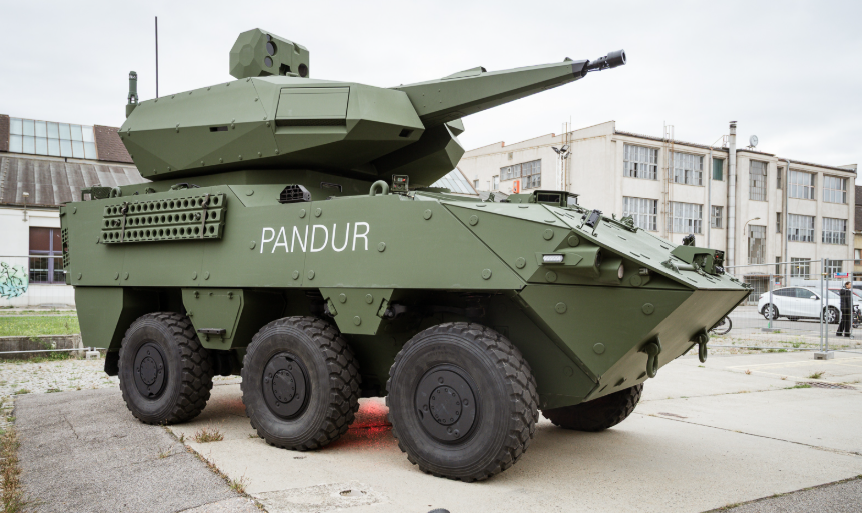
The “MBT Vision 2032,” presented by PSM Projekt System & Management GmbH—a joint venture of KNDS Deutschland and Rheinmetall—is not just a tank concept. It is a strategic bridge between today’s Leopard 2 and tomorrow’s Main Ground Combat System (MGCS). And more importantly, it is a statement: the tank is not disappearing. It is transforming.
At first glance, the design carries familiar DNA. Its silhouette echoes the Leopard 2, Europe’s long-standing armored backbone. But the similarities quickly fade as the details emerge.
The most striking shift is structural: a crew of three, all positioned within a heavily protected hull, while the turret remains completely unmanned. This is more than a design tweak—it is a fundamental rethinking of survivability. By removing personnel from the turret, the most exposed part of the vehicle, the concept reduces vulnerability while opening new possibilities for automation, sensor integration, and weapon control.
At the heart of this unmanned turret sits a 130 mm main gun, supported by an autoloader—likely Rheinmetall’s evolving Future Gun System (FGS). The move away from manual loading is not just about efficiency. It enables a smaller crew, reduces physical constraints, and aligns with a battlefield increasingly defined by speed and data, not brute force alone.
But firepower is only part of the story.
The inclusion of a remote-controlled 30 mm secondary weapon system signals something even more telling: tanks are no longer only fighting other tanks. They are preparing to fight drones.
Low-cost UAVs and loitering munitions have reshaped the battlefield, exposing vulnerabilities even in heavily armored platforms. The MBT Vision 2032 addresses this threat directly, integrating defensive capabilities against aerial targets into its core design rather than treating them as an afterthought.
This is the new reality of armored warfare: three-dimensional, asymmetric, and constantly evolving.
Equally notable is the attempt to resolve one of the long-standing contradictions in tank design—protection versus weight. The MBT Vision 2032 aims to deliver enhanced protection while reducing overall mass. If achieved, this would significantly improve mobility, deployability, and operational flexibility, critical factors in a European security environment shaped by rapid response requirements and complex terrain.
And then there is timing.
The “2032” in the concept’s name is not accidental. It reflects an intended initial operational capability aligned with Europe’s broader modernization timeline. With the MGCS—the next-generation Franco-German tank project—still years away from deployment, MBT Vision 2032 is positioned as an interim solution, a “bridge system” that ensures continuity of capability while new doctrines and technologies mature.
But calling it a bridge risks understating its significance.
Because what MBT Vision 2032 represents is not just a stopgap—it is a testing ground for the future of ground combat. Concepts such as unmanned turrets, reduced crew sizes, integrated drone defense, and advanced firepower will likely define the next generation of armored vehicles.
In that sense, this concept is less about 2032 and more about what comes after.
It also reflects a broader shift in European defense thinking. Instead of waiting for perfect, long-term solutions, industry and governments are accelerating incremental innovation—fielding systems earlier, learning faster, and adapting continuously.
For Germany, and for Europe, the message is clear: armored warfare still matters. But it must evolve to remain relevant.
The battlefield is no longer dominated by direct line-of-sight engagements. It is a networked environment where sensors, drones, electronic warfare, and data flows determine advantage. Tanks that fail to integrate into this ecosystem risk becoming liabilities rather than assets.
MBT Vision 2032 is an attempt to ensure that does not happen.
It is a machine designed not just to survive the battlefield—but to understand it, adapt to it, and dominate within it.
Because the real question is no longer whether tanks will exist in the future.
The question is what kind of tanks will.