Rheinmetall - When 30% Trading Growth Is No Longer Enough

In most industries, a 30% jump in revenue and profit would trigger celebration. In today’s defense sector, it can trigger disappointment.
That is the paradox facing Rheinmetall, Germany’s largest defense contractor and one of the most closely watched stocks in the DAX. The company has delivered what many firms can only dream of: booming sales, rising profits, and an order backlog that stretches well into the next decade. Yet investors briefly sent the stock lower. Why? Because expectations have grown even faster than Rheinmetall itself.
Strong numbers, higher demands
Rheinmetall closed the past year with nearly €10 billion in revenue, representing growth of around 30% year‑on‑year. Profits climbed at a similar pace, reflecting the company’s rapid pivot toward defense technologies amid rising global military spending.
The real headline, however, sits in the backlog: €63.8 billion in confirmed and expected orders. This figure alone illustrates how dramatically Europe’s defense landscape has changed since 2022. Governments are no longer debating whether to rearm — they are debating how fast.
And yet, markets reacted with caution.
When “good” isn’t good enough
Despite the impressive growth, Rheinmetall’s results came in slightly below analyst expectations. Revenue missed forecasts by roughly 2%, while operating earnings fell about 4% short. The response was immediate: the stock dropped by around 5%, briefly making Rheinmetall one of the weakest performers in the DAX.
This reaction says less about Rheinmetall’s fundamentals and more about the psychology of a sector caught in a boom. Investors have priced in extraordinary growth — and anything short of perfection can feel like a letdown.
A geopolitical growth engine
Zooming out, the structural drivers behind Rheinmetall’s expansion remain firmly in place. Defense budgets are rising across Europe, NATO is accelerating procurement cycles, and ammunition — once treated as a commodity — has become a strategic asset.
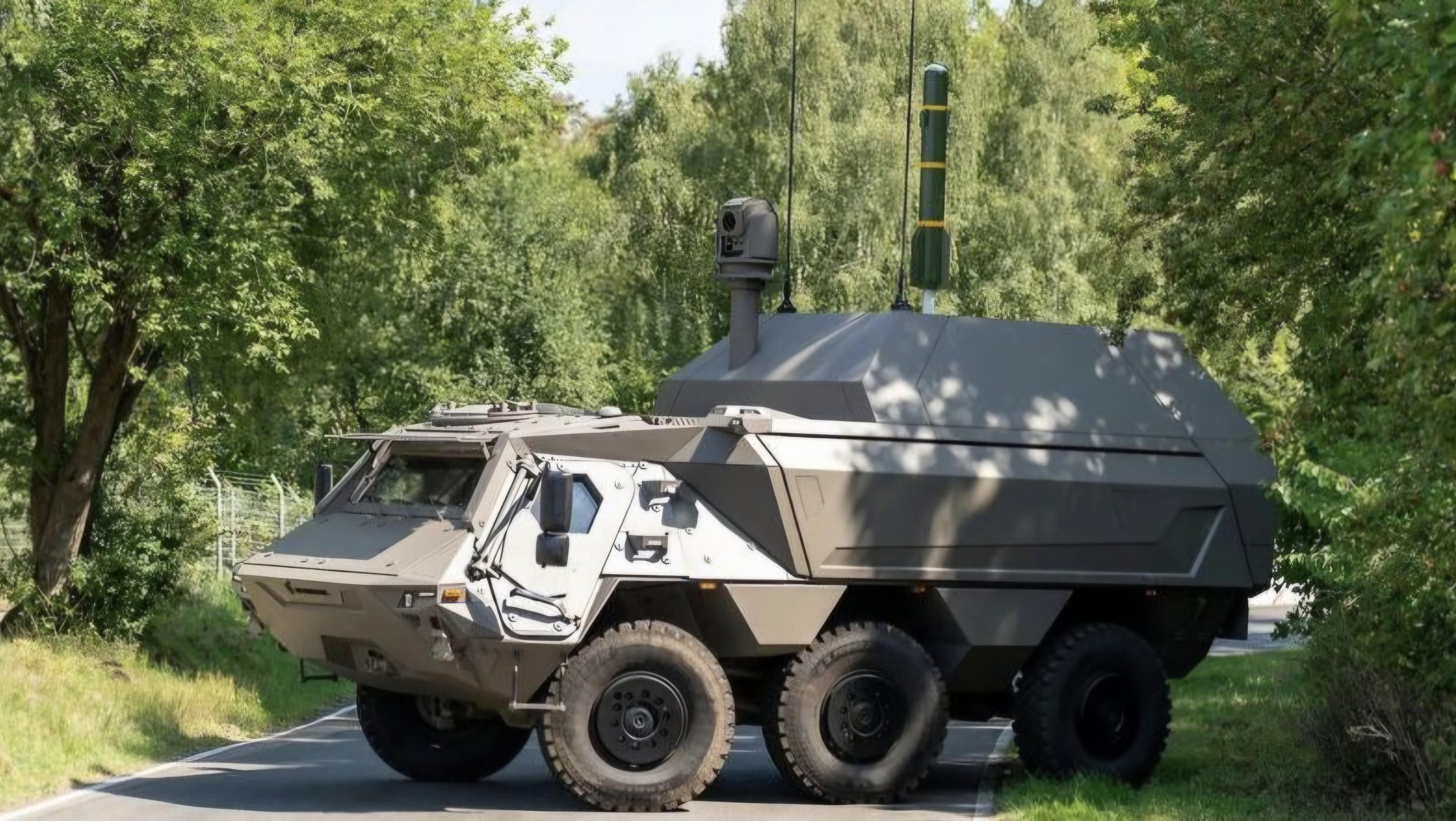
Rheinmetall sits at the center of this shift. Its portfolio spans armored vehicles, artillery, air defense, electronics, and increasingly, large‑scale ammunition production, an area Europe has identified as a critical bottleneck.
The company’s order backlog reflects not just current contracts, but long‑term framework agreements that signal sustained demand rather than a short‑term spike.
An ambitious roadmap to 2030
Management’s outlook leaves little room for modesty. For 2026, Rheinmetall expects revenue of €14–14.5 billion, implying growth of 40–45% in a single year. Longer term, the company is targeting €50 billion in annual revenue by 2030 — a figure that would have sounded unrealistic just a few years ago.
To get there, Rheinmetall is reshaping itself at speed.
From car parts to combat systems
One of the most consequential strategic moves has been the exit from the automotive supplier business. By shedding lower‑margin civilian activities, Rheinmetall is doubling down on defense manufacturing, where political priorities and pricing power now align.
The company is expanding weapons and ammunition production across Europe and has strengthened its naval ambitions through the acquisition of Lürssen’s military shipbuilding business, giving it deeper access to the maritime domain.
This is not diversification — it is concentration.
Risks investors shouldn’t ignore
Despite the bullish long‑term narrative, risks remain. Expectations are extremely high. Political decisions still shape defense budgets. And defense stocks, perhaps more than any other sector, are vulnerable to sharp sentiment shifts driven by headlines rather than fundamentals.
Short‑term volatility should not surprise anyone.
The bigger picture
Rheinmetall’s recent pullback is not a sign of weakness — it is a reminder that the market now treats the company as a cornerstone of Europe’s rearmament, not just another industrial firm.
In an environment where defense has become a strategic necessity rather than a discretionary expense, Rheinmetall remains one of the sector’s defining winners. The question for investors is no longer whether the company will grow — but how much growth is already priced in.

.jpg)