The Nvidia CEO Jensen Huang strongly advises Germany to embrace an AI revolution
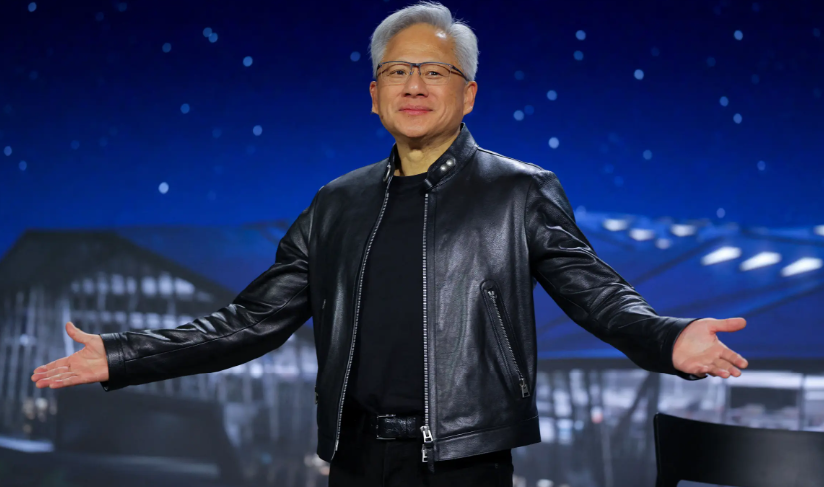
Jensen Huang does not look like a CEO under pressure. Standing before hundreds of journalists on the sidelines of Nvidia’s GTC 2026 conference in San José, the head of the world’s most valuable company projects calm confidence—and numbers to match.
“Our growth rate is accelerating,” Huang says. “We’re going to generate a lot of cash.”
But beyond the bullish outlook, Huang’s unusually open media session revealed something more strategic: a warning to Europe, a careful dance around China, and a firm rejection of the idea that Nvidia has missed the so‑called “inference moment” in artificial intelligence.
A friendly warning for Europe
Huang reserved some of his most pointed remarks for Europe—and Germany in particular. His message was flattering, but unmistakably urgent.
“I have good news for Europe,” he said. The continent has world‑class research, strong industrial champions, and political stability. What it lacks, in Huang’s view, is speed.
Europe, he argued, is uniquely positioned to benefit from AI because of its strength in automation, manufacturing, energy, and industrial systems. Yet adoption in business and government remains slow, fragmented, and overly cautious.
“Germany needs its own AI infrastructure,” Huang said bluntly. Without domestic compute capacity, Europe risks permanent dependence on non‑European cloud providers. Digital sovereignty, he implied, is not a slogan—it’s a capital expenditure decision.
His prescription was clear: invest aggressively in data centers, support open‑source AI models, and scale talent development. Otherwise, Europe may invent the future but fail to deploy it.
Hardware as strategy
On stage at GTC, Nvidia unveiled its latest data‑center hardware, including the Blackwell B200 GPU and the GB200 NVL72 server architecture, designed for energy‑efficient, high‑density AI workloads. These systems are optimized for generative models—and increasingly, for inference at scale.
The announcements underline Nvidia’s core strategy: staying several hardware generations ahead in a market where demand continues to outstrip supply. Competition is intensifying, with AMD, Intel, and specialized players like Cerebras and Tenstorrent all pushing alternative architectures.
Huang is unfazed. Nvidia’s advantage, he suggests, is not just chips—but a tightly integrated ecosystem of hardware, software, and developer tools.
China: constrained, but not abandoned
No conversation about Nvidia is complete without China. Under questioning, Huang reiterated that the company complies fully with U.S. export controls restricting the sale of high‑performance GPUs to Chinese customers.
At the same time, Nvidia is not walking away.
The company is developing “adapted products” for the Chinese market—systems that comply with regulations while allowing Nvidia to remain present in one of the world’s largest AI economies. It’s a delicate balance between geopolitics and business reality, and Huang made clear Nvidia intends
Did Nvidia miss the inference moment?
Critics have recently asked whether Nvidia focused too long on training massive AI models—and underestimated the importance of inference, the stage where models are deployed into real‑world applications.
Huang rejected the premise.
Inference demand, he said, is growing explosively, and Nvidia is well positioned to serve it with specialized hardware and optimized systems. Training and inference are not competing phases, but mutually reinforcing ones.
“We’re still at the very beginning of the AI revolution,” Huang said.
A warning wrapped in optimism
Huang’s tone throughout was strikingly open—far more candid than most tech CEOs of comparable stature. Beneath the optimism, however, sat a clear warning.
AI leadership is no longer just about research excellence or startup ecosystems. It is about infrastructure, execution, and speed. Countries and companies that hesitate may not get a second chance.
Europe, Huang suggested, still has time.
But not much.