China Just Open‑Sourced a Quantum Operating System - and That Changes the Race
Quantum computing has long been defined by scarcity.
Scarce machines. Scarce access. Scarce software.
A handful of companies allowed researchers to submit jobs through cloud portals, while the real control systems — the operating logic that actually runs quantum hardware — remained locked away.
China just broke that model.
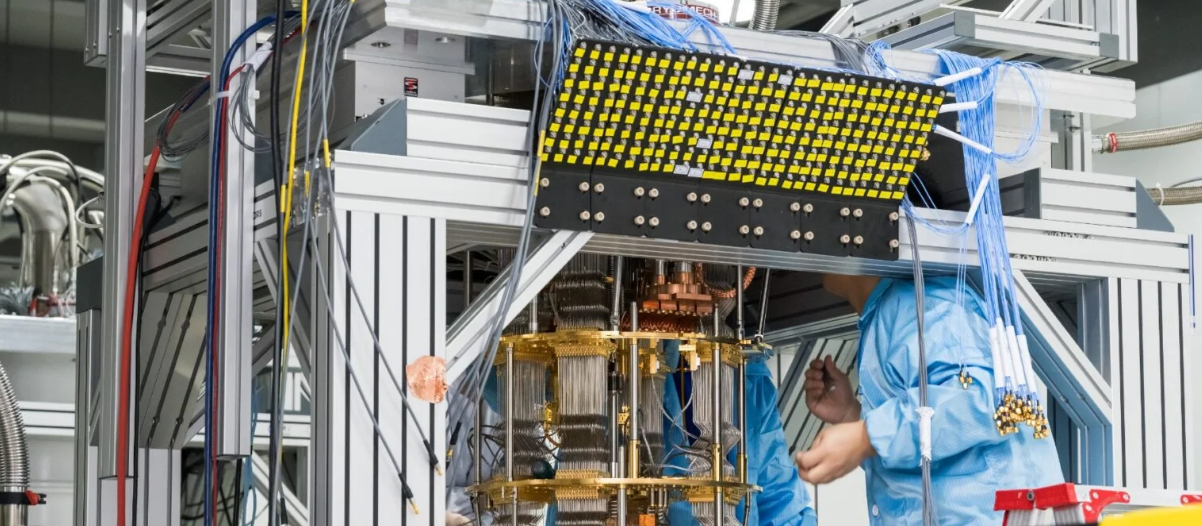
Last week, Hefei‑based Origin Quantum released Origin Pilot, its domestically developed quantum computer operating system, for public download. The software, which powers the company’s third‑generation superconducting quantum computer, Origin Wukong, is now available to researchers, developers and institutions outside the company — a rare move in a field defined by secrecy and tight control.
Chinese officials and researchers describe the release as more than a technical milestone. It is a strategic signal: quantum computing is moving out of the lab and into an industrial phase.
The “soft heart” of quantum machines
If quantum hardware is the body, Origin Pilot is the nervous system.
A quantum operating system does what Windows, Linux or macOS do for classical machines: it schedules tasks, manages hardware resources and coordinates between software and processors. But quantum machines add layers of complexity. Qubits are fragile, error‑prone and require constant calibration. Running multiple quantum jobs in parallel is a technical challenge few systems can handle reliably.
According to the Anhui Quantum Computing Engineering Research Center, Origin Pilot supports parallel quantum task execution, automatic qubit calibration, and hardware‑software coordination across multiple quantum architectures.
Guo Guoping, Origin Quantum’s chief scientist, called the operating system the “soft heart” of the quantum ecosystem — and framed its release as a shift away from what he described as “closed‑door tech innovation” toward open ecosystem development.
That framing matters.
Why “open” is the real story
Western quantum leaders like IBM and Google provide open programming frameworks and cloud access to their machines. But their underlying operating systems remain proprietary. Users can write code — but not touch the machinery that runs it.
Origin Pilot is different.
It is described as the world’s first openly downloadable quantum computer operating system, designed to run locally and integrate with multiple physical qubit platforms, including superconducting qubits, trapped ions and neutral atoms.
By standardizing drivers and interfaces, the system aims to reduce fragmentation in quantum software development — one of the field’s biggest bottlenecks. Developers can write once and run across different quantum hardware types, rather than rebuilding their stack for each machine.
This is not just about openness. It’s about scale.
From research project to industrial platform
Origin Pilot was first introduced in 2021 and has gone through multiple iterations. It is already deployed on China’s Origin Wukong quantum computers, which are accessible via cloud platforms to domestic users.
Its public release aligns closely with China’s broader industrial strategy. State media have identified quantum technology as one of six priority “industries of the future” under the country’s upcoming 15th Five‑Year Plan (2026–2030), alongside areas such as fusion energy, brain‑computer interfaces and 6G communications.
The message is clear: quantum computing is no longer treated as a distant scientific bet, but as infrastructure — something to be built, standardized and deployed.
A reality check
None of this means quantum computers are about to replace classical supercomputers. Today’s machines still struggle with error rates, limited qubit counts and narrow application domains. Origin Pilot does not solve those fundamental physics problems.
But software ecosystems shape who benefits when the hardware matures.
By releasing a full operating system rather than just tools or APIs, China is betting that control over the software layer will matter as much as breakthroughs in qubit design.
Quantum supremacy was a headline.
Quantum ecosystems are the endgame.
.png)