The Drone vs UGV Debate Is Missing the Point. Wars Are Won by Supply Networks, Not Machines
Military technology loves a false choice.
Tank versus missile.
Aircraft versus drone.
Human versus machine.
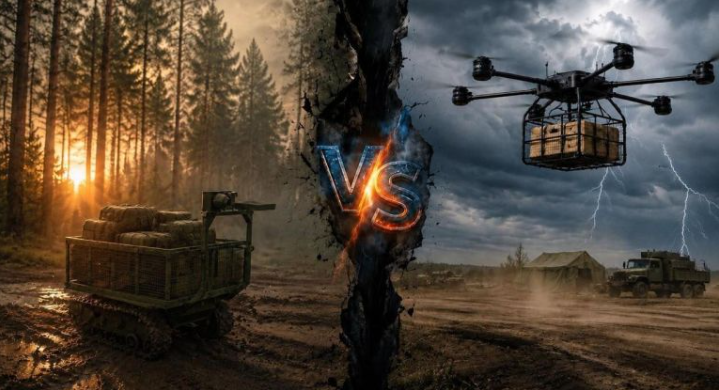
Now the latest debate emerging from the battlefield asks whether unmanned ground vehicles (UGVs) are superior to cargo drones for frontline logistics.
It is an attractive argument.
It is also the wrong one.
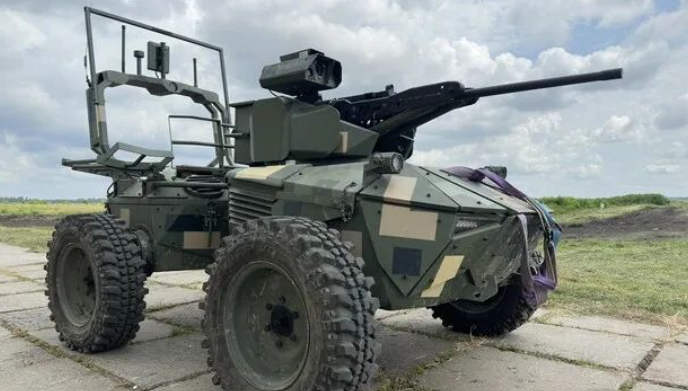
Recent claims surrounding Russia's Depesha-3 ground robot highlight a growing belief that tracked autonomous platforms could replace aerial logistics drones. The argument appears compelling. A ground robot can carry considerably heavier loads, operate for longer periods, transport casualties, and potentially maintain control through fiber-optic connections that are less vulnerable to electronic warfare.
In a battlefield increasingly saturated with jamming systems, that sounds like the future.
But focusing on whether robots are "better" than drones misunderstands the problem military logisticians are trying to solve.
Wars are not won by vehicles.
They are won by moving supplies.
The purpose of military logistics has always been brutally simple: deliver the right material, to the right location, at the right time, while exposing the fewest people to danger.
Every technological innovation should be judged against that standard.
Ground robots certainly offer impressive advantages.
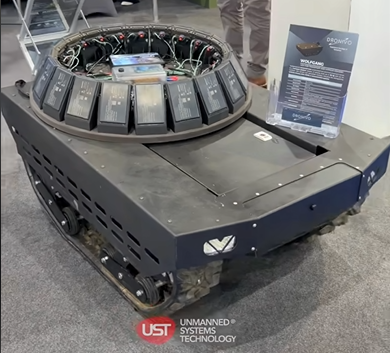
A tracked UGV can move ammunition, batteries, fuel, food, water, engineering supplies and other heavy cargo in quantities that would require multiple drone sorties. It can often perform a return mission carrying a wounded soldier, damaged equipment or evacuated supplies.
That changes the economics of tactical logistics dramatically.
Instead of risking crews in armored vehicles, militaries can increasingly send machines into contested areas.
Yet the battlefield is rarely cooperative.
Ground systems remain prisoners of geography.
A robot must follow a route.
Routes contain mines.
Routes contain craters.
Routes contain mud, rubble, trenches, destroyed infrastructure and enemy observation posts.
A vehicle capable of carrying hundreds of kilograms is useless if it cannot physically reach its destination.
That is where aerial logistics changes the equation.
Cargo drones are not superior because they fly.
They are superior because they ignore terrain.
A drone can reach isolated positions, bypass obstacles, cross rivers, avoid damaged roads and deliver critical supplies directly into areas where ground movement has become impossible.
When a frontline unit urgently requires batteries, medical supplies or communications equipment, speed often matters more than payload.
The downside is equally obvious.
Drones carry limited weight.
Weather affects performance.
Flight endurance remains constrained.
Electronic warfare continues to evolve.
Intercepting or disrupting aerial systems remains a priority for military planners worldwide.
The strengths of one platform are almost perfectly matched by the weaknesses of the other.
Which is exactly why the future belongs to both.
The most successful military organizations are increasingly discovering that battlefield logistics is becoming a layered ecosystem rather than a single transport solution.
Heavy routine resupply can move through ground robotics when viable routes exist.
Urgent lightweight cargo can be delivered through aerial platforms.
Crewed vehicles remain essential farther from the front line.
Reconnaissance assets identify safe corridors.
Engineers clear obstacles.
Communications systems coordinate movement.
Recovery teams retrieve damaged platforms.
The result is not competition.
It is integration.
This mirrors a broader trend across modern warfare.
The military organizations that adapt fastest no longer ask which weapon, vehicle or technology should dominate.
They ask how every capability can reinforce every other capability.
That mindset matters because battlefield logistics is rapidly becoming one of the decisive determinants of combat effectiveness.
Precision weapons attract headlines.
Drones dominate social media footage.
Artificial intelligence captures investor attention.
But armies still depend on food, fuel, ammunition, medical supplies and maintenance.
The glamorous systems at the front depend entirely upon the unglamorous logistics network behind them.
That reality has not changed in centuries.
What has changed is how those supplies move.
Robotics is not eliminating logistics problems.
It is creating new ways to solve them.
The future battlefield will not be supplied by trucks alone.
Nor by drones alone.
Nor by autonomous ground vehicles alone.
It will be sustained by interconnected networks of machines operating across air and land, supported by human decision-makers who understand the strengths and limitations of each system.
The winner of tomorrow's logistics race will not be the army with the biggest drone fleet or the most advanced ground robot.
It will be the army that knows exactly when to use each.
Because in modern warfare, the decisive platform is no longer the vehicle.
It is the network.