The Robot Mule Goes to War. Dronivo’s Wolfgang UGV Takes the Load Off Soldiers
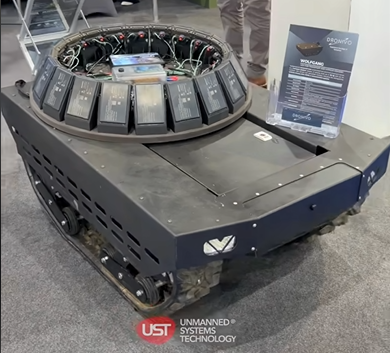
The most important military robot on tomorrow’s battlefield may not carry a gun.
It may carry ammunition, batteries, medical equipment, sensors, food and everything else soldiers need to stay in the fight.
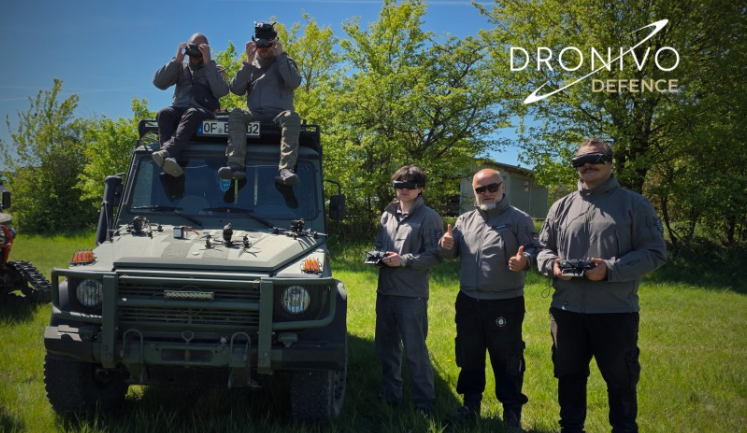
Dronivo GmbH has showcased its Wolfgang unmanned ground vehicle during a military exercise, presenting a compact robotic platform designed for logistics and payload transport. With a payload capacity of up to 150 kilograms and an operational endurance of up to six hours, Wolfgang represents a growing shift in defence technology: using autonomous and remotely operated vehicles to remove physical burden and unnecessary risk from human soldiers.
Modern military units depend on a constant flow of supplies. Ammunition must move forward. Injured personnel may need to be evacuated. Batteries for drones, radios and electronic systems must be replaced. Sensors and communication equipment must be transported across difficult terrain.
Traditionally, much of this burden has fallen directly on soldiers or on larger crewed vehicles.
Both options create problems.
A heavily loaded soldier becomes slower, more tired and less effective. A crewed logistics vehicle is larger, easier to detect and may expose personnel to mines, artillery, drones or direct fire.
A small unmanned ground vehicle offers a different solution.
Wolfgang can act as a robotic carrier, following units into operational areas while transporting heavy or bulky equipment. Its 150-kilogram payload capacity could allow it to carry multiple supply boxes, drone systems, communication equipment or mission-specific payloads that would otherwise require several soldiers.
Its six-hour endurance also makes it suitable for patrols, resupply missions and extended training scenarios where constant human control or frequent battery changes would reduce its value.
The real strength of a platform like Wolfgang is not one single capability. It is flexibility.
A logistics UGV can potentially be adapted for different missions through modular payloads. On one mission, it could carry ammunition and water. On another, it could transport surveillance equipment, electronic-warfare systems or communication relays. With the right configuration, similar platforms could also support casualty evacuation or operate as mobile power stations for drone teams.
This modular approach is becoming increasingly important as armed forces move toward distributed and technology-heavy operations.
Small units now rely on more electronic equipment than ever before. Reconnaissance drones, counter-drone sensors, secure radios and targeting systems all require power, spare parts and transport. A robotic logistics platform can help sustain these systems without increasing the physical load on personnel.
The military-exercise environment is particularly important for demonstrating such technology.
A controlled demonstration can make a vehicle look impressive. A military exercise tests whether it can work alongside soldiers, follow real procedures and remain useful under operational pressure.
Questions such as terrain mobility, communication range, reliability, noise, navigation and ease of control become much more important outside a showroom.
The greatest challenge for logistics robots is not simply carrying weight. It is carrying weight reliably through mud, slopes, damaged roads, forests and urban terrain while maintaining contact with the unit.
Military users will also expect the vehicle to operate in poor weather, resist electronic interference and continue functioning when satellite navigation or communications are degraded.
Another major question is autonomy.
A remotely controlled vehicle still requires a dedicated operator. A more autonomous platform could follow soldiers, navigate between points or return to a safe area with less human input. However, greater autonomy also creates technical and security challenges, especially in contested environments.
Even with these limitations, the direction is clear.
Unmanned ground systems are moving from experimental technology toward practical battlefield tools. Their value may be highest not in replacing tanks or soldiers, but in handling the dangerous, exhausting and repetitive tasks that reduce combat effectiveness.
Wolfgang is part of that shift.
It does not need to look futuristic or carry a weapon to matter. By moving 150 kilograms of equipment for up to six hours, it could give soldiers more mobility, reduce fatigue and keep humans farther away from danger.
The future battlefield will not be shaped only by faster missiles and smarter drones. It will also depend on whether armies can move supplies, power and equipment efficiently under fire.
Sometimes the most disruptive military robot is simply the one carrying the bags.
%20(1).jpg)