The Drone Hit-Rate Myth. Ukraine’s War Cannot Be Reduced to One Percentage
For years, the public debate over drone warfare in Ukraine has revolved around one irresistible question:
What percentage of drones actually hit their targets?
It sounds precise. It sounds measurable. It sounds like the number that should settle every argument about cost, procurement and battlefield value.
According to a completed 12-part analysis by Belgian defence practitioner Tim De Zitter, it may also be the wrong question.
His series, Measuring Drone Effectiveness in Ukraine, examines public evidence from 2025 and 2026 across tactical FPV drones, fibre-optic systems, front and middle-strike platforms, long-range Ukrainian aircraft and Russian Shahed or Geran operations.
Its central conclusion is both simple and disruptive: drone effectiveness is not one probability. It is a chain.
A drone must be serviceable. It must launch successfully, navigate, survive electronic warfare, locate the target, complete its terminal attack and physically strike. Even then, impact does not automatically mean destruction. And destruction does not necessarily equal meaningful military effect.
Compressing that chain into a single “hit rate” creates the illusion of clarity while concealing what commanders, manufacturers and procurement officials actually need to understand.
Consider the widely discussed figure suggesting that around 40 percent of FPV drones succeed. What is the denominator? Every drone delivered? Every drone issued? Every attempted launch? Every platform that reached the target area? And what counts as success: contact, visible damage, a confirmed kill or disruption of the enemy mission?
Change the denominator and the rate changes with it.
This helps explain why apparently contradictory claims can coexist. A unit may report 70 to 80 percent success among drones that reach the terminal phase, while a larger dataset shows a much lower proportion across all systems committed to operations. Both figures could describe reality, but at different points in the effectiveness chain.
Distance further complicates the picture. A short-range FPV mission against a visible vehicle is not statistically comparable to a deep strike across hundreds of kilometres. The latter may be intended to penetrate air defences, force dispersal, consume interceptors or disrupt production. Judging both solely by visible impacts is analytically careless.
The same warning applies to fibre-optic FPV drones. Their physical link can bypass conventional radio-frequency jamming, but it does not abolish terrain, mechanical failure, operator error, defensive fire or terminal-attack problems. Defeating one attrition mechanism is not the same as eliminating attrition.
Then there is the seductive power of combat footage.
Strike videos dominate social media because successful attacks are recorded, selected and published. Missing from the feed are aborted missions, defective aircraft, navigation failures and drones that never acquired a target. Viral footage can demonstrate that a capability exists. It cannot, by itself, establish a representative success rate.
Perhaps the most important distinction is between hitting a platform and creating an effect.
Damaging a tank and destroying it are not identical outcomes. Nor is destroying one vehicle necessarily more consequential than attacking a command post, communications relay, fuel point or logistical node. The most valuable target may not be the most visually spectacular one.
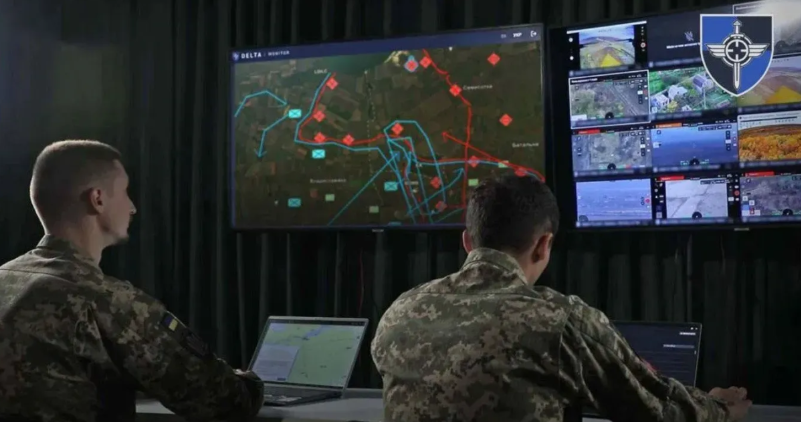
This is where Ukraine’s evolving battlefield data may become strategically decisive. The military that can consistently distinguish failure at launch from failure in navigation, acquisition, penetration or warhead effect can improve training, redesign hardware and allocate missions with far greater precision.
The real drone learning curve, therefore, is not a neat rise from 40 to 80 percent.
It is the transition from counting dramatic videos to understanding complete mission chains.
The side that masters that distinction will not merely build more drones.
It will waste fewer of them, learn faster and turn battlefield data into combat power.