The Day Europe Realized Its Security Had an Owner: Ukraine, Starlink and the Race for Sovereignty in Space
For decades, military power was measured in tanks, aircraft, missiles and soldiers.
Ukraine has added something else to that list: bandwidth.
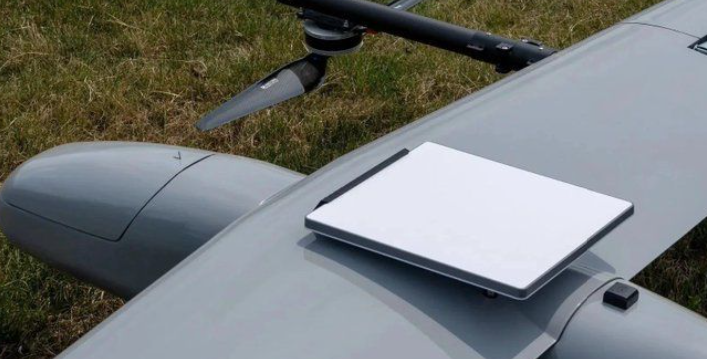
The latest Starlink controversy is therefore much bigger than an argument over internet speed. Reports from Ukraine indicate that high-speed satellite connectivity used by airborne systems remained restricted on October 23, with Ukrainian officials reporting connection problems around the 140–160 km/h range. Some operators saw improvements, but full functionality had not been confirmed.
That should make Europe uncomfortable.
Because the lesson is brutally simple: a military can own the drone, train the operator, develop the software and plan the mission, yet remain dependent on somebody else's infrastructure to connect it all together.
That is not merely a technology problem.
It is a sovereignty problem.
Ukraine has demonstrated just how central satellite communication has become to modern warfare. Reporting on the disruption says Ukrainian operations involving drones, reconnaissance, logistics and data transmission were affected, with some missions cancelled.
And this is where the Starlink story becomes strategically important far beyond Ukraine.
For years, defence debates concentrated on platforms: Who has the better fighter? The longer-range missile? The more capable drone?
But the digital battlefield has another layer underneath all of them.
Connectivity.
A sophisticated drone without a reliable communications link can rapidly become a very expensive object in the sky. A distributed military without resilient communications becomes harder to coordinate. Increasingly, the question is not simply who owns the weapons, but who owns the network connecting them.
That gives satellite infrastructure enormous strategic importance.
And Europe has noticed.
Its long-term answer is IRIS², the EU's planned secure satellite constellation. Current plans envisage 348 satellites, including 330 in low Earth orbit and 18 in medium Earth orbit. The first satellites are scheduled for launch in 2029.
The ambition goes beyond creating another broadband provider.
IRIS² is intended to provide secure connectivity for governments, businesses and citizens, while serving security, defence and critical-service requirements. Europe has also signalled its willingness to involve Ukraine.
In other words, Europe is beginning to treat satellite connectivity not merely as a commercial service, but as strategic infrastructure.
That distinction may define the next phase of European defence.
Because sovereignty in the 20th century meant controlling your territory, industrial base and armed forces.
In the 21st century, it increasingly means controlling the digital and orbital infrastructure on which those forces depend.
Europe learned a painful lesson about energy dependency after Russia's invasion of Ukraine.
The Starlink debate raises a similarly uncomfortable question about technological dependency:
What happens when strategically essential infrastructure belongs to an external provider whose operational decisions Europe does not control?
The answer cannot simply be to replace one monopoly with another.
Real resilience requires alternatives, redundancy and the ability to keep critical communications functioning when political, commercial or technical conditions change.
IRIS² therefore represents something considerably larger than 348 satellites.
It represents an attempt to give Europe another layer of strategic autonomy.
But there is a problem.
2029 is still years away.
Ukraine is fighting now.
That gap between today's dependency and tomorrow's sovereignty may be one of Europe's most consequential security challenges.
The Ukrainian battlefield has repeatedly demonstrated that technologies once considered supporting infrastructure can quickly become central to combat power.
Drones did it.
Artificial intelligence is doing it.
Satellite communications are doing it now.
The next great military competition will not only be about who has the best weapons.
It will be about who owns the networks that make those weapons work.
And Europe is discovering that sovereignty does not stop at its borders.
It extends all the way into orbit.