Sweden Gripen for Ukraine - Europe Just Stopped Donating Fighters and Started Building an Air Force
A fighter jet delivery can be military aid.
A fleet strategy can reshape a nation’s future.
Sweden's newly announced Gripen package for Ukraine appears to be the latter.
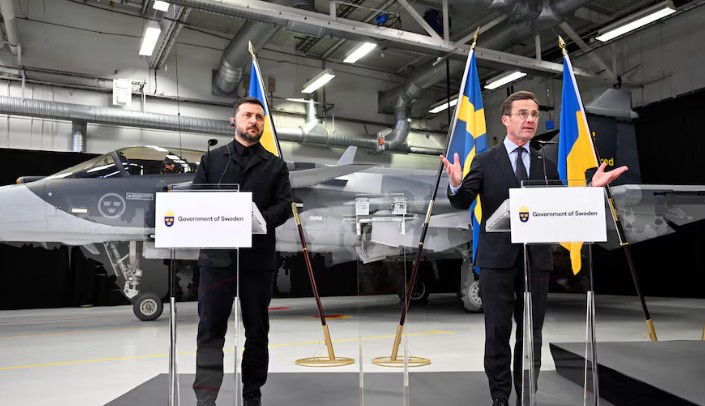
Following a meeting between Ukrainian President Volodymyr Zelenskyy and Swedish Prime Minister Ulf Kristersson, both countries confirmed a landmark agreement that could fundamentally alter the trajectory of Ukraine's air power. The plan combines the donation of 16 Gripen C fighter aircraft with the future procurement of up to 20 next-generation Gripen E/F fighters financed through EU-backed funding.
At first glance, the announcement may look like another fighter transfer in a long list of military aid packages. In reality, it signals something much larger: Europe is helping Ukraine build a modern air force rather than simply keeping one alive.
The structure of the agreement is what makes it significant.
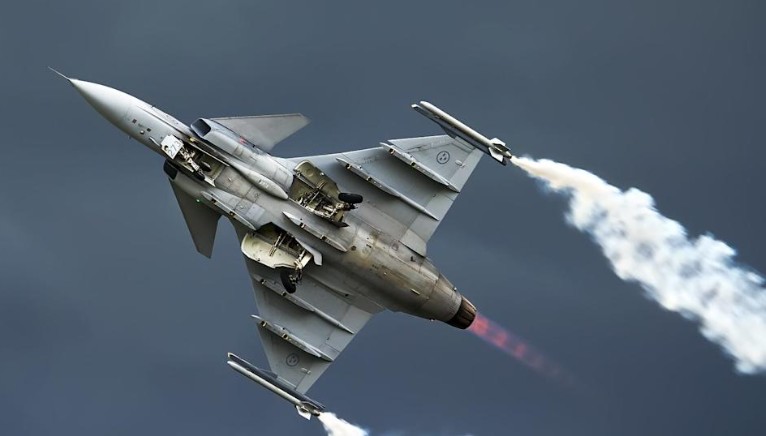
The donated Gripen C aircraft are expected to arrive in early 2027. These aircraft provide Ukraine with an immediate pathway into the Gripen ecosystem while offering additional combat capability during an ongoing war. The newer Gripen E fighters are scheduled for delivery beginning around 2030, creating a long-term modernization roadmap rather than a one-time equipment transfer.
This dual-track approach mirrors how successful air forces are built. Pilots, technicians, logistics personnel, maintenance infrastructure, weapons integration, training programs, and industrial partnerships all require years to mature. The Gripen package creates continuity between present battlefield needs and future force development.
For Ukraine, the aircraft themselves are particularly relevant.
Unlike many Western fighters originally designed around large and secure air bases, the Gripen was developed during the Cold War with a different philosophy. Sweden expected potential attacks on fixed infrastructure and therefore prioritized dispersed operations. Gripens can operate from highways, remote road bases, and austere locations while requiring relatively small maintenance teams and rapid turnaround times.
That concept aligns closely with Ukraine's operational reality.
Russian missile strikes, long-range drones, and precision-guided munitions continuously threaten airfields and military infrastructure. Survivability increasingly depends on mobility, dispersion, and the ability to generate sorties from multiple locations.
The Gripen was effectively built for that challenge.
The larger strategic significance, however, extends beyond aircraft performance.
The Swedish support package includes ammunition, electronic warfare capabilities, long-range strike assets, drone-production funding, and defense innovation cooperation. This reflects a growing understanding among European defense planners that modern warfare is won through networks rather than individual platforms.
Fighters alone do not secure air superiority.
Air superiority emerges from the integration of sensors, electronic warfare systems, drones, intelligence networks, munitions stockpiles, maintenance capacity, and industrial resilience. Sweden's package addresses several of these layers simultaneously.
For Europe, the decision represents an important shift in defense thinking.
Since the start of the war, much of Western military assistance has focused on transferring available equipment from existing inventories. This approach was necessary but inherently temporary. The Gripen program points toward a different model: helping Ukraine establish permanent military capabilities that can grow over decades.
The numbers illustrate the ambition.
While the current package includes 16 donated Gripen C aircraft and up to 20 Gripen E fighters, a broader framework agreement signed in 2025 reportedly envisioned the possibility of Ukraine eventually acquiring between 100 and 150 Gripen aircraft.
If realized, such a fleet would represent one of Europe's most significant fighter programs of the coming decades.
Whether Ukraine ultimately reaches that scale remains uncertain. Funding, production capacity, pilot training, and the course of the war will all influence future decisions.
What is already clear is that the conversation has changed.
Europe is no longer discussing how to sustain Ukraine's air force for the next year.
It is beginning to design what Ukraine's air force could look like for the next generation.