Frankenburg Technologies and the End of Exquisite Air Defence
urope’s air defence problem is no longer hypothetical—it is flying overhead.
Since late 2025, small unmanned drones have repeatedly crossed into EU airspace, grounding airports and probing military infrastructure from Poland to Germany. Nineteen incursions into Polish airspace alone represented the most serious NATO airspace violation in 75 years. The drones were not advanced. They were cheap, expendable, and plentiful.
The response exposed a deeper vulnerability.
Western air defence systems were built to defeat aircraft and ballistic missiles—high‑end threats with correspondingly high‑end interceptors. Using those missiles against drones costing a few thousand euros is not just inefficient; it is strategically unsustainable. The economics favour the attacker.
This is the imbalance Frankenburg Technologies, an Estonian defence start‑up founded in early 2024, was created to address.
Led by Kusti Salm, former Permanent Secretary of the Estonian Ministry of Defence and a former European Defence Agency official, Frankenburg has a blunt ambition: build missiles designed for drones instead of adapting missiles meant for jets—and make them cheap enough to fire without hesitation.
“It’s about redefining the economics of air defence,” Salm says. Not improving interception rates by marginal percentages, but changing the cost equation that currently incentivises mass drone attacks.
Russia’s drone strategy illustrates the problem perfectly. Estimates indicate more than 6,000 one‑way attack drones produced in 2024, with days in 2025 seeing between 500 and 700 launched at once. These platforms exist not because they are difficult to stop—but because stopping them is too expensive.
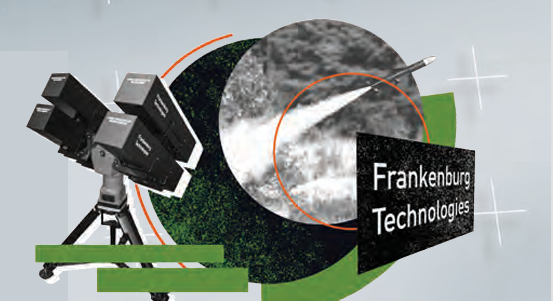
Frankenburg’s response is the Mark 1 interceptor, a purpose‑built, short‑range missile designed specifically to destroy low‑ and slow‑flying drones. According to the company, it is the smallest guided missile ever produced, with production costs in the low five‑figure euro range—more than ten times cheaper than many traditional surface‑to‑air interceptors.
The Mark 1 makes deliberate trade‑offs. It is not designed for Arctic winters or desert heat. It is not intended for long‑term storage or multi‑decade service lives. It does not aim to counter fighter aircraft or ballistic missiles. Every one of those requirements adds cost, complexity, and time.
Instead, Mark 1 reflects a war‑driven philosophy: build what the battlefield actually needs today.
Technically, it uses solid rocket fuel, AI‑powered guidance, and proximity detonation within a two‑kilometre range. Operationally, it exists to be deployed in numbers—on mobile platforms or fixed installations—around critical infrastructure, military bases, and front‑line logistics hubs.
What sets Frankenburg apart is not only what it builds, but how fast it builds it.
Rather than following traditional defence development cycles—where live tests occur a few times per year—Frankenburg has conducted missile tests several times per month on NATO‑authorised ranges. This enables near‑real‑time iteration, compressing development timelines from decades to months.
The company’s leadership experience makes that pace credible.
Frankenburg’s engineering director previously led development on the IRIS‑T missile system. Production is overseen by a veteran of large‑scale automotive manufacturing. Engineers from MBDA in the UK have joined the team. Its advisory and leadership ranks include former defence chiefs and senior NATO commanders.
This is not ceremonial expertise—it directly shapes design decisions.
“Building missiles is hard,” Salm notes. “There are very few people in Europe who have done it at system level.” Frankenburg’s approach is to concentrate that scarce expertise on simplicity, speed, and scale.
Already selling to one NATO ally, the company believes production could reach 100 missiles per day, with ambitions to scale into the thousands. Analysts estimate more than 2,000 critical infrastructure sites along NATO’s eastern flank alone—each potentially requiring hundreds of interceptors during a sustained drone assault.
Looking forward, Frankenburg plans to expand toward longer‑range interceptors and additional threat classes, but its core innovation remains unchanged: rapid development cycles measured in months, not decades.
In the age of drones, perfection is a liability. Affordability is a capability.
Frankenburg Technologies is betting that Europe’s future air defence will be defined not by exquisite missiles—but by ones forces can afford to fire.