eBee X Breaks the Horizon - Why EagleNXT’s Drone Is Quietly Redefining Romania’s BVLOS Politics

The approval of EagleNXT’s eBee X for Beyond Visual Line of Sight (BVLOS) operations in Romania may appear like a routine regulatory milestone. In reality, it represents something far more important: a signal that long-range drone operations are moving from experimental capability to operational infrastructure.
For years, drones have been trapped in a regulatory paradox. The technology advanced rapidly — offering longer endurance, better sensors, and autonomous navigation — while regulations limited their use to short-range, line-of-sight missions. This mismatch slowed the adoption of unmanned aerial systems in sectors where they could deliver the greatest value.
BVLOS approvals change that equation.
The Romanian Civil Aviation Authority’s certification now allows the eBee X to operate far beyond the pilot’s direct visual control. This seemingly technical distinction unlocks entirely new operational concepts. Instead of short inspection flights, drones can now conduct long-range missions across large infrastructure networks, border regions, rural environments, and disaster zones.
In practical terms, this transforms drones from tactical tools into operational assets.
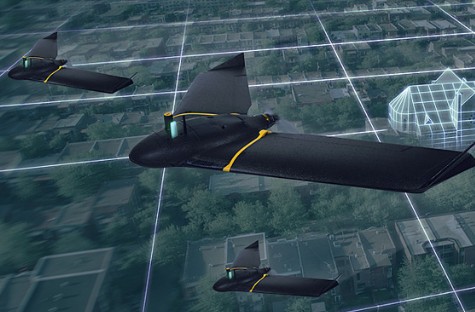
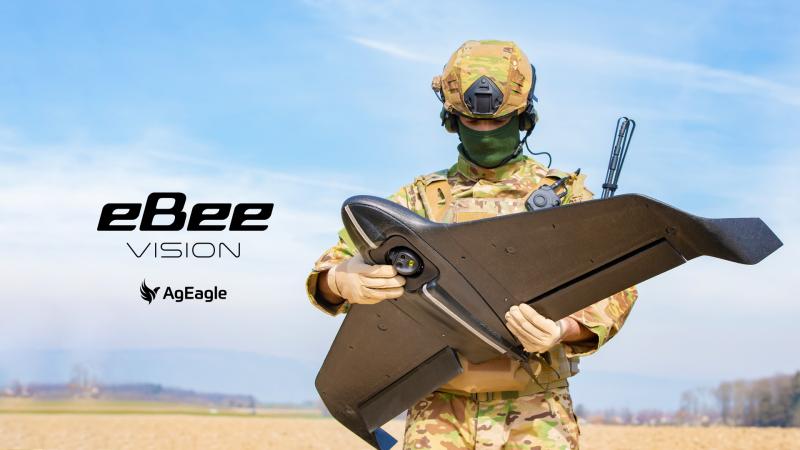
The eBee X is particularly suited for this transition. As a fixed-wing drone platform, it combines long endurance with efficient aerodynamics, enabling flights covering tens of kilometers in a single mission. Unlike multi-rotor drones that hover and operate locally, fixed-wing systems behave more like small aircraft — capable of mapping large areas quickly and reliably.
This capability is especially valuable for sectors where scale matters.
Critical infrastructure operators, for example, increasingly require continuous monitoring of pipelines, power lines, railways, and transportation corridors. Traditional inspection methods rely on helicopters, vehicles, or ground teams, which are expensive, slow, and often dangerous. BVLOS drone operations dramatically reduce those costs while increasing the frequency and quality of inspections.
Public safety agencies also stand to benefit. Long-range drones can support search-and-rescue missions, wildfire monitoring, and disaster response operations in areas where helicopters may be unavailable or unsafe. In remote regions, drones can provide rapid situational awareness during floods, earthquakes, or large-scale accidents.
The Romanian approval also carries broader strategic significance for Europe’s drone ecosystem.
Under the European Union Aviation Safety Agency (EASA) framework, drone regulations are gradually becoming harmonized across member states. The C6 class identification of the eBee X enables operations under Standard Scenario STS-02, which is specifically designed for BVLOS missions in sparsely populated areas.
This regulatory architecture matters because it reduces fragmentation. Instead of navigating completely different rules in each country, drone operators can increasingly rely on standardized frameworks. Once a platform proves compliance in one member state, adoption in others becomes significantly easier.
Romania’s certification therefore functions as both a national approval and a regional precedent.
Another important element behind this milestone is collaboration between technology providers and local partners. In this case, SysCAD Solutions S.R.L., EagleNXT’s Romanian partner, played a key role in navigating regulatory requirements and demonstrating operational safety.
Such partnerships are becoming essential in the drone industry. Advanced hardware alone is no longer enough. Successful deployment requires regulatory expertise, local operational knowledge, and integration with national aviation authorities.
As Europe continues to integrate drones into its airspace, these cooperative ecosystems will determine how quickly unmanned aviation scales.
The broader implication is clear: the drone industry is entering a new phase. The conversation is shifting away from whether drones are useful and toward how they can be integrated into critical systems.
Platforms like the eBee X illustrate this evolution. They are no longer simply flying cameras or experimental technologies. They are becoming infrastructure tools — part of the digital backbone that monitors, protects, and manages modern societies.
BVLOS approvals may not generate dramatic headlines, but they quietly remove one of the final barriers to large-scale drone operations.
And when those barriers fall, the sky stops being a limit.
It becomes a network.