Russia's New Drone Equation. Ukraine May Have Just Lost Its Warning Time
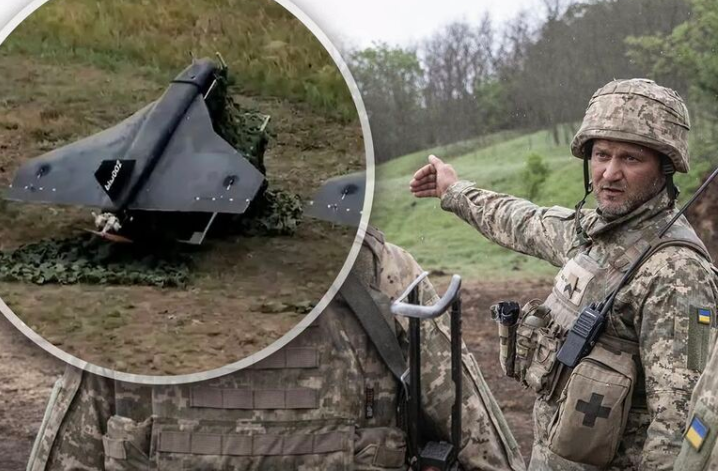
For much of the war, Ukraine learned how to live with the sound of the Geran.
The Iranian-designed Shahed and its Russian-produced variants became a familiar part of the conflict's rhythm: relatively slow, noisy, propeller-driven drones that usually provided defenders and civilians with precious minutes, and sometimes hours, of warning.
That advantage may be shrinking.
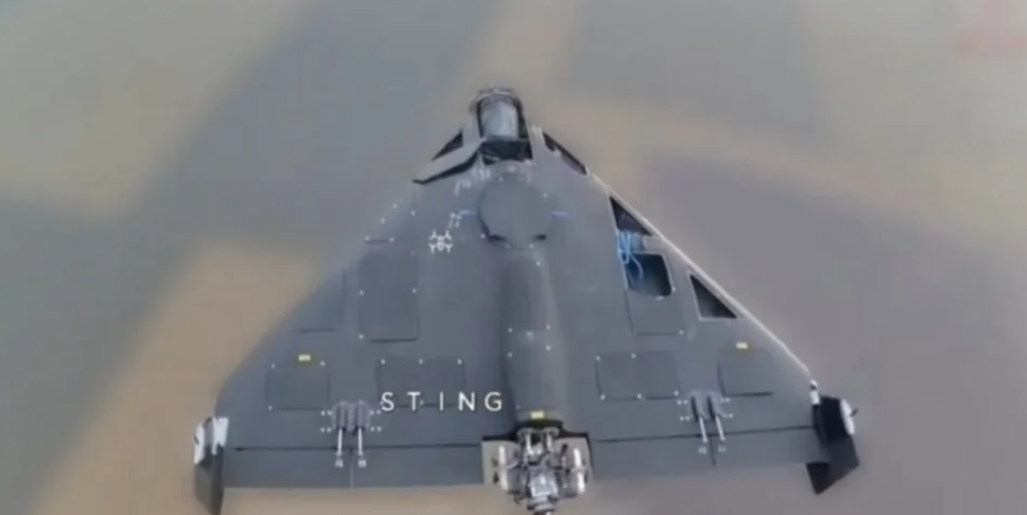
A Russian jet-powered Geran UAV reportedly flew nearly 900 kilometers from occupied Crimea to western Ukraine on August 18, following an unusually complex route designed to avoid known air-defense zones.
If confirmed, this would represent far more than a record-range mission.
It could signal a fundamental evolution in Russia's long-range strike campaign.
The key issue is not simply distance.
It is speed.
For years, the Geran-2 has been one of Russia's most effective strategic weapons not because it is technologically advanced, but because it is cheap, abundant, and difficult to stop at scale. Russia transformed drone warfare into a form of industrial attrition, launching hundreds of UAVs in mass attacks designed to overwhelm Ukrainian defenses.
Defenders adapted.
Ukraine built increasingly sophisticated interception networks. Mobile fire teams, electronic warfare systems, radar coverage, and layered air defenses significantly improved the ability to destroy incoming drones.
But these defenses evolved against a particular threat profile.
Slow-moving drones.
The emergence of the jet-powered Geran changes the equation.
A faster drone compresses every stage of the defensive cycle:
Detect. Identify. Classify. Decide. Intercept.
Each step suddenly becomes more difficult.
The difference can be measured not in hours, but in minutes.
And in air defense, minutes are often everything.
What makes this latest flight particularly significant is the route reportedly chosen by the drone. Rather than taking a direct approach, it appears to have followed a path designed to exploit gaps in coverage and avoid areas where Ukrainian anti-drone systems are commonly deployed.
That suggests something important.
Russia is not just introducing a new platform.
It is learning how to employ it operationally.
Military innovation is rarely about a single piece of technology. The real advantage emerges when a military combines technology with new tactics, new routes, new operational concepts, and new ways of exploiting weaknesses in the opponent's defenses.
This is exactly what makes the development concerning.
The drone itself matters.
The learning process behind it matters even more.
For Russia, the attraction is obvious.
A jet-powered Geran offers several advantages simultaneously.
Greater speed reduces reaction times.
Extended range increases target options.
More complex routing complicates interception.
And perhaps most importantly, the weapon can continue serving the same strategic purpose as earlier Gerans: exhausting Ukrainian air defenses while imposing constant uncertainty.
The psychological dimension should not be underestimated.
Air-raid alerts are effective partly because citizens have time to react.
A faster strike architecture shortens that window.
The difference between a one-hour warning and a ten-minute warning can dramatically affect civilian preparedness, emergency response, and infrastructure protection.
Military targets face the same challenge.
Logistics facilities, command centers, airfields, and energy infrastructure all depend on early warning to activate protective measures.
The shorter the warning cycle becomes, the higher the probability of successful strikes.
This development also fits a broader pattern visible throughout the war.
Drone warfare is becoming increasingly polarized.
On one end of the spectrum, cheap FPV drones dominate tactical operations near the frontline.
On the other, long-range strike drones are gradually evolving into something closer to miniature cruise missiles.
The distinction between drone and missile is beginning to blur.
Jet propulsion accelerates that process.
For Ukrainian planners, the challenge is obvious.
Many air-defense systems were optimized against specific classes of threats. As drone speed, routing flexibility, and range increase, existing defensive architectures must adapt.
The issue is no longer simply shooting down drones.
It is detecting them early enough to shoot them down.
That may require additional radar coverage, wider sensor integration, greater automation, and faster decision-making processes.
The larger strategic implication is perhaps the most important.
For much of the war, Ukraine enjoyed a degree of predictability regarding Russia's long-range drone campaign. The threat was serious, but generally understood.
A 900-kilometer jet-powered strike suggests that predictability may be disappearing.
Every war eventually reaches a point where one side introduces a capability that changes assumptions rather than outcomes.
This may be one of those moments.
The immediate military impact of a single drone flight is limited.
The questions it raises are not.
If Russia can routinely launch jet-powered drones across nearly the entire depth of Ukraine while reducing warning times and avoiding established defense corridors, then the country's long-range security architecture will face a new challenge.
The most dangerous development is not the drone itself.
It is the possibility that Russia has begun transforming its drone campaign from a war of quantity into a war of speed.