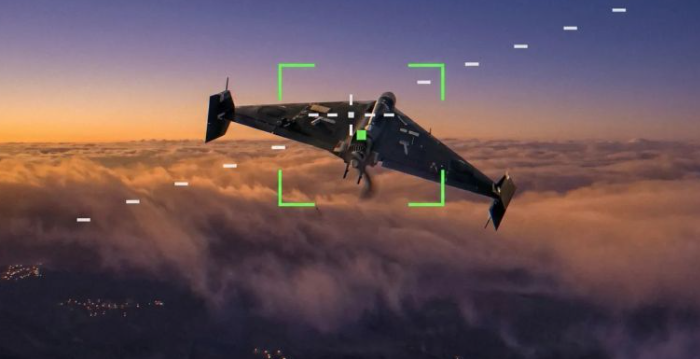
From Silent Gliders to Networked Killers - The Shahed Drone’s Fatal Evolution
For the first year of Russia’s drone war, the Shahed was terrifying not because it was advanced — but because it wasn’t.
The Iranian-designed kamikaze drone that Russia rebranded as Geran, Herbera, or Molniya was brutally simple. No radio uplink. No operator watching a screen. No commands once it launched. It followed pre‑programmed GNSS coordinates, leaned on inertial navigation when GPS faltered, and flew straight into its target. Then it disappeared — physically and electronically.
For defenders, that simplicity was a nightmare. No radio emissions meant no radio detection. Air defenses had to rely on sound, optics, or luck. Cheap engines, wooden airframes, mass production. Quantity became its own weapon.
That era is over.
Over the past year, Russia has quietly transformed its strike drone fleet by adding something Shaheds were never supposed to have: a voice.
The mesh modem revolution
Wreckage analysis and field intelligence now confirm the large‑scale integration of Chinese-made XK‑series MESH radio modems across Russia’s long‑range UAVs. These aren’t hobbyist radios. They’re industrial‑grade mesh networking devices — the same class used for resilient battlefield communications and critical infrastructure.
With these modems installed, Shaheds are no longer fire‑and‑forget. Operators can update routes mid‑flight, monitor telemetry, and in some configurations receive live video. Drones can relay data between each other, forming a distributed airborne network rather than a single vulnerable link.
Technically, the design choices are deliberate.
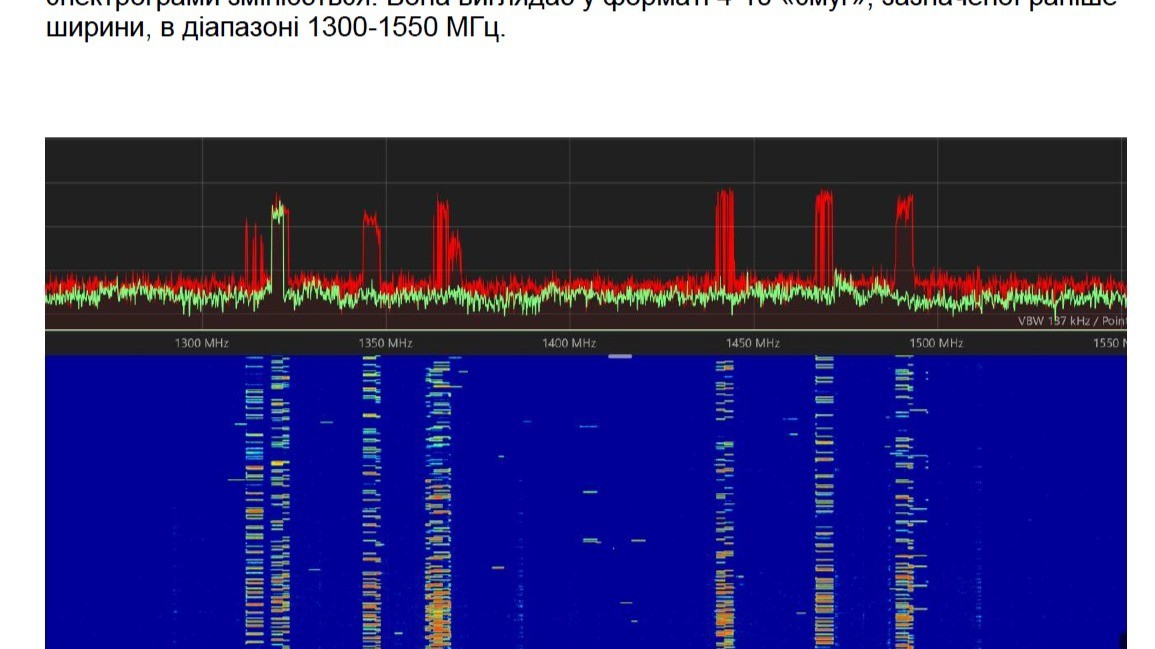
The modems operate primarily in the 1.3–1.5 GHz and 3.2–3.4 GHz bands — spectrum that sits between GNSS frequencies, sees little civilian traffic, and offers long‑range propagation. Transmit power has climbed dramatically, reaching up to 60+ watts per drone. Adaptive frequency hopping spreads emissions across the band, complicating jamming and interception.
This isn’t an experiment anymore. The same modem family has been identified on Geran/Shahed, Herbera, Molniya, V2U, Kub, and Skalpel UAVs. Russia isn’t upgrading a drone. It’s standardizing an ecosystem.
Smarter — and suddenly visible
But every upgrade has a cost.
The original Shahed was silent. The new one is not.
A mesh‑enabled drone must transmit — constantly. Telemetry pings. Network synchronization. Video bursts. When searching for a link, the modem emits high‑power beacons that cut through the spectrum like a flare in the dark.
On a waterfall display, the signatures are unmistakable. Sparse, hopping bursts during cruise. Dense, parallel spectral columns when video activates. Loud synchronization pulses when the network is hunting for nodes. Each mode leaves a fingerprint.
What once slipped past radio sensors is now broadcasting its presence for hours.
This is the paradox of modern warfare: intelligence makes systems more capable — and more observable.
Why detection is catching up
This shift is forcing a rethink in air defense. Acoustic sensors still matter. Visual spotters still matter. But radio-frequency awareness is becoming decisive again — not by chasing control links, but by recognizing behavior.
Modern RF detectors don’t need to decode the signal. They don’t need encryption keys. They only need to know how it moves, how it breathes, how it searches.
That’s the battlefield Shaheds have entered.
The enemy is building a unified mesh network in the sky.
The counter is learning how to see it.
And in a war where seconds matter, being seen may prove more dangerous than being slow.

.png)