600 km/h vs. Shahed: Ukraine Is Building the Fighter Jets of the Drone Age
The drone war is entering a new phase.
For more than two years, Ukrainian air defenses have learned how to fight propeller-driven threats: Shahed drones, reconnaissance UAVs, and various loitering munitions. Radar systems adapted. Electronic warfare evolved. Interceptor drones emerged as one of the most innovative responses of the war.
But now the battlefield is changing again.
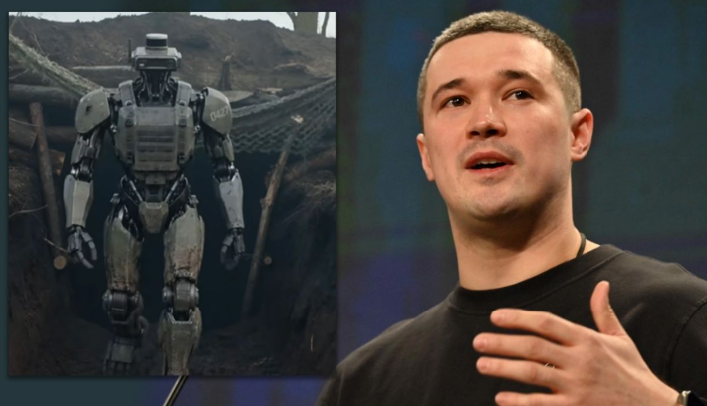
According to Ukraine's Vice Prime Minister and Minister of Digital Transformation, Mykhailo Fedorov, Russia is increasingly fielding jet-powered variants of the Shahed, creating a new challenge for Ukrainian defenders. Ukraine's answer is equally ambitious: jet-powered interceptor drones capable of speeds exceeding 600 kilometers per hour, with several systems already undergoing combat testing.
The significance extends far beyond Ukraine.
This is not merely another drone.
It may represent the birth of an entirely new category of air-defense weapon.
The End of the Propeller Era?
For years, drone warfare has largely been defined by affordability.
Cheap drones imposed disproportionate costs on expensive defenses. The arithmetic favored the attacker.
A relatively inexpensive UAV could force a defender to deploy costly missiles, complex radar systems, and extensive personnel resources.
Interceptor drones began to change that equation.
Instead of firing expensive air-defense missiles, defenders could launch agile drone hunters designed specifically to chase and destroy incoming aerial threats.
Now another evolution is underway.
As Russian drones become faster and more difficult to intercept, traditional FPV-based interceptors face growing limitations in speed, altitude, and endurance.
Physics is becoming the battlefield.
And physics demands a new solution.
The Rise of the Miniature Fighter
The concept sounds almost futuristic.
A drone designed solely to hunt other drones.
Not at 100 km/h.
Not at 200 km/h.
But at speeds exceeding 600 km/h.
At that point, the comparison is no longer with consumer drones or modified racing aircraft.
The comparison begins to resemble fighter aviation.
Scaled down.
Automated.
Disposable.
Mass-produced.
What Ukraine appears to be building is not simply a faster drone.
It is a new form of tactical interceptor.
A machine designed for one purpose: reaching aerial threats before traditional defenses can.
Brave1 and the New Defense Ecosystem
What makes the Ukrainian approach particularly remarkable is that it is not driven solely by large defense corporations.
Over the past year, the government-backed innovation platform Brave1 has supported manufacturers through grants, testing programs, battlefield evaluation, and procurement scaling.
The result is an innovation cycle measured in months rather than years.
This is becoming one of Ukraine's greatest strategic advantages.
Traditional military procurement systems often spend years defining requirements before production begins.
Ukraine frequently develops, tests, modifies, and fields capabilities while combat is ongoing.
The battlefield becomes the laboratory.
The laboratory becomes the production line.
And technological adaptation becomes a combat capability in itself.
A Technological Arms Race in Real Time
The most important lesson from this announcement is not that a specific interceptor can exceed 600 km/h.
It is that the innovation cycle is accelerating.
Russia introduces faster drones.
Ukraine develops faster interceptors.
New flight profiles emerge.
Countermeasures follow.
Then the process repeats.
Unlike previous military revolutions that unfolded over decades, the drone revolution evolves continuously.
What appears cutting-edge today may become obsolete six months later.
That dynamic is forcing militaries everywhere to rethink how innovation works.
Success increasingly belongs not to those with the most technology.
But to those who can adapt the fastest.
The Future of Air Defense Is Shrinking
For decades, air defense meant large launchers, radar complexes, and expensive missiles.
Tomorrow's air defense may look very different.
A portable radar.
An AI-assisted targeting system.
A swarm of interceptor drones.
A logistics chain measured in batteries and composite materials rather than missile tubes.
Ukraine's experience suggests that air defense is becoming more distributed, more scalable, and dramatically more affordable.
The interceptor drone is no longer an experiment.
It is becoming a core component of modern warfare.
And if jet-powered variants prove successful in combat, future military historians may point to this moment as the beginning of a new era.
An era where the skies are not dominated by aircraft.
Nor by missiles.
But by autonomous aerial hunters chasing one another at hundreds of kilometers per hour.
The drone war is evolving.
And once again, Ukraine is racing to stay one generation ahead.