Russia’s Fuel Paradox: Fighting NATO While Buying Gasoline From a NATO Country
For years, the Kremlin has portrayed its confrontation with the West as an existential struggle against NATO.
Russian state television speaks of encirclement, Western aggression, and a geopolitical battle against the Atlantic alliance. Political leaders regularly frame the war in Ukraine as part of a broader conflict against NATO's influence.
Yet reality has a habit of ignoring ideology.
This week, that reality arrived in the form of a fuel tanker.
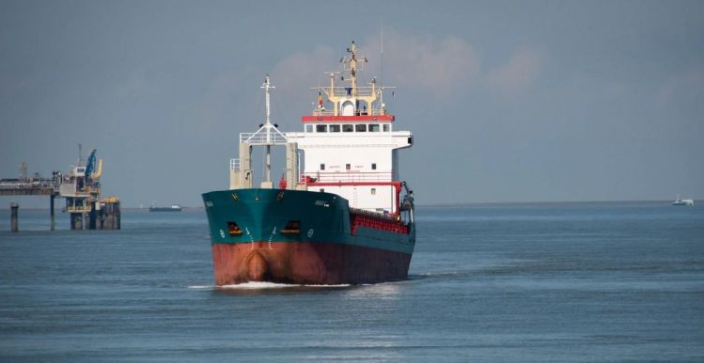
According to shipping and market-tracking data from S&P Global and Kpler, Russia has now received its first confirmed seaborne gasoline shipment from Turkey. The tanker Wendrix reportedly delivered approximately 200,000 barrels of fuel from the Turkish port of Mersin to Primorsk on Russia's Baltic coast.
The symbolism is impossible to ignore.
A country presenting itself as locked in confrontation with NATO is now buying gasoline from a NATO member state.
The irony practically fuels itself.
The Hidden Battlefield: Russia’s Refineries
The immediate explanation is straightforward.
Russia is facing mounting pressure on its domestic refining capacity.
Data indicates Russian oil refineries processed approximately 3.7 million barrels per day in July, significantly below previous averages. Multiple energy facilities have experienced disruptions, repairs, and operational challenges during the war.
Particularly important has been Ukraine's increasingly aggressive long-range strike campaign.
For much of the conflict, battle lines were measured in kilometers of territory. Increasingly, they are measured in infrastructure damage hundreds of kilometers from the front.
Oil depots.
Fuel storage facilities.
Refineries.
Distribution networks.
These targets are not as visually dramatic as tanks exploding on the battlefield, but they strike directly at the economic and logistical foundation of military power.
Armies run on fuel.
Modern economies do too.
A New Supply Map Is Emerging
Russia's fuel imports reveal an emerging pattern in global trade.
For decades, Moscow was viewed as an energy superpower exporting hydrocarbons around the world.
Today, the picture is becoming more complicated.
Imports of refined products have reportedly arrived from India, Morocco, Kazakhstan, South Korea, and now Turkey.
The significance is not simply the volume of imports.
It is what they reveal.
The global energy market has adapted to sanctions, restrictions, disrupted supply chains, and geopolitical fragmentation. Instead of clean separations between opposing camps, a more complex reality has emerged.
Countries compete politically while continuing to trade economically.
Strategic rivals remain commercial partners.
Public rhetoric often diverges sharply from supply-chain reality.
The world economy remains interconnected even when politics suggests otherwise.
The Limits of Economic Warfare
The Turkish shipment also highlights a broader lesson about modern sanctions and energy security.
Economic warfare is rarely as clean as policymakers imagine.
Sanctions are intended to isolate.
Markets are designed to adapt.
As long as buyers need fuel and sellers see profit, alternative routes typically emerge.
The result is not necessarily isolation but redirection.
Trade changes shape.
Middlemen appear.
Shipping routes evolve.
New partnerships emerge.
What was once a direct transaction becomes an indirect one.
The gasoline arriving in Primorsk demonstrates how resilient global commodity markets remain, even during periods of intense geopolitical rivalry.
The Strategic Question
The more interesting question is what this development says about the state of the war itself.
Historically, major military powers seek self-sufficiency in critical wartime resources whenever possible.
Russia possesses some of the world's largest crude oil reserves.
Yet crude oil alone does not fuel military operations.
It must be refined, distributed, and delivered.
That distinction matters.
An energy producer can simultaneously be a fuel importer if refining capacity becomes constrained.
For military planners, this is a reminder that modern warfare increasingly targets systems rather than resources.
Destroying a refinery may prove more impactful than targeting an oil field.
Disrupting logistics may matter more than reducing raw production.
Infrastructure has become a front line.
The Great Contradiction
Perhaps the most provocative aspect of the story is not economic but political.
For years, narratives on all sides have portrayed the global order as divided into opposing blocs.
East versus West.
Russia versus NATO.
Authoritarianism versus democracy.
Yet international commerce tells a more complicated story.
Turkey remains a NATO member.
Russia remains engaged in one of the largest military confrontations in Europe since World War II.
And nevertheless, a fuel tanker sailed from one country to the other because markets recognized a need.
This contradiction is not unique to Russia.
Modern geopolitics increasingly resembles a world where nations can compete militarily, disagree politically, and trade commercially at the same time.
The era of rigid Cold War lines is gone.
What remains is a messy, interconnected reality where strategic rivals often depend on each other more than they publicly admit.
The gasoline shipment to Primorsk is therefore more than a commercial transaction.
It is a reminder that global power is rarely as simple as political slogans suggest.
Russia may talk about confronting NATO.
But at least for now, part of its fuel supply is coming from inside the alliance.
.png)