Russia Just Broke the Economics of Air Defense. Now Ukraine Must Reinvent It.

For more than two years, one of Ukraine's most remarkable wartime innovations was not a missile.
It was economics.
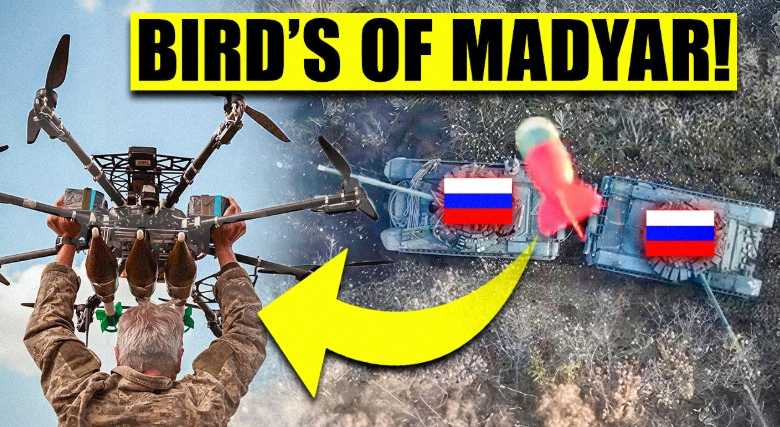
Russia could launch relatively inexpensive Shahed attack drones in massive numbers. Ukraine responded with something even cheaper: interceptor drones costing thousands rather than hundreds of thousands of dollars. It was a battlefield equation that favored ingenuity over budget.
Until the equation changed.
The arrival of jet-powered Shahed variants may represent one of the most significant evolutionary steps in the drone war. Not because they are revolutionary weapons. Not because they are impossible to stop.
But because they attack something far more important:
The affordability of air defense itself.
According to battlefield assessments cited by Ukrainian military observer Oleksandr Karpiuk, the low-cost interceptor layer that once achieved interception rates of roughly 40 to 50 percent against conventional Shaheds may now be achieving only around 15 percent against jet-powered variants.
That number reveals more than a tactical problem.
It reveals a strategic one.
The genius of Ukraine's drone interception model was always based on asymmetry. Defenders did not need expensive systems to counter every incoming threat. Instead, fleets of affordable interceptor drones could shoulder a substantial share of the defensive burden, preserving precious missile inventories for more critical targets.
The model worked because of physics.
Traditional Shaheds were relatively slow. Interceptor drones could pursue them from behind, gradually closing the distance until engagement became possible.
Jet-powered Shaheds change that geometry entirely.
When the target flies significantly faster than the interceptor, pursuit becomes futile. The defender can no longer simply chase.
Instead, interception becomes a prediction game.
The drone must launch earlier.
Detection must occur sooner.
Target trajectories must be calculated faster.
Ground radar, sensors, communications, guidance systems, and operators must coordinate with far greater precision.
The margin for error shrinks dramatically.
Suddenly, what was once a relatively simple intercept mission becomes a complex network-centric operation.
This is why the issue extends beyond drones alone.
The challenge is increasingly becoming one of systems integration.
Modern air defense is evolving into a race between algorithms.
Finding a fast-moving target is one problem.
Predicting where it will be in sixty seconds is another.
Directing an interceptor to that point is yet another.
Every second matters.
Every delay increases the probability of failure.
The consequence is economic as much as operational.
If cheap interceptor drones become less effective, other defense layers must absorb more of the workload.
Electronic warfare systems become more important.
Fighter aircraft fly more missions.
Surface-to-air missile batteries engage more targets.
All three options are significantly more expensive than deploying low-cost interceptors.
That reality creates exactly the dilemma Russia may be seeking.
Not necessarily overwhelming Ukrainian defenses.
Exhausting them.
Historically, military innovation often revolves around shifting economic pressure rather than achieving pure technical superiority. The side that forces its opponent to spend ten dollars defending against every dollar of attack gains a powerful advantage over time.
Jet-powered drones move the contest in that direction.
And scale makes the problem worse.
Reports indicate a dramatic increase in the number of these systems being deployed. If attack volumes continue rising while low-cost interception effectiveness declines, defenders face a dangerous combination of quantity and speed.
The challenge confronting Ukrainian engineers is therefore surprisingly specific.
They do not need a perfect solution.
They need a cheap one.
History repeatedly shows that wartime innovation rewards scalable answers, not elegant ones. The objective is not simply building a faster interceptor drone. It is creating one that can be manufactured in large numbers, deployed rapidly, and operated economically enough to restore the cost advantage of defense.
This may become the next great technological contest of the drone age.
Not stealth versus detection.
Not offense versus defense.
Speed versus affordability.
Because the future of air defense may depend less on whether a drone can be intercepted and more on whether it can be intercepted cheaply.
That distinction could determine not only the outcome of drone warfare in Ukraine but also how militaries around the world design their defenses for the next generation of autonomous conflict.
The drone war is entering a new phase.
And the battle is no longer merely about flying machines.
It is about mathematics.