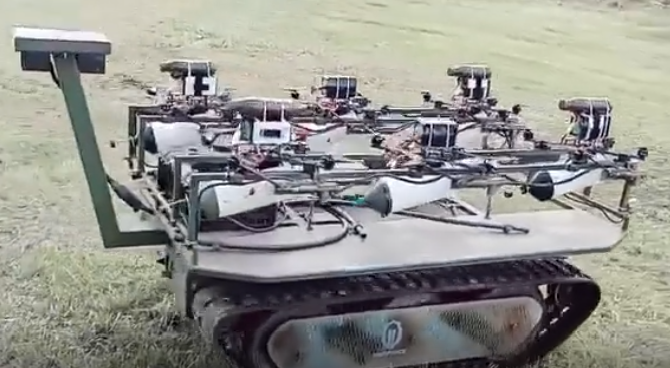
ROVO3 UGV from Hentschel System with Anti-Drone-Laser from Inleap Photonics. Europe’s Low‑Cost Drone Defense May Already Be Tested in Ukraine
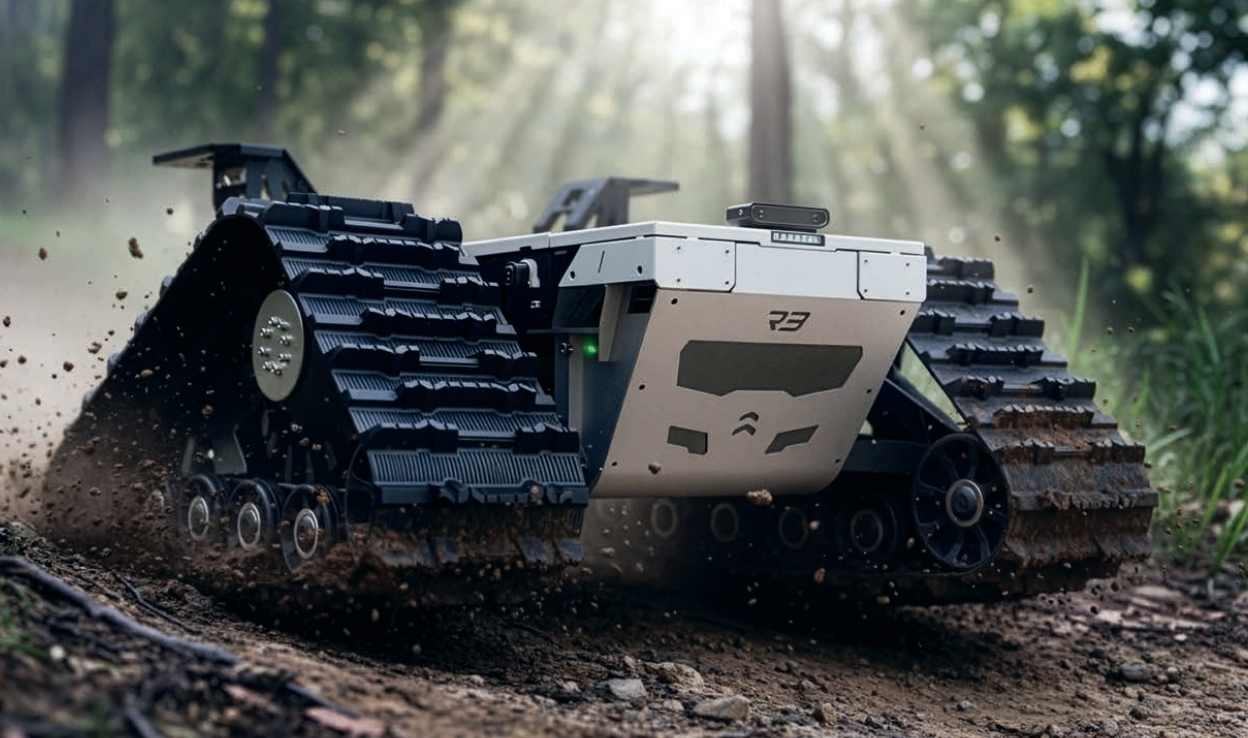
In modern warfare, speed matters. So does cost. But increasingly, precision is becoming the decisive factor—and Europe may have just built a system that combines all three.
At first glance, it doesn’t look revolutionary. A small unmanned ground vehicle (UGV), rugged, electric, capable of 300 kilograms of payload—nothing unusual in a world of military robotics. But mounted on top is something different: a compact anti‑drone laser system, designed not to overwhelm the sky, but to surgically eliminate threats.
This is where things get interesting.
The platform itself—based on an Austrian-developed electric UGV—represents the growing logic of distributed, mobile defense systems. Instead of static installations, expensive air-defense batteries, or complex integration chains, the idea is simple: move the defense to where the threat is.
In an era where drones can strike unpredictably—from above cities, infrastructure, or front lines—mobility is not a bonus. It’s a necessity.
But the real innovation lies in the laser.
Unlike traditional high-power laser systems, which rely on brute force and complex beam steering via mechanical mirrors, this system approaches the problem differently. It uses an optically transmissive medium, where the laser beam is redirected through changes in the refractive index triggered by electrical signals.
In simpler terms: instead of moving mirrors, the system bends the beam itself.
The result? Extreme speed and precision—possibly faster than conventional interception systems can react.
And speed is everything.
Modern drone threats, especially low-cost quadcopters, are defined by two things: numbers and unpredictability. A swarm doesn’t require perfect coordination—just enough density to overwhelm defenses. That’s why traditional systems struggle. Missiles are too expensive. Kinetic interceptors are too slow to scale. Electronic warfare often disrupts more than just the target.
Here, the laser proposes a different solution: hit the weak spot, instantly.
The system reportedly uses AI and image recognition to identify drone vulnerabilities and engage targets in fractions of a second—less than 0.2 seconds per engagement. That changes the economics dramatically. Instead of spending tens of thousands per intercept, or more, the defense cost per shot becomes almost negligible once the system is deployed.
This is the holy grail of counter-drone warfare: cost inversion.
The attacker invests a few thousand euros. The defender responds with cents.
But every technology looks good on paper.
The real battlefield is where theory meets physics—and where reality tends to push back.
Laser systems have always faced one stubborn challenge: the environment. Rain, fog, dust, and atmospheric distortion can degrade beam quality and reduce effectiveness. This system attempts to mitigate that through layered defense—combining laser engagement with interceptor drones for adverse conditions.
Smart. But still unproven at scale.
And then there’s the question that no press release can answer: survivability.
A system deployed on a small UGV is mobile—but also potentially exposed. It must detect, track, and neutralize threats while remaining operational in contested environments. That’s not just a technological challenge; it’s a tactical one.
Can it operate under jamming? Can it remain effective under attack? Can it defend itself?
We don’t yet know.
What we do know is this: Europe is clearly trying to close the gap between innovation cycles and battlefield reality. The fact that such a system may soon be deployed in Ukraine is not incidental—it is deliberate.
Ukraine is where concepts are validated—or discarded.
And that is what makes this system important.
Not because it is the most powerful laser. Not because it is the most advanced UGV. But because it embodies a shift: away from large, slow, expensive systems—and toward smaller, agile, rapidly deployable solutions that match the tempo of modern threats.
If it succeeds, it could redefine counter-drone strategy across Europe and beyond.
If it fails, it will still teach the same lesson every innovation cycle does: the future of warfare belongs not to the strongest system, but to the one that adapts fastest.
In the end, that is the real test—not whether the laser works in a lab, but whether it survives the first encounter where failure is not theoretical.
Because in today’s wars, prototypes don’t get second chances.