Romania’s €2 Billion Air Defense Gamble. Why NATO’s Eastern Flank Is Betting on Israeli Firepower
In an era when drones can cripple critical infrastructure, cruise missiles can cross borders in minutes, and air superiority can determine the outcome of entire conflicts, Romania has made a decision that resonates far beyond its national borders.
Bucharest has selected Rafael’s Spyder air defense system in a landmark deal valued at more than €2 billion, making it the largest contract in the history of the Israeli defense giant. The acquisition will significantly strengthen Romania’s Short-Range and Very Short-Range Air Defense (SHORAD/VSHORAD) capabilities and send a powerful signal about how NATO’s eastern members are preparing for a new security reality.
This is not merely an arms purchase.
It is a strategic declaration.
The Age of Cheap Threats
The modern battlefield has transformed dramatically.
Not long ago, air defense systems were primarily designed to counter fast jets and attack helicopters. Today, the challenge is far more complex. Low-cost drones, precision-guided munitions, cruise missiles, and swarm attacks have created a threat environment where even relatively inexpensive systems can inflict disproportionate damage.
The war in Ukraine has become a harsh lesson for every military planner in Europe. Nations have watched as drones costing thousands of euros have threatened assets worth millions. The conclusion has been unavoidable: air defense can no longer be viewed as a specialized capability—it has become a frontline necessity.
Romania’s decision reflects that reality.
By investing in Spyder, the country is aiming to protect military installations, critical infrastructure, and maneuvering forces against an increasingly diverse range of aerial threats.
Why Spyder Is Different
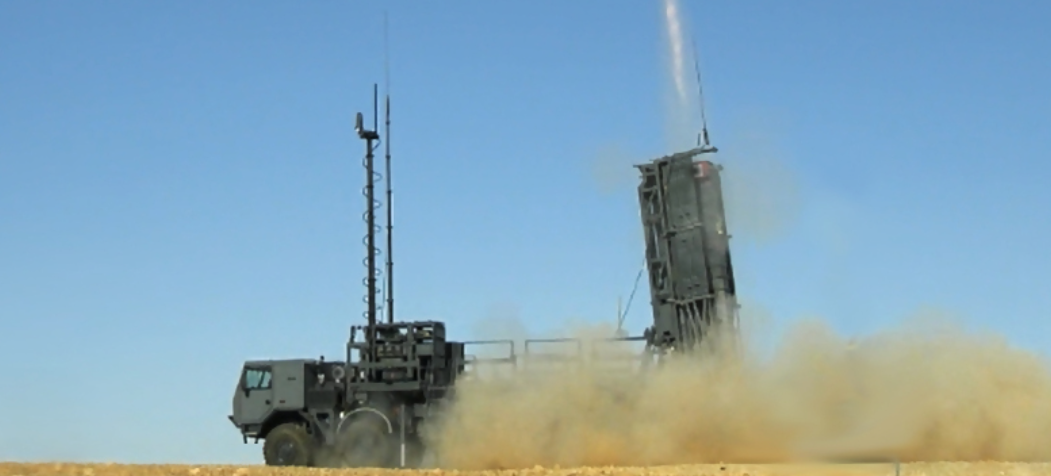
Spyder—short for Surface-to-Air Python and Derby—is based on air-to-air missiles that have already proven themselves in operational service.
What makes the system particularly attractive is its versatility.
Spyder can engage aircraft, helicopters, cruise missiles, drones, and precision-guided weapons. Its highly mobile architecture allows it to protect both fixed strategic assets and moving military formations, a capability increasingly valued by modern armies.
Speed is another critical factor.
In an age where seconds can determine success or failure, Spyder’s rapid response capability and modular design make it one of the most adaptable SHORAD solutions available.
For Romania, positioned on NATO’s eastern flank and bordering the Black Sea region, flexibility is not a luxury. It is a requirement.
More Than Missiles
The deal goes well beyond launchers and interceptors.
The comprehensive package includes radar systems, training infrastructure, logistics support, and associated equipment that will allow Romania to build a complete and sustainable air-defense ecosystem.
The first systems are expected to be delivered within 36 months, marking the beginning of a major modernization effort for the Romanian Armed Forces.
Yet perhaps the most important component of the agreement is not technological.
It is industrial.
Building Defense Capability at Home
Unlike traditional procurement programs that simply import foreign equipment, the agreement includes extensive cooperation with Romanian industry.
Rafael plans to establish local production, maintenance, and support capabilities in partnership with domestic companies. This approach reflects a broader trend emerging across Europe: governments increasingly want not only advanced weapons but also local industrial participation and technological know-how.
For Romania, this could mean new jobs, enhanced technical expertise, and greater self-sufficiency in sustaining critical defense systems.
In a continent increasingly focused on defense resilience, industrial cooperation has become nearly as valuable as military capability itself.
A Victory for Israel’s Defense Industry
For Rafael, the agreement represents a historic achievement.
Chairman Yuval Steinitz described the contract as strategically significant and highlighted the confidence Romania has placed in the company’s technology.
CEO Yoav Tourgeman went further, calling it the largest deal in Rafael’s history and evidence of growing trust among European NATO member states in combat-proven Israeli defense solutions.
The message is unmistakable: Europe’s rearmament is creating unprecedented opportunities for defense suppliers capable of delivering proven systems quickly.
The Bigger Picture
Romania’s selection of Spyder reveals a broader transformation unfolding across Europe.
The continent is entering an era in which integrated air and missile defense is no longer a niche capability but a strategic priority. Every drone intercepted, every cruise missile defeated, and every critical asset protected could determine the outcome of future crises.
For countries on NATO’s eastern frontier, the challenge is especially urgent.
The €2 billion Spyder deal demonstrates that Romania is not waiting for threats to evolve before responding.
It is investing now.
And in today’s Europe, that may be the most important defense strategy of all.