Romania’s Quiet Drone Moment - How D‑STORM Puts ORBOTIX on Europe’s Defence Map
Europe’s defence awakening isn’t happening only in Paris boardrooms or Brussels press rooms. It’s also happening in places that rarely headline the continent’s rearmament story—like Brașov.
In the European Defence Fund’s latest funding wave, the EU is set to invest €1.07 billion across 57 projects spanning AI, cyber defence, drones and counter-drone systems.
Romania shows up in at least a dozen of them, with a combined approved maximum of up to €263 million, according to an analysis of the EDF results and project factsheets.
But one project stands out as a signal of where European defence is heading—and where Romania could quietly become harder to ignore: D‑STORM (Drone‑based Scalable Tactical Operations Responsive Munitions).
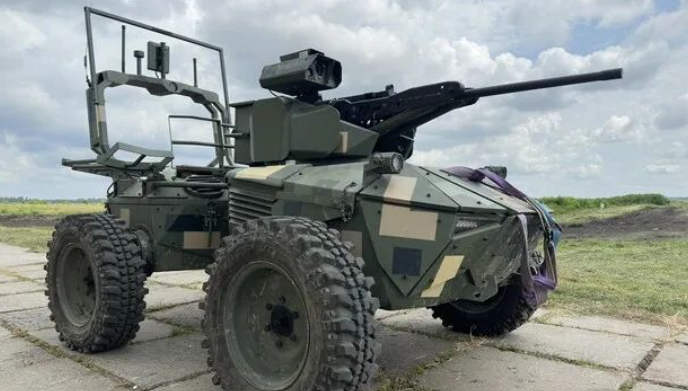
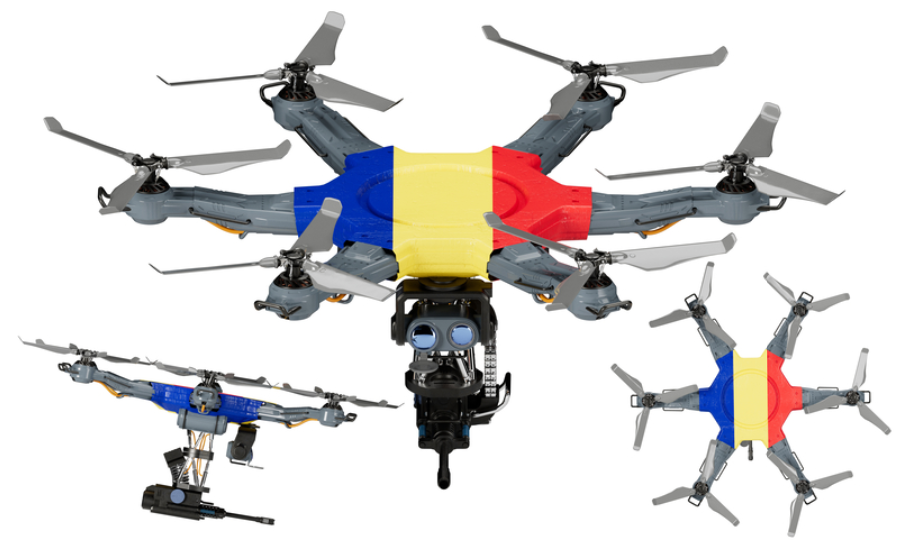
D‑STORM sits in the EDF’s logic of the moment: the mass battlefield. The project’s own description is explicit—interoperable, affordable, mass‑producible loitering munitions and unmanned combat aerial systems, designed for modern saturation warfare and Europe’s strategic requirements.
Its blueprint is equally blunt: a modular “Plug&Play” architecture that mixes low‑cost hardware with advanced software, aiming to maximize effect while minimizing unit and logistics costs.
The numbers are not symbolic. D‑STORM’s estimated total cost is €12.42 million, with a maximum EU contribution of €9.8 million, over 24 months and including design, prototyping, testing and related development activities.
Industry reporting identifies MBDA’s Italian unit as leading the effort, positioning the programme inside Europe’s missile-industrial core rather than at the margins.
And inside that consortium is ORBOTIX INDUSTRIES SRL, a Romania-based participant highlighted in the Romanian project list covering EDF-funded defence initiatives.
Why does that matter? Because Europe’s defence strategy is increasingly a supply-chain strategy. Brussels isn’t just funding big primes; it’s deliberately widening the industrial base. The Commission notes that SMEs make up over 38% of participants and receive over 21% of total funding in this round—an explicit bet that Europe’s next defence edge will require more than the usual suspects.
D‑STORM also sits in a policy moment where the EU is dangling an on-ramp for newcomers: several projects tied to mass production of affordable drone munitions are expected to launch “sub-calls” where startups and SMEs can receive up to €60,000 each to integrate innovations—including Ukrainian entities.
This is the EU’s two-track play: fund industrial programmes now, and seed the next layer of capability through cascade funding.
For ORBOTIX INDUSTRIES SRL, the optics are clear: participation in an EDF-backed loitering munition programme connects Romanian engineering capacity to a European push that is accelerating fast. Public materials from Orbotix emphasize autonomy designed for contested environments and systems framed around AI-enabled targeting and mission resilience—language that fits tightly with the EDF’s current priorities.
Internally, a shared carousel-style document in your environment also frames “Orbotix” as expanding investment in Romania and building a wider ecosystem for autonomous systems—suggesting a strategic intent to scale presence, not remain a boutique supplier.
Here’s the provocative part: D‑STORM isn’t just another “innovation project.” It’s a signal that Europe is trying to industrialize lessons learned from high-intensity war into repeatable production, and that smaller EU states won’t be relevant by rhetoric—only by output.
If D‑STORM delivers, it won’t merely produce a new design philosophy. It could help normalize a new geography of European defence manufacturing—one where Romania is not only a consumer of security but a visible builder of it.