Romania’s IFV Gamble - When Rheinmetall Preference Meets Industrial Power Politics
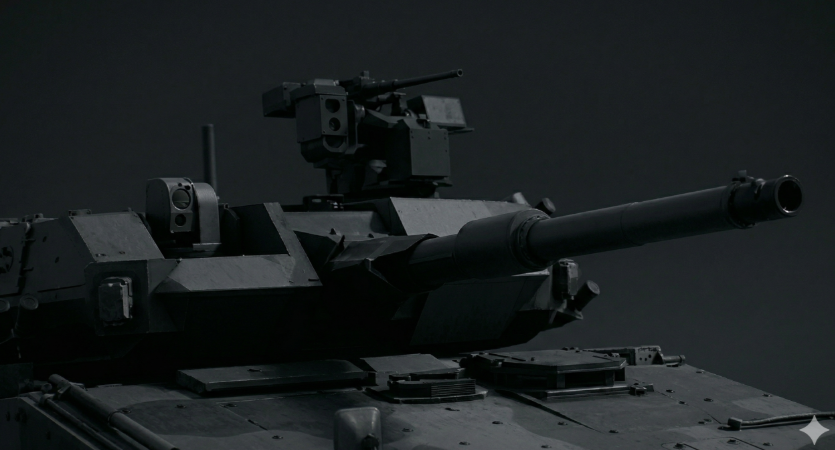
Romania’s €3‑billion infantry fighting vehicle (IFV) program was supposed to be a straightforward modernization effort. Instead, it has become one of the clearest stress tests yet of Europe’s new defense financing architecture—and of how far frontline NATO states are willing to go to protect industrial sovereignty over political convenience.
In late 2024, Germany’s Rheinmetall appeared to have pole position. Its KF41 Lynx was widely reported as the preferred solution for Bucharest’s next‑generation mechanized force. But by April 2026, what looked like a done deal no longer does.
The reason is not technical performance. It is leverage.
From Preferred Bidder to Political Headache
According to multiple reports, Romanian officials have grown increasingly uneasy with how the Lynx path has evolved. Three concerns stand out: price escalation, process opacity, and industrial balance.
Media reporting indicates that cost expectations may have shifted substantially from early estimates, creating friction over affordability and state support requirements. At the same time, observers have pointed to a procurement process that moved from exploratory discussions toward an apparent Lynx trajectory without a fully competitive request for proposal or side‑by‑side trials—weakening Romania’s negotiating position in a program of strategic scale.
That discomfort hardened when public signals from Rheinmetall suggested contractual certainty that Romanian authorities later denied, fueling domestic political backlash and renewed scrutiny over where real production and jobs would actually land.
SAFE: Designed to Favor Europe, Tested at the Edges
This dispute matters far beyond Romania.
The IFV program is a flagship test case for the EU’s Security Action for Europe (SAFE) financing mechanism, a €150‑billion loan framework intended to accelerate rearmament while reinforcing Europe’s defense industrial base. SAFE structurally favors European suppliers—but it does not outright prohibit non‑EU designs if production and value creation are localized within the Union.
That nuance is now at the heart of Romania’s dilemma.
Hanwha’s Countermove: Industrial Depth Plus Capital
Enter South Korea.
Hanwha Aerospace has reframed the competition by offering not just its AS21 Redback IFV, but a radically different industrial proposition. Reporting indicates that Hanwha has proposed building up to 80% of vehicles in Romania, alongside a €1.3‑billion industrial investment spanning production, testing, and R&D infrastructure. On top of that, Seoul has reportedly brought €900 million in export financing via K‑SURE, softening budget pressure under SAFE constraints.
This pairing—deep localization plus sovereign-backed financing—is not new for South Korea. It is a deliberate export strategy honed in Eastern Europe and Poland. What is new is its collision with EU‑funded procurement.
Industrial Sovereignty as the Deciding Variable
Romanian officials have increasingly framed the IFV decision not merely as a platform choice, but as an industrial sovereignty vote. SAFE loans may provide capital, but Bucharest still wants lasting capacity: jobs, suppliers, engineering competence, and political proof that defense spending strengthens the domestic economy.
The unresolved question is whether European primes, accustomed to incumbency, will accept 70–80% local content demands as the price of SAFE‑backed access—or whether Romania will be pressured to accept a more conventional European supply chain.
A Signal to Europe’s Frontline States
However this ends, Romania’s IFV program has already become a precedent.
If Bucharest forces a transparent competition and extracts deep localization commitments, it signals that SAFE funds will not be blank checks for incumbents. If it defaults to a de facto Lynx path, it reinforces the gravitational pull of EU preference—even at the cost of leverage.
For South Korea, the stakes are equally clear. A Redback win would validate a model that combines industrial seriousness with financial firepower, proving that non‑EU suppliers can compete inside Europe’s most protected procurement frameworks.
This is no longer just a vehicle competition. It is a referendum on how Europe arms itself—and who gets to build that future.


.jpg)