Frankenburg, Babcock and ACUA Ocean. The UK’s New Low-Cost Shield Against Swarm Attacks
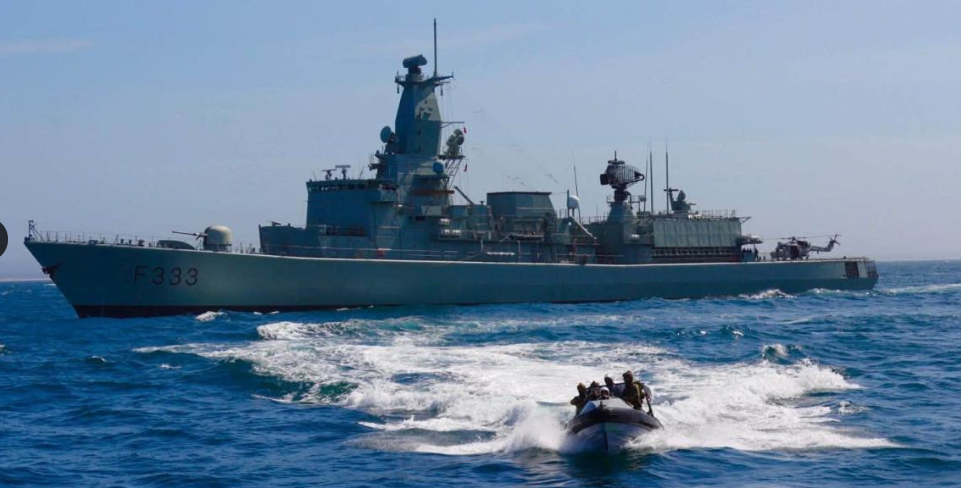
The next generation of naval air defence may not arrive on a destroyer, frigate or aircraft carrier. It may come in the form of a relatively small autonomous vessel carrying low-cost missiles and patrolling the sea for days without a crew.
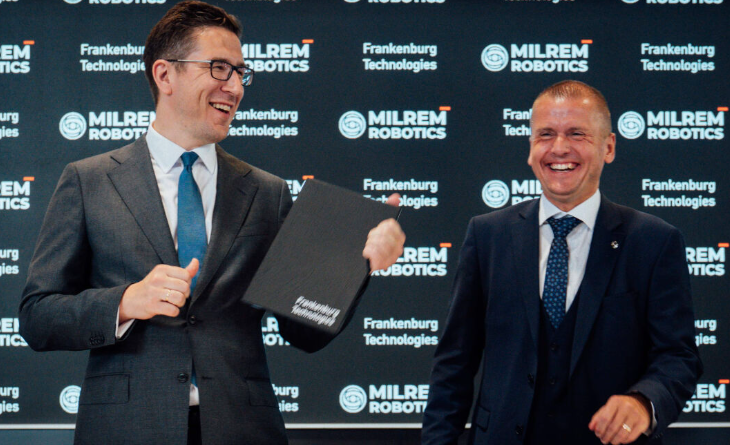
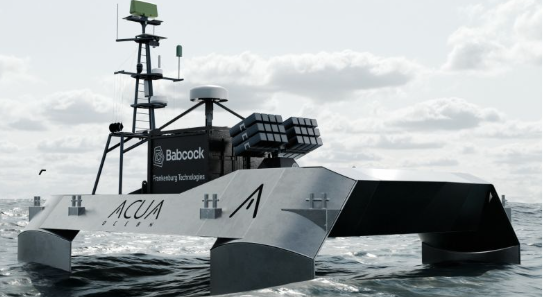
Frankenburg Technologies, Babcock International Group and ACUA Ocean Technologies have signed a memorandum of understanding to develop integrated maritime counter-drone systems. Their goal is ambitious: combine autonomous surface vessels, modular launchers and affordable precision-guided missiles into a scalable defence system capable of protecting ships, ports and critical infrastructure from mass drone attacks.
The concept brings together three specialised technologies.
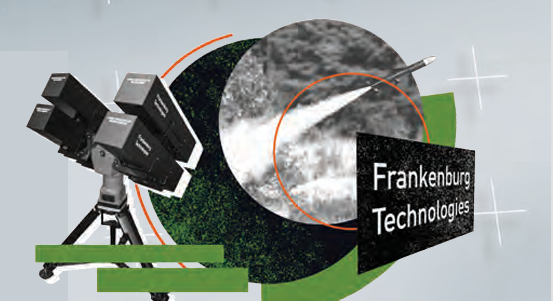
ACUA Ocean provides the uncrewed surface vessel. Babcock contributes a multi-domain launcher system that can be installed on both crewed and autonomous ships. Frankenburg adds its low-cost air-defence missiles, designed for mass production and the interception of Class I–III uncrewed aerial systems.
Together, these components could create what is effectively an autonomous missile outpost at sea.
That matters because the economics of air defence are becoming increasingly difficult. Low-cost drones can be produced and launched in large numbers, while conventional interceptor missiles may cost many times more than the targets they destroy. In a prolonged conflict, this cost imbalance can become as dangerous as the drones themselves.
Frankenburg’s strategy is to reverse that equation.
Its Mark I missile is designed to reduce short-range interception costs by more than ten times compared with traditional systems. The company also promotes a decentralised manufacturing model called FieldFoundry, intended to support local and high-volume missile production.
If that model works, autonomous vessels could carry affordable interceptors close to likely threat areas, creating a persistent defensive layer without tying down large warships or exposing crews to unnecessary danger.
The maritime element is especially significant.
Traditional defensive platforms can be expensive to operate, limited in number and vulnerable to saturation attacks. Autonomous vessels could be deployed in larger groups, remain at sea for extended periods and operate as forward sensors, launch platforms or defensive pickets.
ACUA Ocean says its PIONEER uncrewed surface vessel has already completed more than 100 continuous hours at sea, operating 16 to 20 nautical miles offshore without direct physical intervention. The company also highlights the vessel’s stability in rough conditions, an important factor if launchers and sensors must remain operational during high seas.
This approach fits the UK’s broader vision of a hybrid navy, where conventional crewed ships operate alongside autonomous systems.
However, the project will still face major technical and operational questions.
The partners will need to prove reliable target detection, identification, communication and engagement in complex maritime environments. They must also show that autonomous or remotely operated platforms can remain secure against electronic warfare, cyberattacks and communication loss.
Rules of engagement will be another critical issue. A missile-carrying autonomous vessel cannot simply detect and fire without a clearly defined command structure, particularly in crowded coastal waters.
There is also the question of survivability. Small autonomous vessels may be cheaper and easier to replace than warships, but they could still become targets for enemy drones, missiles, electronic attacks or sabotage.
Despite those challenges, the logic behind the project is compelling.
Modern warfare is increasingly shaped by quantity, speed and cost. The side that can deploy more systems, replace losses faster and sustain operations longer may gain a decisive advantage.
Frankenburg, Babcock and ACUA Ocean are betting that maritime air defence must become more distributed, more autonomous and far less expensive.
Their proposed system is not simply another missile launcher on another ship. It represents a different model of naval defence: persistent, unmanned and built to fight drone swarms without bankrupting the defender.
The future of maritime security may belong not only to larger and more advanced warships, but also to fleets of smaller autonomous platforms carrying enough affordable firepower to make mass drone attacks economically and operationally ineffective.