Frankenburg and Milrem. Europe’s New Robot Missile Hunters Could Change Everything
The drone war has exposed a brutal truth about modern air defence:
The defender is often losing the economic battle.
Across Europe, Ukraine, and the Middle East, military planners face the same dilemma. Cheap drones costing hundreds or thousands of euros can force defenders to launch interceptors worth tens or even hundreds of thousands. The mathematics are unforgiving. Every attack becomes a financial strategy.
Now two European companies believe they have found a way to break that equation.
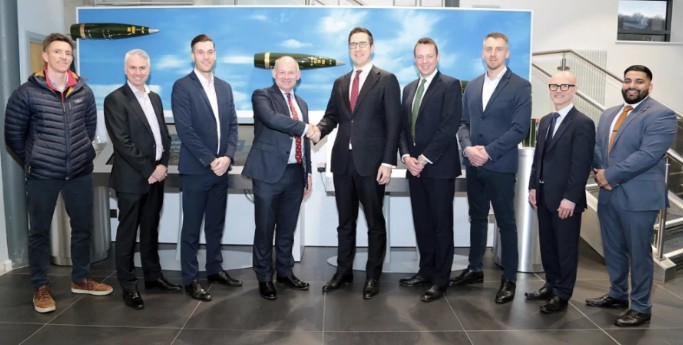
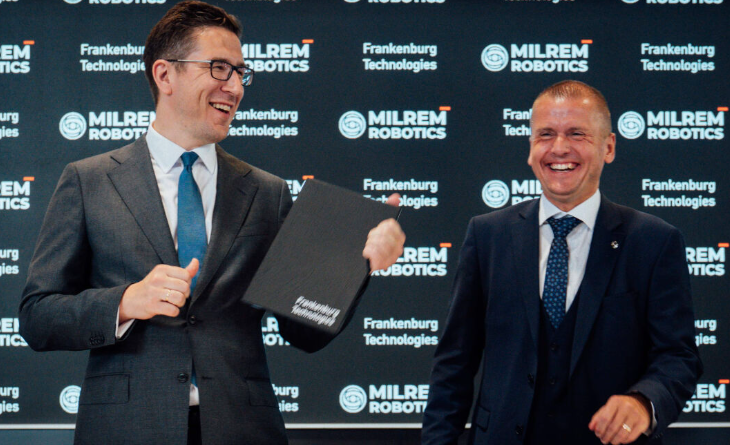
At Eurosatory 2026, Frankenburg Technologies and Milrem Robotics announced a partnership that could signal a major shift in how nations protect critical infrastructure, military installations, and borders from the exploding drone threat.
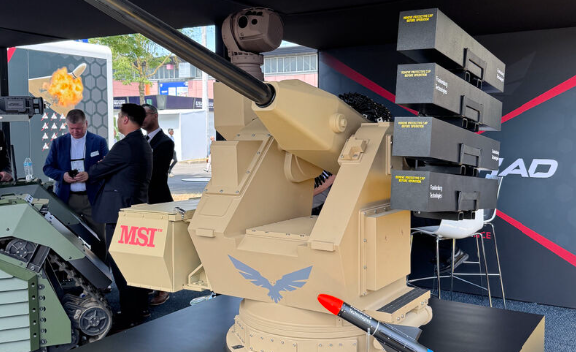
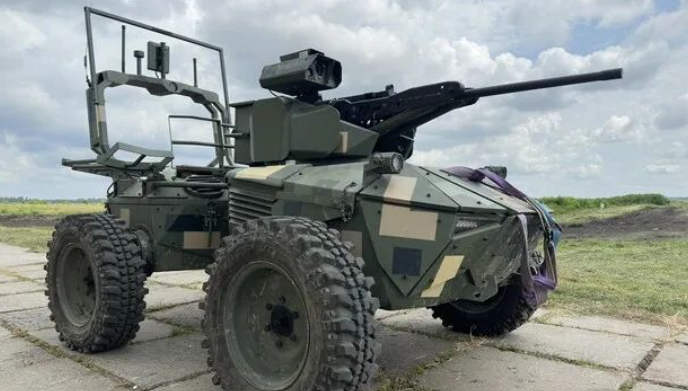
Their goal is ambitious: place affordable guided interceptor missiles on autonomous robotic vehicles and create a new category of mobile, distributed air defence.
In simple terms, they want missile systems that can drive themselves to where they are needed, spread across large areas, and destroy aerial threats without requiring expensive traditional air-defence architectures.
If successful, the implications could be enormous.
From Expensive Defences to Distributed Protection
Traditional air defence evolved for a world dominated by aircraft, helicopters, cruise missiles, and ballistic threats.
The drone age has changed the rules.
A single military base, energy facility, or ammunition depot may now face attacks from dozens—or even hundreds—of low-cost aerial systems simultaneously.
Defending every target with conventional missile batteries quickly becomes prohibitively expensive.
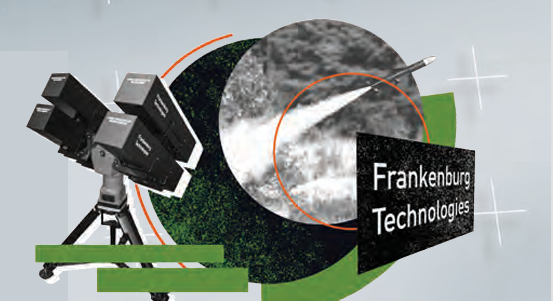
This is precisely the challenge Frankenburg Technologies aims to solve with its Mark I interceptor.
The company describes the missile as the world's first mass-manufacturable, cost-effective guided interceptor specifically designed for scalable counter-UAS operations. Built using commercially available components and optimized for rapid industrial production, the system reportedly reduces interception costs by more than ten times compared with conventional short-range air-defence solutions.
That claim directly targets one of the most pressing concerns in defence today: affordability at scale.
The Robot Air Defence Concept
Affordable missiles alone are not enough.
They must also be where the threat appears.
This is where Milrem Robotics enters the equation.
The Estonian company has become one of the world's leading developers of unmanned ground vehicles, providing robotic platforms that already serve defence customers across multiple countries.
Instead of concentrating weapons in a few static locations, Milrem's robotic platforms could allow air-defence assets to disperse over wide operational areas.
Imagine dozens of unmanned missile carriers protecting a border region. When intelligence identifies an incoming threat, the systems reposition automatically, close gaps in coverage, and establish new defensive configurations without exposing personnel to risk.
This represents more than automation.
It represents decentralization of air defence itself.
The Rise of Autonomous Force Protection
The strategic significance extends beyond interceptor economics.
Drone warfare is rapidly becoming a contest between autonomous systems.
Attack drones are becoming smarter, cheaper, and increasingly available in large numbers. As swarming capabilities improve, defenders must also embrace automation to keep pace.
Human operators cannot effectively manage hundreds of simultaneous engagements in real time.
Robotic air-defence platforms offer a potential answer.
By combining autonomous mobility, advanced sensors, rapid targeting, and cost-effective interceptors, future C-UAS networks could respond faster than traditional systems while covering much larger areas.
The concept aligns with a growing military trend toward distributed operations, where survivability comes from mobility and dispersion rather than concentration.
Europe’s Defence Industry Is Learning New Lessons
Perhaps the most important aspect of the Frankenburg–Milrem partnership is what it says about the evolution of European defence innovation.
Historically, major air-defence programs required enormous budgets, long development timelines, and highly specialized supply chains.
The new generation of defence companies is pursuing a different approach.
Use commercially available components where possible.
Automate aggressively.
Reduce production costs.
Deploy systems in large numbers.
Scale quickly.
It is a startup mindset applied to warfare.
The message is clear: quantity is becoming a strategic capability in its own right.
A Glimpse of the Future Battlefield
The companies intend to conduct a joint demonstration within approximately twelve months.
Whether the concept achieves its full potential remains to be seen.
But one thing is already evident.
The future battlefield will not be protected solely by billion-euro air-defence networks.
It will increasingly rely on fleets of autonomous systems working together—sensors, robots, interceptors, AI-enabled command networks, and distributed effectors operating across large areas.
For decades, air defence was about building stronger shields.
The next generation may be about building millions of affordable pieces of one.
And that could fundamentally change the balance between attackers and defenders.