France’s Rearmament Test - When Budget Increases Meet Industrial Reality

France’s updated Military Programming Law may mark a subtle turning point in Europe’s long rearmament debate.
With an additional €36 billion committed through 2030, Paris is no longer merely signalling concern—it is reallocating power, production and priorities. The revision raises total defence spending for 2024–2030 to roughly €449 billion and targets the most stressed areas exposed by high‑intensity war: munitions, air defence, drones and counter‑drone systems.
Yet the true significance of the law lies less in the headline number than in what comes next. Because Europe’s central defence challenge today is no longer political will—it is execution capacity.
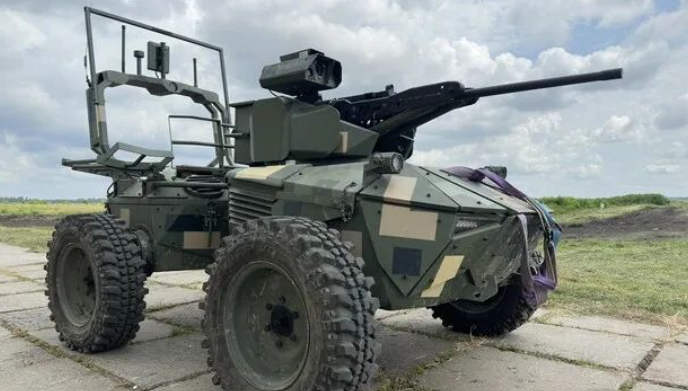
France’s revised plan is explicit about where execution will be hardest. Ammunition stockpiles—shells, missiles, drones, interceptors—are to be rebuilt at scale after years of peacetime attrition. SAMP/T NG air‑defence acceleration receives fresh priority. Counter‑drone capabilities are expanded across land, sea and critical infrastructure. Drone and robotic warfare gets dedicated funding.
Together, these changes reflect lessons learned not in think‑tank exercises, but in Ukraine.
High‑intensity conflict consumes matériel at rates European forces were not industrially designed to sustain. Even a highly capable military like France’s cannot defend territory, deploy overseas or support allies without industrial depth, supplier resilience and predictable throughput.
Here lies the real test.
France’s defence establishment now understands the “what.” The unresolved question is the “how fast.”
Procurement cycles remain long compared to the tempo of modern war. Supplier ecosystems—especially in energetics, propulsion, electronics and sub‑components—were optimized for lean delivery, not surge. Production lines built for efficiency must now relearn resilience and redundancy.
Nowhere is this tension clearer than in air defence.
Missile‑based systems such as SAMP/T remain indispensable, but they are expensive, slow to replenish and dependent on complex supply chains. The updated law implicitly acknowledges this by pairing missile acceleration with expanded counter‑drone and unmanned solutions, signalling a shift toward layered defence architectures.
For industry, this shift is both an opportunity and a stress test.
Companies are being asked to do three difficult things simultaneously: ramp production, shorten lead times, and integrate new technologies—often before mature procurement frameworks exist. For primes, that means cultivating deeper supplier ecosystems. For SMEs, it means surviving the cash‑flow and certification gap between political intent and signed contracts.
France’s choices also carry European implications.
If one of the continent’s most capable defence ecosystems struggles to translate funding increases into deliverable capability, the problem is systemic. Conversely, if France succeeds, it offers a playbook for others: focused priorities, industrial realism, and political acceptance of higher upfront risk.
There is also a strategic bet embedded in the law. By cancelling legacy drone programmes and redirecting funding toward cheaper, sovereign and battlefield‑relevant systems, Paris is betting that future deterrence depends less on exquisite platforms and more on mass, adaptability and regeneration speed.
That bet aligns closely with the war lessons Europeans say they have internalised. But weak links remain. Munitions supply chains still rely on imported components. Workforce shortages persist. Regulatory and contracting friction slows experimentation. And election cycles loom large over multi‑year defence planning.
Which brings us back to the central question.
Europe no longer lacks urgency. France’s revised Military Programming Law proves that. What remains uncertain is whether Europe’s defence‑industrial system—financially, technically and organisationally—can absorb urgency without breaking.
Rearmament is no longer rhetorical. It has entered the unforgiving phase where delivery—not declarations—defines credibility.
France has placed its wager. The rest of Europe is watching carefully.