Project Eagles Explains Why Brilliant Drone Can Fail Without Proper Flight Testers
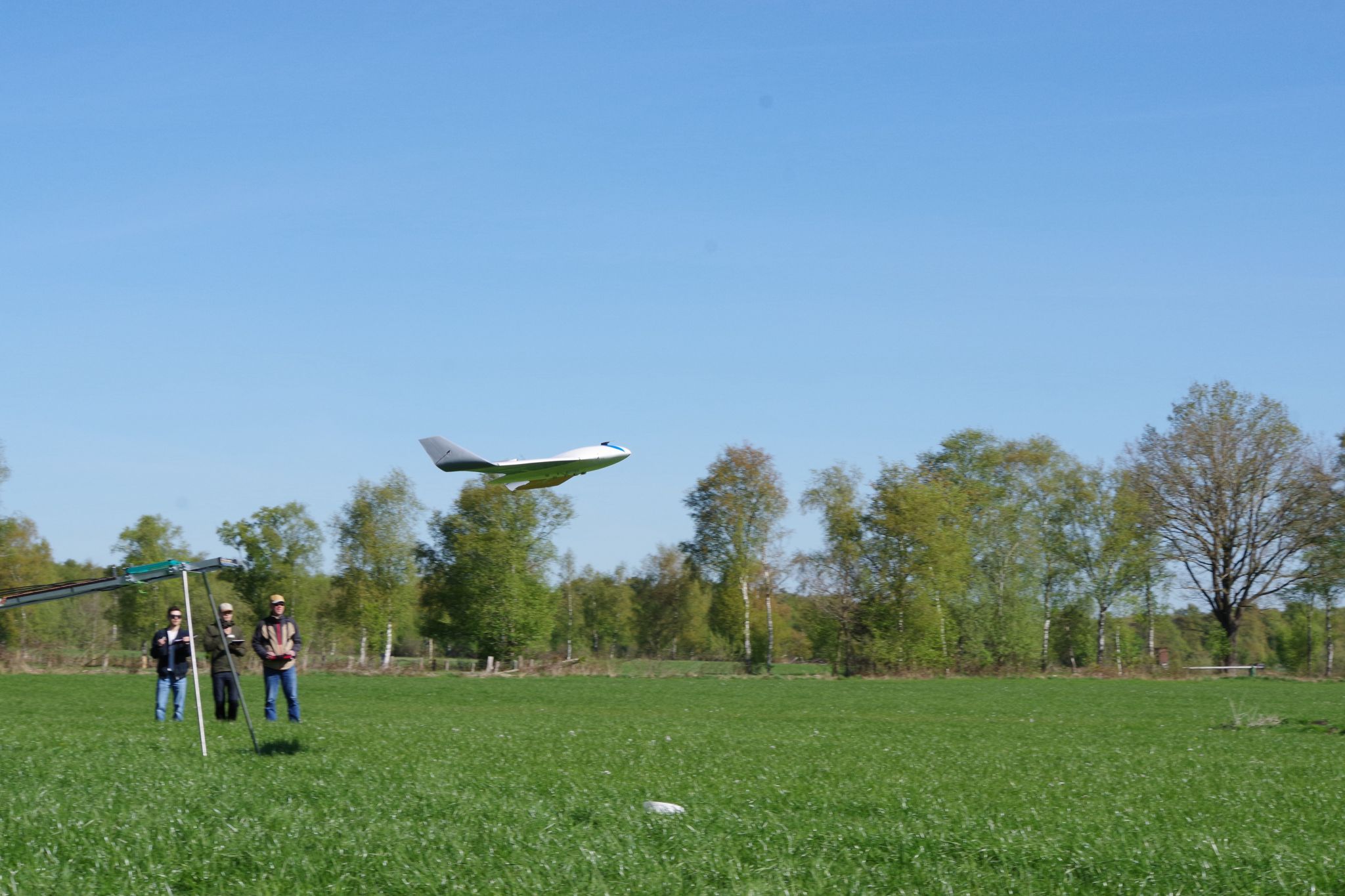
A flawless aircraft means nothing, until it proves itself in the air.
That is the uncomfortable truth at the heart of modern aviation. Engineers can design immaculate systems, simulation teams can model every edge case, and manufacturers can assemble near-perfect machines. Yet the moment an aircraft leaves the runway for a real-world test flight, everything changes. Complexity explodes. Assumptions collapse. And suddenly, success depends not on hardware—but on people.
Welcome to Project Eagles, where the real story is not the aircraft, but the humans who make it fly, fail, learn, and ultimately succeed.
The Myth of the “Perfect Aircraft”
There is a persistent illusion in aerospace: that engineering excellence guarantees operational success.
It doesn’t.
Flight testing is where theory meets reality and reality is merciless. Systems that perform perfectly in controlled environments can behave unpredictably under dynamic conditions. Environmental factors, unexpected interactions, or simple timing errors can turn a routine test into a costly delay—or worse.
And this is where most programs break down.
Not because the aircraft isn’t good enough, but because the coordination between engineering, testing, and piloting isn’t aligned.
Where the Real Performance Happens
During the latest Project Eagles flight test campaign, one thing became clear: success is not about flying—it’s about orchestrating.
Great flight test campaigns look deceptively simple. Procedures are followed. Data is collected. Flights are executed. But beneath that surface lies a tightly synchronized system driven by high-performance teams.
The Flight Test Engineers are the hidden backbone.
They design test scenarios, manage risk profiles, control execution timing, and ensure every second in the air generates meaningful data. A poorly structured test wastes hours. A well-designed one can unlock months of development insight in a single flight.
And they operate under extreme pressure.
Every test window is expensive. Every delay cascades. Every flight must count.
The Pilot Is Not Just a Pilot
Then there is the figure often romanticized, but rarely understood: the Test Pilot.
In Project Eagles, that role was carried by Rasmus Köhler, whose deep UAV experience turned technical ambition into measurable results.
The difference between a standard pilot and a test pilot is not skill alone—it is interpretation.
A test pilot is not just flying the aircraft. They are:
- Sensing subtle system behaviors
- Translating feedback into engineering language
- Managing evolving test parameters in real time
- Acting as the final decision-maker between pushing limits and aborting safely
In a flight test environment, milliseconds matter. Judgment matters more.
And experience is everything.
Data Is the Real Output
Here is another uncomfortable reality: flight tests are not about flying—they are about data.
Every maneuver, every response, every deviation is a signal. But raw data is useless without context. It must be captured precisely, interpreted correctly, and translated into actionable insights.
During Project Eagles, the alignment between engineers and pilot created something rare: data that exceeded expectations.
Not more data - better data.
Cleaner. More relevant. Faster to analyze.
And that is where true efficiency emerges, not by flying more, but by learning more per flight.
The Cost of Getting It Wrong
When flight testing fails, the consequences are not just technical. They are financial and strategic.
A disorganized campaign can:
- Burn test hours with no usable output
- Create conflicting datasets
- Delay certification timelines
- Inflate project costs dramatically
In today’s aerospace environment, especially in UAV development, there is no margin for that kind of inefficiency.
Programs don’t collapse because of bad engineering. They stall because of poor execution.
The Human Edge in an Autonomous Age
Ironically, as UAV technologies advance toward autonomy, the importance of human expertise in flight testing is increasing, not decreasing.
Why?
Because the systems are becoming more complex, less predictable, and more interconnected.
Autonomy doesn’t eliminate uncertainty. It multiplies it.
And navigating that uncertainty requires exactly what Project Eagles demonstrated:
- Elite coordination
- Structured testing discipline
- Experienced interpretation
- And trust between engineers and pilots
Final Approach
Project Eagles proves a simple but powerful truth:
Aircraft don’t pass flight tests—teams do.
Behind every successful test campaign is not just innovation, but orchestration. Not just technology, but judgment. Not just data, but understanding.
In the sky, machines perform.
But on the ground and in the cockpit, humans decide whether that performance means success.