Project EAGLES - The Berlin Student Team Taking on Wildfires With Next-Gen UAVs

While governments debate budgets and corporations optimize roadmaps, forests keep burning. Faster. Hotter. More often. Satellites see fires too late. Watchtowers rely on human attention. Crewed aircraft are expensive, risky, and reactive.
So here’s the uncomfortable question:
Why are we still detecting wildfires like it’s the last century?
At the Technical University of Berlin, a student-led team called Project EAGLES is quietly asking that same question - and answering it with hardware. Not PowerPoint. Not theory. A real aircraft.
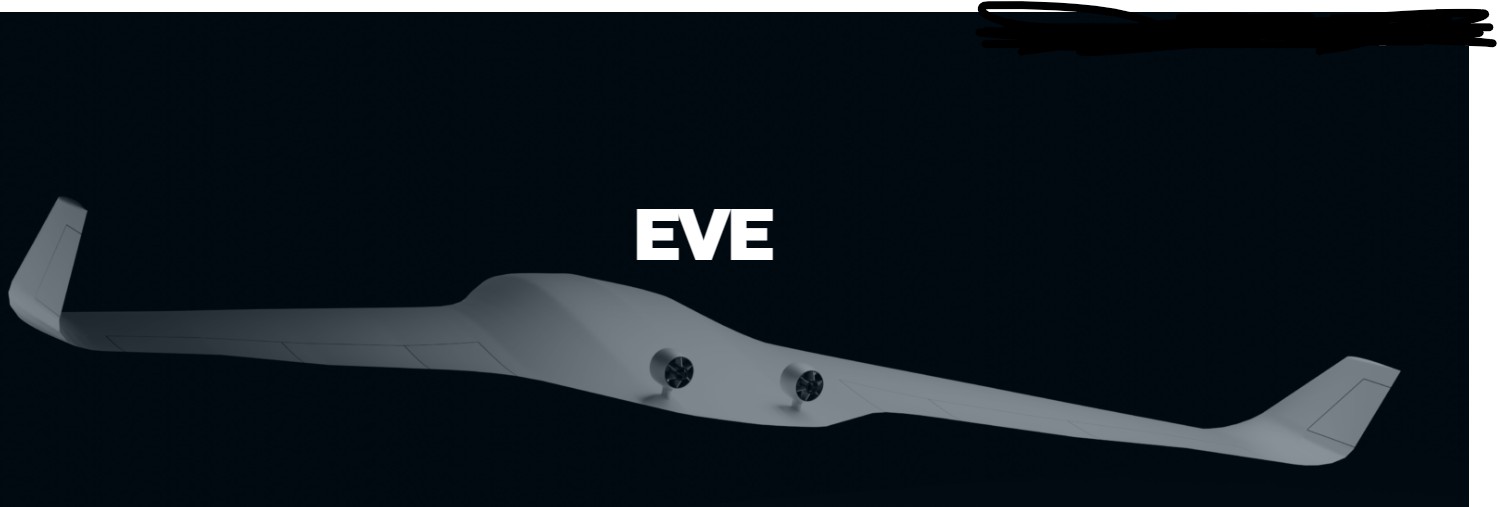
Their drone is called EVE. And it forces us to rethink who gets to build serious aerospace systems - and how fast innovation can move when it’s driven by urgency rather than procurement cycles.
Students Building What Institutions Struggle to Deliver
Project EAGLES stands for Electric Aircraft for Green Long-Endurance Surveillance. That alone should raise eyebrows. Long endurance. Green propulsion. Purpose-built surveillance. These are goals national agencies struggle to align - yet a group of students decided to take them on anyway.
Why? Because wildfires don’t wait for committees.
EVE isn’t a quadcopter with a thermal camera slapped on. It’s a blended-wing-body UAV designed from the ground up for efficiency, endurance, and mission relevance. This design choice matters. A blended wing doesn’t just look futuristic - it radically reduces drag, improves lift-to-drag ratio, and maximizes energy efficiency. Translation: more time in the air, more ground covered, fewer blind spots.
Ask yourself:
Why are most wildfire drones still short-range, short-endurance platforms when the problem spans thousands of hectares?
Early Detection Is a Race Against Physics
Wildfires don’t explode instantly. They whisper first - subtle heat anomalies, faint thermal signatures, early-stage ignition points invisible to the naked eye. Satellites often miss this window. Ground patrols arrive too late.
EVE is designed to live in that gap.
Electric propulsion enables quiet operation and simplified logistics. Long endurance allows persistent monitoring rather than fly-and-land routines. The mission isn’t dramatic response - it’s boring persistence, the kind that actually saves forests.
And that raises another uncomfortable question:
Why does so much funding still chase reaction instead of prevention?
This Is Not a Student Toy
Project EAGLES has already flown EVE. Not in a simulation. Not “next semester.” In the real world. With a self-built launch system, real telemetry, and real risk.
They’re running computational fluid dynamics. They’re validating designs in wind tunnels. They’re integrating systems the way aerospace engineers do when failure isn’t an option.
This isn’t a side project. It’s an education-by-consequence model - where design decisions matter because the aircraft leaves the ground.
So why does it feel like students are sometimes moving faster than institutions tasked with innovation?
A Bigger Question Than One Drone
EVE is about wildfire detection - but Project EAGLES hints at something broader.
What if universities became serious incubators for operational aerospace systems?
What if public agencies partnered earlier, not later?
What if “student project” stopped being shorthand for “not mission-ready”?
In a world facing climate-driven disasters, the luxury of slow innovation is gone. The next generation of engineers isn’t waiting for permission - they’re building solutions now.
And maybe that’s the most provocative part.
Who Owns the Future of Environmental Surveillance?
Industry will say it’s complicated. Governments will say it’s regulated. Budgets will say it’s expensive.
Project EAGLES answers differently: Build it. Fly it. Prove it.
EVE doesn’t claim to solve wildfire detection alone. But it exposes a deeper truth - that the gap between problem and solution is often cultural, not technical.
So here’s the final question Project EAGLES forces us to confront:
If a team of students in Berlin can design, build, and fly a long-endurance surveillance UAV to tackle one of the planet’s most urgent problems -
what excuse does the rest of the system have?
That’s not just a drone in the air.
That’s a challenge to how innovation is supposed to work.