Power Projection Without Endurance. Can the U.S. Fight a Long War with China?
U.S. military power has been defined by dominance—technological superiority, global reach, and unmatched firepower. But in a potential conflict with China, the defining question may no longer be how fast America can strike.
It may be how long it can keep fighting.
Recent readiness assessments are beginning to expose an uncomfortable reality: beneath the surface of advanced weapons systems and global capabilities lies a growing strain on the infrastructure that enables them. The issue is not capability—it is sustainability.
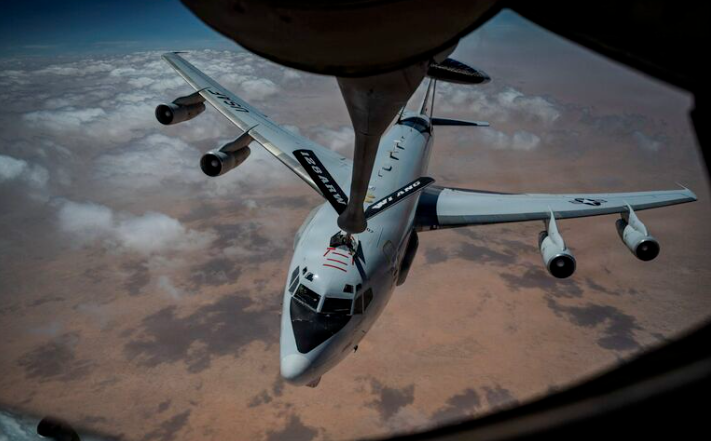
A critical pressure point lies in one of the least visible yet most essential components of modern warfare: aerial refueling. The U.S. Air Force’s tanker fleet is the backbone of long-range operations, enabling fighters, bombers, surveillance aircraft, and logistics fleets to operate across vast distances, particularly in the Indo-Pacific theater. Without it, power projection collapses.
And that backbone is under stress.
Recent reports show that tanker aircraft availability has repeatedly fallen short of operational targets over multiple years. Aging platforms, spare-part shortages, maintenance bottlenecks, workforce expertise gaps, and delays in fielding next-generation systems are compounding the problem. These are not isolated issues—they are systemic vulnerabilities.
In short: the U.S. can reach anywhere. The question is whether it can stay there.
This distinction becomes critical in the context of a prolonged high-intensity conflict with China. Unlike recent conflicts defined by asymmetric warfare, such a scenario would require sustained operations across months—or years—under constant pressure. Geography alone imposes enormous logistical demands. Distances in the Indo-Pacific stretch supply lines, while contested environments increase vulnerability at every stage.
In this environment, logistics is not support. It is strategy.
The modern battlefield is no longer decided solely by advanced platforms or precision strikes. It is defined by the ability to maintain operational tempo—refuel aircraft, repair systems, replace losses, sustain personnel, and keep networks functional. Break the chain, and even the most advanced military becomes constrained.
And the chain is long.
The tanker issue is merely one symptom of a broader structural challenge. Across the defense ecosystem, similar pressures are emerging: supply chain fragility, limited industrial surge capacity, maintenance backlogs, and shortages of skilled technical personnel. These factors rarely dominate headlines—but in prolonged conflict, they determine outcomes.
War, in this sense, is not only about combat.
It is about endurance.
The United States still retains overwhelming advantages in technology and global reach. But those advantages were built in an era where conflicts were shorter, less contested, and less dependent on sustained industrial output under pressure. A peer conflict changes that equation entirely.
China, by contrast, has spent years preparing for long-duration scenarios within its immediate strategic environment. Its focus on regional denial, industrial capacity, and logistical resilience reflects a different philosophy of warfare—one that prioritizes persistence over projection.
This creates an asymmetry that is not immediately visible, but deeply consequential.
The U.S. can project power across oceans. China can sustain pressure closer to home. The outcome of a prolonged conflict would depend not only on initial strength, but on which system degrades more slowly over time.
This is where readiness reports become more than internal assessments. They are signals—early warnings about structural weaknesses that may not matter in short conflicts, but become decisive in long ones.
Because in modern war, superiority is not static.
It erodes.
The challenge, therefore, is not simply to maintain technological leadership, but to rebuild the underlying systems that support it—logistics, maintenance capacity, industrial resilience, and workforce expertise. These are not glamorous investments. They do not produce headlines or prototypes.
But they produce endurance.
And endurance may be the most important advantage in the next generation of warfare.
The United States has spent decades perfecting how to fight fast.
It now faces a different question:
Can it fight long?