Porsche, a Drone, and a Fighter Jet Walk Onto a Runway. The Speed Race That Exposes the Future of Mobility
Every generation invents its own version of the ultimate speed contest.
Yesterday it was muscle cars against motorcycles.
Then came Formula 1 versus fighter jets.
Today, the lineup looks far more interesting.
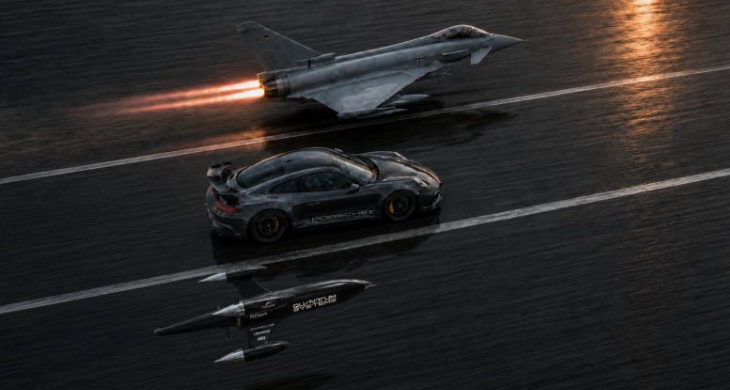
A Porsche Taycan Turbo GT.
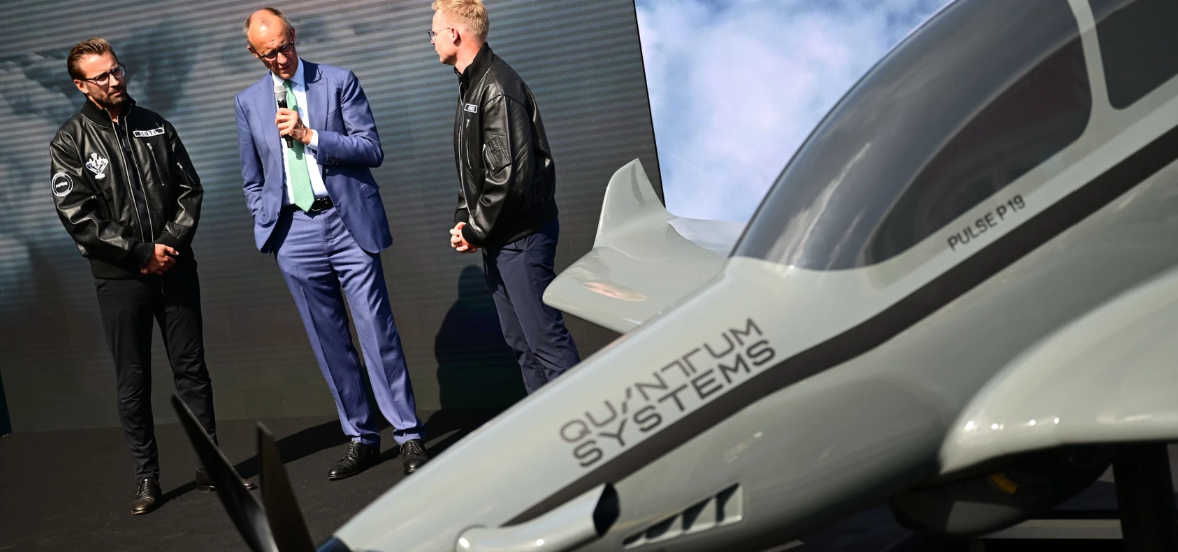
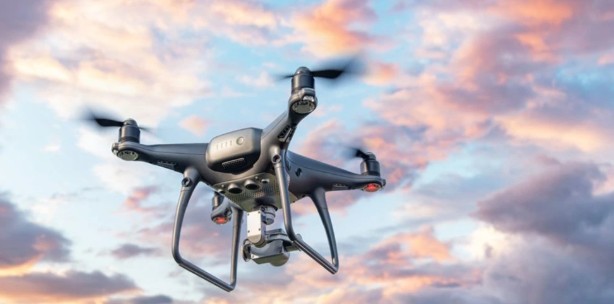
A Quantum Systems Skyron 400.
An Airbus-built Eurofighter.
At first glance, the winner seems obvious. One machine was literally designed to break through the sound barrier while carrying advanced weapons systems and executing high-G maneuvers. Another is among the world's most advanced electric performance cars. The third is an unmanned aerial platform designed primarily for reconnaissance and operational utility.
Game over?
Not quite.
Because the race depends entirely on the question being asked.
If the challenge is 0-100 km/h, the Porsche enters as the favorite.
Electric performance vehicles have rewritten acceleration physics. Instant torque, sophisticated traction control, and all-wheel-drive systems allow modern EVs to launch with a brutality once reserved for dragsters. For the first few seconds, even extraordinary aerospace engineering can struggle to compete with a machine optimized for explosive ground acceleration.
The fighter jet has immense thrust, but it must overcome rolling resistance, build airflow across control surfaces, and reach takeoff conditions safely. The rules of aviation are not the same as the rules of drag racing.
Round one?
Probably Porsche.
But races rarely end at 100 km/h.
The quarter mile changes everything.
Now the Eurofighter begins to awaken.
Military aircraft do not accelerate like cars. They transform kinetic energy into a completely different category of performance. When afterburners ignite, the conversation shifts from acceleration to domination.
A fighter's power-to-weight ratio exists in a world that automobiles can only admire.
The Porsche remains astonishingly quick.
Yet once sufficient runway exists, physics starts collecting its debt.
The Eurofighter's acceleration curve keeps climbing long after most vehicles have reached their limits.
The drone occupies a fascinating position.
Unlike the Porsche, it is unconcerned with roads.
Unlike the Eurofighter, it is unconcerned with pilots.
Its value comes not from absolute speed but operational flexibility.
Modern military planners increasingly care less about who is fastest and more about who arrives with the required capability at the lowest cost and risk.
That distinction matters.
Because the most revolutionary machine in this comparison may not be the most expensive one.
The Skyron 400 represents a broader trend transforming defense, security, and industrial operations. Small, autonomous systems are increasingly performing missions once reserved for manned platforms. They are cheaper, more scalable, and often easier to deploy.
In pure speed terms, they lose.
In operational efficiency, they frequently win.
Now consider the final challenge.
The end of the runway.
This is where the Eurofighter stops participating in the race and begins redefining it.
The Porsche remains attached to Earth.
The drone remains constrained by its design envelope.
The Eurofighter leaves the runway entirely.
Within moments, it has converted horizontal acceleration into altitude, speed, energy, and maneuvering potential on a scale neither competitor can approach.
This is not a victory.
It is a category change.
And that distinction explains something important about modern technology.
People often compare platforms as if they are competing for the same objective.
They are not.
The fighter exists to dominate airspace.
The drone exists to gather information and enable decisions.
The Porsche exists to maximize performance, engineering excellence, and driving experience.
Each machine is the fastest in its own universe.
The deeper lesson extends beyond this imaginary race.
For decades, technology competition focused on making things faster.
Today, the advantage increasingly belongs to systems that are more adaptable, autonomous, affordable, and deployable.
Speed remains impressive.
Capability is what matters.
That is why the real winner depends on who is keeping score.
If the finish line is 100 km/h, choose the Porsche.
If the finish line is the end of the runway, choose the Eurofighter.
If the finish line is accomplishing a mission at the lowest cost with the smallest risk, don't be surprised if the drone quietly wins while nobody is watching.
Because the future rarely belongs to the fastest machine.
It usually belongs to the smartest one.