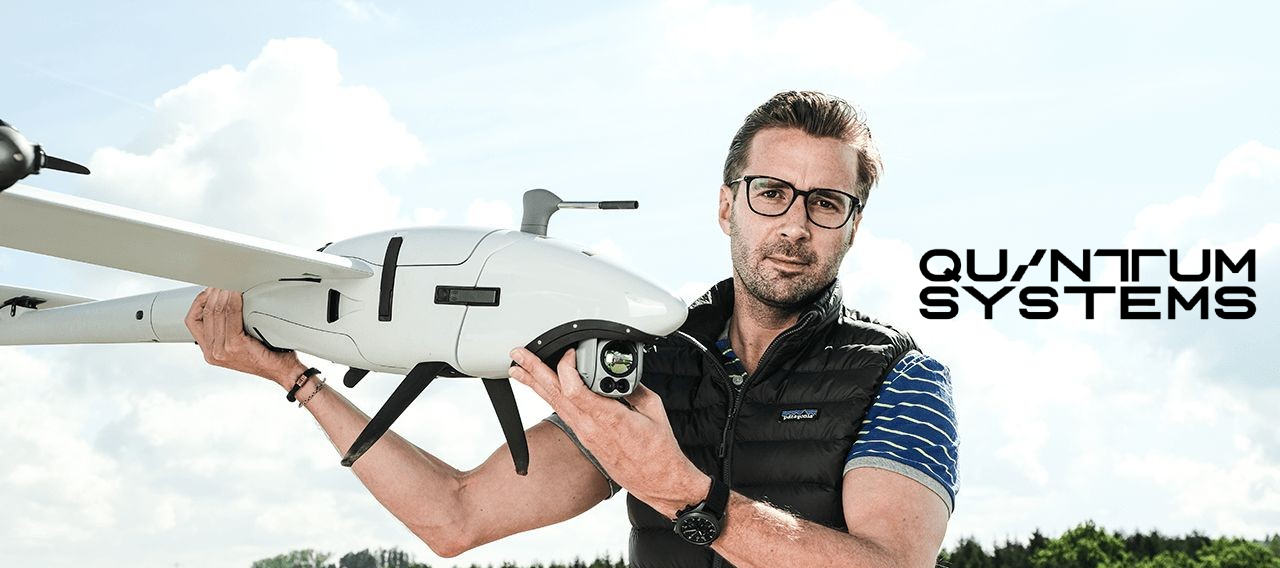
Quantum Systems × Spleenlab - The AI That Lets Drones Navigate Without GPS
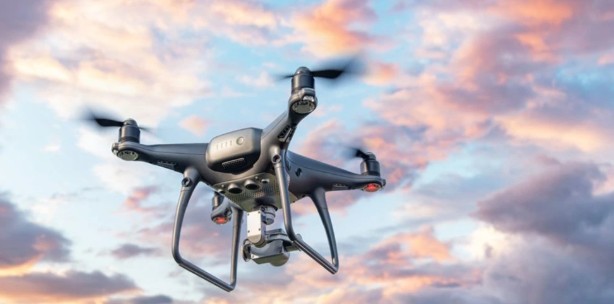
For years, autonomy had a hidden weakness.
GPS.
Almost every drone, autonomous vehicle, and robotic system depended on it. It was reliable, global, and easy to integrate. But it also created a critical vulnerability—one that modern environments increasingly exploit.
Signals can be jammed. Spoofed. Blocked.
And in many real-world scenarios, they simply don’t work.
Now, that dependency is being challenged.
With the acquisition of the Jena-based AI startup Spleenlab, the Bavarian drone manufacturer Quantum Systems is taking a decisive step toward GPS-independent autonomy.
This is not just a strategic expansion.
It’s a technological shift.
Spleenlab has spent years developing AI software capable of enabling unmanned systems to perceive and understand their environment in real time. Instead of relying on satellite signals, the system uses onboard sensors—primarily cameras—and machine learning models to interpret surroundings dynamically.
The result is a form of navigation that is fundamentally different.
Instead of asking, “Where am I on the map?”
The system determines, “Where am I based on what I see?”
This is known as perception-based navigation—and it changes the rules of autonomy.
For drones, this capability is transformative.
In military operations, it enables reliable functionality in GPS-denied environments, where signal disruption is common. In civilian use cases, it opens new possibilities in areas where GPS has always been unreliable: dense cities, forests, tunnels, or industrial zones.
Think of logistics robots navigating warehouses without external positioning systems.
Drones inspecting infrastructure deep inside confined spaces.
Agricultural UAVs operating across vast, signal-poor landscapes.
The applications are not niche.
They are everywhere.
The acquisition itself is the result of several years of collaboration between the two companies. Rather than developing AI capabilities entirely in-house, Quantum Systems chose to integrate a specialized team with deep expertise in machine learning and real-time perception.
Spleenlab, originally founded in 2018, has grown into a team of over 50 engineers and researchers, with strong ties to universities in Jena and Ilmenau. Its technology has already demonstrated the ability to track and localize objects—and entire systems—in dynamic environments without external references.
By bringing this capability into its ecosystem, Quantum Systems is accelerating its evolution from a drone manufacturer into a full-stack autonomy provider.
This reflects a broader trend.
In the past, drones were defined by their hardware: flight time, range, payload. Today, the competitive edge is increasingly determined by software intelligence.
What a drone can understand matters more than how far it can fly.
But this transition comes with challenges.
Perception-based navigation requires enormous computational efficiency. Data must be processed instantly, often on lightweight onboard hardware. The system must remain stable across varying lighting conditions, weather changes, and complex terrain structures.
And unlike GPS, which provides a standardized reference, perception systems must rely on their own interpretation of reality.
That demands precision—and trust.
Yet, this is exactly where the future is heading.
Autonomous systems are moving away from external dependencies toward self-contained intelligence. The goal is not just automation—but independence.
And independence is what makes systems resilient.
The partnership between Quantum Systems and Spleenlab is therefore more than a business decision. It is a signal that the next generation of autonomous systems will not rely on a single source of truth.
They will build their own.
GPS made autonomy possible.
AI is making it reliable.
And with each step away from dependency, autonomy becomes not just a feature—but a capability that can operate anywhere, under any conditions.