Operation Vivaldi and the Birth of the Robotic Airborne Assault
Military revolutions are rarely announced when they happen.
The tank did not look like the future in 1916.
The helicopter was initially viewed as a supporting tool rather than a weapon of maneuver.
And the first military drones were considered reconnaissance platforms, not instruments capable of reshaping warfare itself.
Operation Vivaldi may represent another such moment.
If reports from Ukraine's Third Army Corps are accurate, the operation may have introduced something genuinely new to military history: the robotic airborne assault.
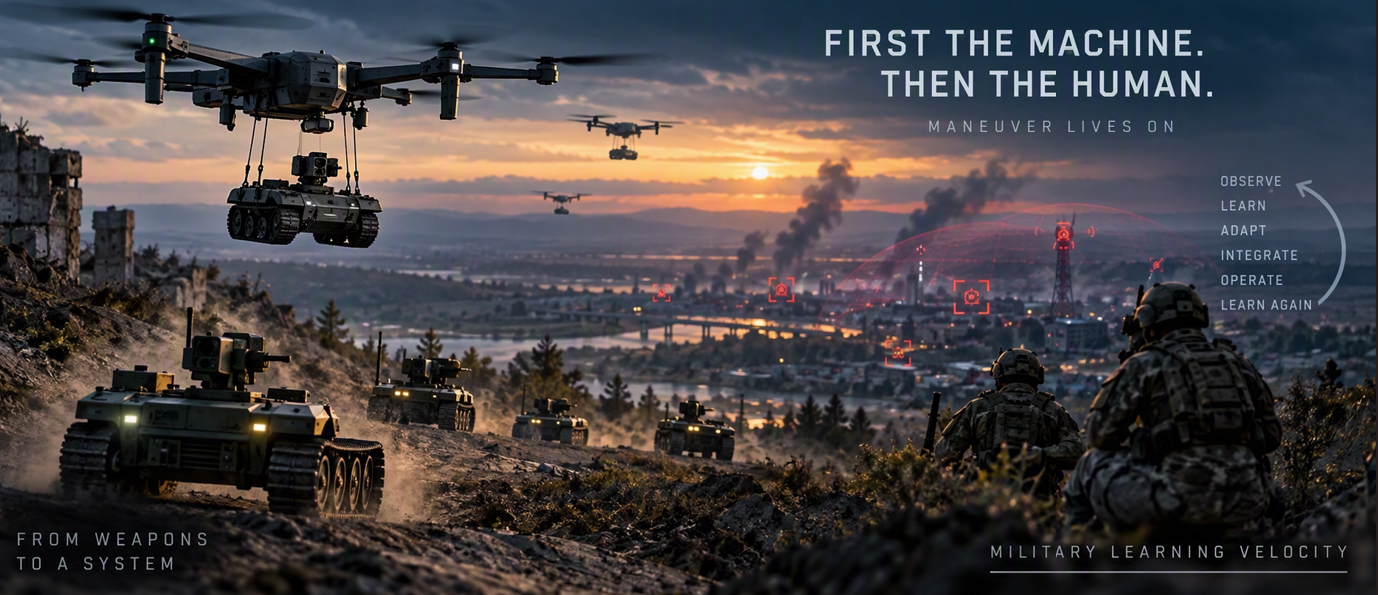
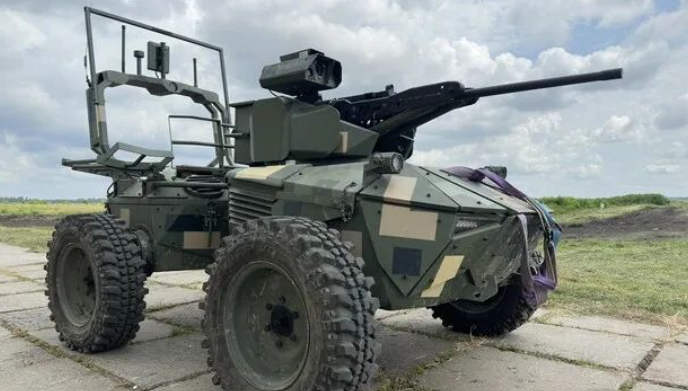
For the first time, heavy drones reportedly carried kamikaze ground robots deep behind enemy lines, deploying them into Russian rear areas before conventional forces advanced.
The significance is not the robot.
The significance is the sequence.
For decades, airborne and air assault operations have followed a familiar pattern. Aircraft, helicopters, or transport platforms carried soldiers into enemy depth. Human beings were the first echelon. They established footholds, seized objectives, and survived until larger forces arrived.
Operation Vivaldi appears to have inverted that logic.
The first wave was not infantry.
The first wave was machines.
That distinction sounds technical.
In reality, it could prove revolutionary.
Modern battlefields have become extraordinarily dangerous for humans. Drones, thermal sensors, satellite imagery, electronic surveillance, precision artillery, and networked command systems have transformed depth into vulnerability.
Historically, distance provided protection.
Today, distance often provides targeting data.
The challenge is no longer reaching the enemy's rear.
The challenge is surviving there.
Ukraine's answer appears to have been simple:
Send robots first.
According to Ukrainian accounts, heavy bomber drones delivered unmanned ground vehicles more than ten kilometers behind Russian lines. These robotic systems were then used to disrupt tactical rear areas, support combined arms operations, and contribute to the wider offensive.
This approach was reportedly supported by extensive electronic warfare and air defense activities designed to suppress Russian reconnaissance and drone operations.
The objective was not merely destruction.
It was disruption.
Command posts.
Communications centers.
Logistics routes.
Reserve movements.
Decision-making cycles.
In modern warfare, destroying targets is only one path to success.
Increasingly, success comes from interrupting the chain that transforms information into action.
Detect. Identify. Locate. Communicate. Decide. Strike.
Break that chain and the battlefield changes.
This is where Operation Vivaldi becomes strategically fascinating.
The operation appears to combine multiple technologies that have existed separately for years.
Drones.
Ground robots.
Electronic warfare.
Reconnaissance.
Precision strikes.
None of these capabilities is new.
The innovation lies in how they were combined.
Military history repeatedly demonstrates that transformative change usually comes not from inventing new tools but from discovering new ways to integrate existing ones.
The tank was revolutionary because it combined armor, mobility, and firepower.
Blitzkrieg emerged from integrating aircraft, radios, mechanized forces, and operational doctrine.
Operation Vivaldi may represent a similar process for unmanned warfare.
Instead of viewing drones and robots as individual systems, Ukraine appears to be employing them as components of a broader operational architecture.
Aerial systems transport ground systems.
Ground systems create effects.
Electronic warfare shapes the environment.
Human forces exploit opportunities.
The result is not simply robot warfare.
It is robot-enabled maneuver warfare.
And that distinction may define the next phase of military transformation.
For years, analysts have debated whether drones would replace traditional maneuver.
Operation Vivaldi suggests a different possibility.
Drones and robotic systems may be creating the conditions that allow maneuver to return.
By reducing human exposure and degrading an adversary's ability to react effectively, unmanned systems can potentially reopen operational windows that had become too costly for conventional forces.
This does not mean tanks are obsolete.
Nor does it mean infantry disappears.
In fact, Ukrainian commanders themselves emphasize that infantry still wins wars.
What changes is the order in which forces appear.
The machine enters first.
The human follows later.
Whether Vivaldi represents a one-time innovation or the beginning of a lasting doctrine remains unknown.
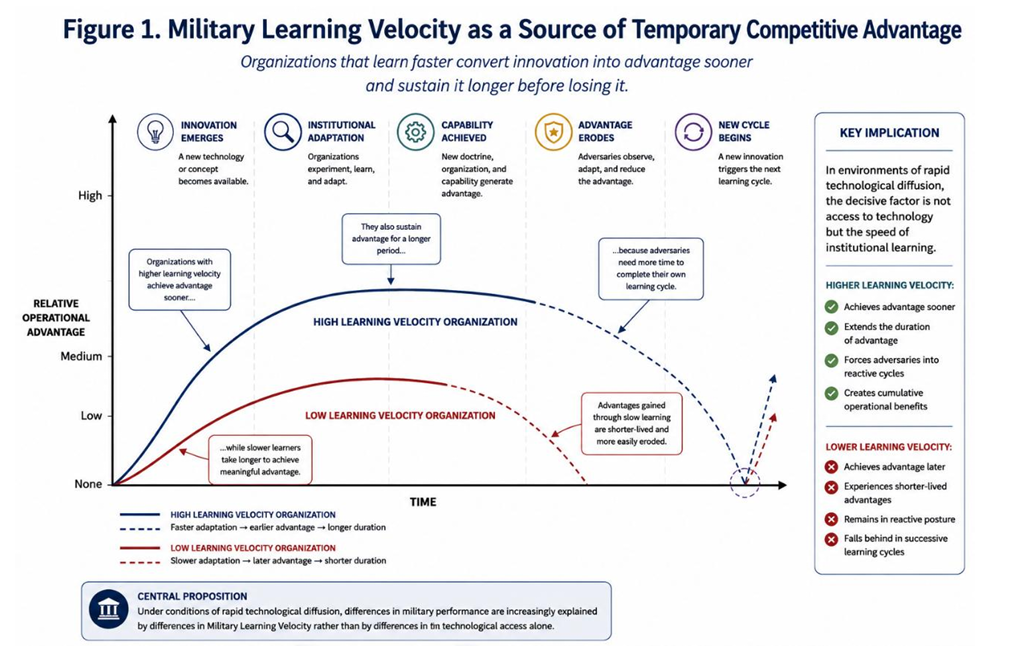
Russia will adapt.
Countermeasures will emerge.
Detection systems will improve.
Electronic warfare will evolve.
The cycle of military adaptation never stops.
Yet that reality only reinforces the operation's larger significance.
The real story may not be the robots themselves.
It may be what happens when military organizations learn how to combine autonomous systems into a coherent operational method.
For over a century, airborne operations started with soldiers descending from the sky.
Operation Vivaldi may be remembered as the moment when, for the first time, the battlefield received a different message:
First the machine. Then the human.