One Week, Three Stories. Drones Are No Longer Just Flying Cameras

The drone industry rarely moves in just one direction.
In a single week, unmanned aircraft made headlines for three completely different reasons: authorities seized hundreds of drones near FIFA World Cup venues, a waterproof consumer drone entered the market, and agricultural drones helped restore oyster populations along the Texas coast.
Together, these stories illustrate how rapidly UAV technology is expanding beyond its traditional role.
Security Takes Center Stage
The largest headline came from the FIFA World Cup in the United States, where authorities confiscated approximately 300 drones operating near stadiums despite extensive public warnings.
Temporary Flight Restrictions (TFRs) prohibited drone operations within three nautical miles of match venues and up to 3,000 feet above ground level during games.
According to officials, most violations involved recreational pilots rather than malicious actors.
Nevertheless, modern public-event security leaves little room for risk.
Even small commercial drones can interfere with police operations, emergency helicopters, broadcast aircraft or create panic among spectators. More importantly, every unauthorized drone forces security teams to determine within seconds whether the aircraft represents a hobbyist mistake or a genuine threat.
As major sporting events become increasingly dependent on counter-UAS technologies, drone detection and mitigation systems are becoming as important as traditional physical security.
Waterproof Drones Expand Consumer Possibilities
While security agencies focused on restricting drones, manufacturers continued pushing technological boundaries.
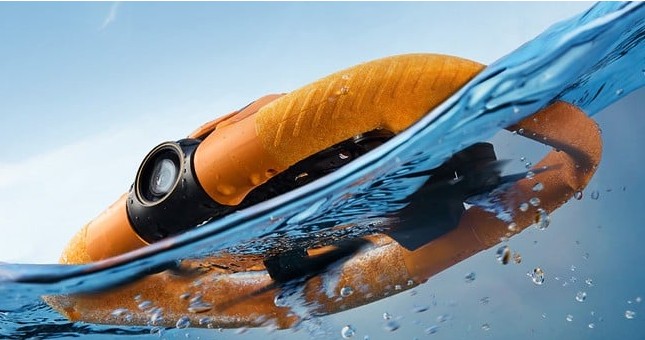
Zero Zero Robotics introduced the HoverAir Aqua, described as the world's first fully waterproof self-flying camera drone capable of taking off from and landing directly on water.
Unlike conventional drones relying primarily on visual tracking, Aqua follows a wearable positioning device known as the Lighthouse. This approach improves tracking reliability in challenging marine environments where waves, reflections and water spray often confuse computer vision systems.
Although aimed primarily at recreational users, the technology demonstrates how UAVs continue moving into everyday consumer activities.
Water sports, sailing, surfing, kayaking and coastal tourism may all benefit from autonomous aerial filming without requiring complex piloting skills.
Innovation increasingly comes from adapting drones to environments previously considered impractical.
Agriculture Meets Marine Restoration
Perhaps the most unexpected application came from Texas.
Researchers and oyster producers used an agricultural drone to distribute one million baby oysters into Galveston Bay in approximately twenty minutes.
The project adapts techniques already common in precision agriculture.
Instead of spreading fertilizer or seeds across farmland, the drone disperses oyster larvae across carefully selected marine restoration sites.
If successful, the approach could dramatically reduce labor costs while accelerating large-scale ecosystem recovery.
Healthy oyster reefs provide much more than seafood production.
They naturally filter water, improve water quality, create habitats for numerous marine species and help protect shorelines from erosion.
This project demonstrates that drones increasingly contribute not only to commercial productivity but also to environmental restoration.
One Industry, Unlimited Directions
What connects these seemingly unrelated stories?
Versatility.
The same core technologies—autonomous flight, precision navigation, lightweight payloads and intelligent automation—can support national security, recreational photography and environmental conservation.
As hardware becomes more capable and software more intelligent, drone applications continue expanding into fields that were almost unimaginable only a decade ago.
The commercial drone industry is no longer defined by aerial photography alone.
It is becoming an enabling technology across security, infrastructure, logistics, agriculture, environmental science and public safety.
The three headlines of this week demonstrate one simple reality.
The future of drones isn't one market.
It's every market.
%20(1).jpg)