One Million Mines: Finland Is Rebuilding the Weapon It Once Chose to Destroy

One million anti-personnel mines. €100 million. Domestic production from 2028.
Those three numbers tell a much bigger story than a Finnish defence procurement.
They tell us how profoundly Europe's security calculations have changed.
The Finnish Defence Forces are preparing to acquire approximately one million anti-personnel mines, with around €100 million allocated to the programme. No contracts have yet been signed, but the objective is to conclude them by the end of 2027 and establish production in Finland in 2028. Full deliveries would extend into the 2030s.
About six Finnish companies are considered capable of participating in production, according to Colonel Riku Mikkonen of Finnish Army Command. Foreign procurement has not been completely excluded, but Helsinki wants domestic industrial capacity.
That distinction matters.
Finland isn't merely shopping for one million mines. It is rebuilding the ability to manufacture them.
And this is a capability the country deliberately abandoned.
Finland joined the Ottawa Convention in 2012 and subsequently destroyed more than one million anti-personnel mines. Its withdrawal from the treaty took effect on January 10, 2026, after the government cited the transformed European security environment following Russia's invasion of Ukraine.
Now the production lines could return.
There could hardly be a clearer illustration of how Russia's war against Ukraine has altered the European defence debate.
For decades, European security architecture moved toward restricting certain weapons and reducing military stockpiles. The assumption was that international agreements, economic integration and conventional deterrence could progressively reduce the need for some of warfare's most controversial tools.
That assumption is being stress-tested on Europe's eastern flank.
Finland shares approximately 1,340 kilometres of border with Russia. Prime Minister Petteri Orpo has described Russia as a long-term threat to Finnish and European security.
And Helsinki is not moving alone.
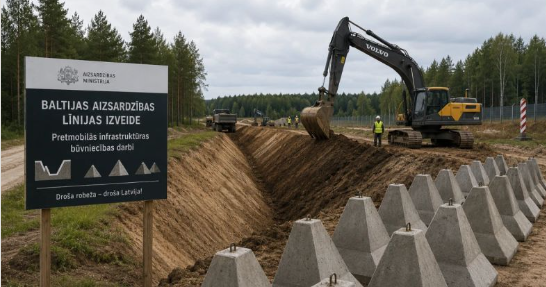
Estonia, Latvia, Lithuania and Poland have also withdrawn from the convention, citing security concerns connected to Russia.
That makes the Finnish decision more than national defence policy.
It is part of a security rethink running along Europe's eastern frontier.
But the military logic does not erase the humanitarian problem.
The Ottawa Convention was created because anti-personnel mines can remain lethal long after soldiers leave a battlefield, creating enduring dangers for civilians. Humanitarian organizations have criticized the return to production, with the International Campaign to Ban Landmines urging Finland and Poland to reverse course.
Finnish authorities say the weapons will remain in storage during peacetime and would be used only in emergency circumstances.
So Finland faces a stark calculation.
One risk lies in possessing weapons capable of leaving a lethal legacy after a conflict.
The other lies in believing that the security environment allows those weapons to remain permanently abandoned.
Helsinki has made clear which danger it currently considers more urgent.
But perhaps the most important number isn't one million.
It's 2028.
Because building factories, establishing suppliers and creating production capacity represents a different level of commitment from simply purchasing ammunition abroad.
A stockpile prepares for a crisis.
A production line prepares for the possibility that the crisis could last.
Finland destroyed more than a million anti-personnel mines because Europe once believed its security environment allowed it to.
Now it is preparing to manufacture them again.
That may be one of the clearest measures yet of how much Europe has changed.