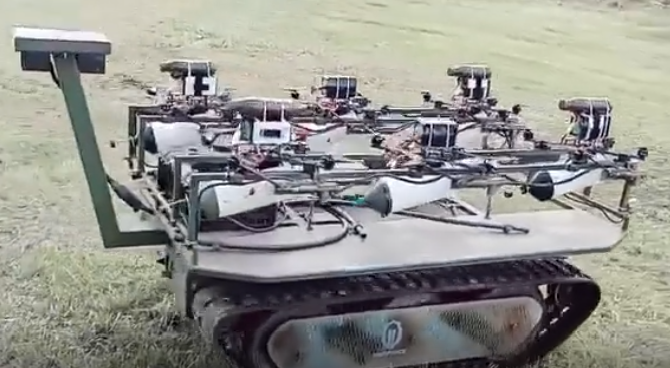
Ondas and DZYNE. $876 Million Acquisition Could Reshape Modern Warfare

The defense industry is entering a new phase.
For years, autonomous warfare was dominated by individual products—a drone here, an interceptor there, a sensor platform somewhere else. Companies competed by building better aircraft, smarter software, or more capable sensors.
That era may be ending.
With its $875.8 million acquisition of DZYNE Technologies, Ondas is making a much bigger bet: that the future of warfare belongs not to individual systems, but to integrated autonomous ecosystems.
If successful, this deal could become one of the most consequential defense-tech transactions of the decade.
Not Another Drone Company
At first glance, DZYNE appears to be another successful defense technology company.
It specializes in:
- Long-endurance autonomous aircraft
- Counter-UAS systems
- Autonomous effects
- Precision strike technologies
- Autonomous logistics
But what attracted Ondas was something far more valuable: operational maturity.
DZYNE arrives with established U.S. defense relationships, deployed systems, proven technologies, and a business expected to generate approximately $191 million in revenue during 2026 and more than $300 million in 2027.
Even more importantly, DZYNE is already EBITDA positive.
In an industry where many defense startups spend years chasing profitability, that matters.
A lot.
The Birth of Ondas Sentinel
The acquisition creates a new business division called Ondas Sentinel.
This platform combines:
✅ World View – persistent stratospheric ISR and sensing
✅ DZYNE – ISR, counter-drone, autonomous effects and logistics
✅ Optimus – tactical autonomous drone operations
✅ InsightSense – distributed battlefield sensing technologies
The strategic objective is clear:
Create a fully integrated defense architecture capable of collecting information, processing intelligence, identifying threats, making decisions, and deploying autonomous effects across multiple domains.
In simple terms:
See more. Understand faster. Strike sooner.
That is becoming the defining equation of modern warfare.
Building the ISR Stack
One of the most significant aspects of the acquisition is the creation of a multi-layered ISR architecture.
From the stratosphere down to the tactical edge, Ondas now controls systems operating at multiple levels simultaneously.
Strategic Layer
World View Stratollites
Operating in the stratosphere, these systems provide:
- Wide-area surveillance
- Border security
- Maritime awareness
- Communications relay
- Strategic intelligence
Operational Layer
DZYNE ULTRA and LEAP
The centerpiece is ULTRA, a long-endurance autonomous aircraft with tens of thousands of operational flight hours.
ULTRA supports:
- Theater-level ISR
- Communications relay
- Border monitoring
- Maritime surveillance
- Distributed operations
Tactical Layer
Optimus and InsightSense
At the battlefield edge, autonomous drones and ground sensor networks provide:
- Reconnaissance
- Force protection
- Infrastructure monitoring
- Tactical intelligence collection
Rather than isolated platforms, the goal is continuous intelligence from stratosphere to frontline.
The Palantir Factor
Perhaps the most strategically important element of the announcement is SkyWeaver.
Developed with Palantir Technologies, SkyWeaver is intended to function as the mission operating system connecting all Ondas and DZYNE assets.
Built on Palantir Foundry and AIP, the platform aims to provide:
- Sensor fusion
- Mission planning
- Decision support
- Autonomous tasking
- AI-enabled intelligence workflows
The vision is ambitious.
A single environment where data from drones, sensors, autonomous aircraft, operators, and commanders can be transformed into real-time operational decisions.
In future warfare, software may become more valuable than the platforms themselves.
Counter-Drone Becomes a Full Spectrum Business
The acquisition also dramatically expands Ondas' counter-UAS portfolio.
The standout system is IonStrike, an autonomous kinetic interceptor designed to defeat:
- Shahed-class attack drones
- One-way attack UAVs
- Emerging aerial threats
But IonStrike is only one layer.
Combined capabilities now include:
Detect
- Sentrycs
- Dronebuster
- Airspace awareness systems
Identify
- Protocol analytics
- Sensor fusion
- AI-enabled classification
Mitigate
- Cyber takeover capabilities
- Electronic defeat systems
Defeat
- Iron Drone autonomous interceptors
- IonStrike autonomous strike systems
This creates something few companies currently possess:
An end-to-end counter-drone architecture.
Affordable Mass: The New Battlefield Economy
Another key driver behind the acquisition is the shift toward what military planners increasingly call affordable mass.
Modern militaries need systems they can deploy in large numbers.
DZYNE strengthens Ondas with several capabilities aligned to that trend.
Blitz
An autonomous Group 1 UAS featuring:
- 150 km operational range
- Swarm capability
- Modular architecture
- Expendable economics
Grasshopper
A cargo glider capable of delivering:
- Up to 500 pounds of supplies
- Precision logistics
- Operations in denied environments
- Significantly reduced logistics costs
Affordable autonomous systems are becoming just as strategically important as expensive high-end platforms.
A Defense Industry Consolidation Story
The financial aspect deserves attention.
The acquisition was structured with:
- $200 million cash
- Approximately 85 million Ondas shares
- DZYNE shareholders receiving approximately 13.8% ownership of Ondas
- More than half of the equity consideration locked up for six months
This structure reflects confidence in long-term growth rather than short-term liquidity.
Ondas now projects:
- At least $525 million revenue in 2026
- Up from a previous target of $390 million
- DZYNE revenue CAGR exceeding 80% between 2025–2028
- EBITDA margins reaching the mid-20% range by 2028
The Bigger Picture
The most important takeaway is not the transaction value.
It is what the transaction reveals about the future of defense.
Military advantage is increasingly shifting toward organizations capable of integrating:
- ISR
- AI
- Counter-UAS
- Autonomous strike
- Logistics
- Sensors
- Software
- Human decision-makers
Into a single operational architecture.
That is precisely what Ondas is attempting to build.
The age of standalone drones is ending.
The age of autonomous defense platforms has arrived.
.jpg)