No Jamming. No Missiles. Just Control: Sentrycs and Lockheed Martin Push Counter-Drone Defense Into a New Era

The counter-drone race is no longer just about detecting drones. It is about defeating them precisely, safely and without creating new risks in the process.
That is what makes the collaboration between Sentrycs, an Ondas Inc. company, and Lockheed Martin particularly significant. Sentrycs’ Cyber-over-RF counter-drone technology is set to be integrated into Lockheed Martin’s Sanctum™ C-UAS platform, adding another layer to a modular defense architecture built for rapidly evolving unmanned aerial threats.
The message is clear: the future of counter-drone defense is layered, interoperable and increasingly precise.
Drone threats are changing fast. Small unmanned systems are becoming cheaper, smarter, more coordinated and easier to deploy. Military forces, homeland security agencies and operators protecting critical infrastructure are no longer dealing only with isolated hobby drones. They must prepare for coordinated drone activity, swarms, complex flight profiles and fast-changing tactics.
Traditional countermeasures such as jamming, spoofing or kinetic engagement can be effective in some environments, but they also bring limitations. Jamming may interfere with surrounding communications. Kinetic defeat can create debris and collateral risks. Spoofing may not work against every system. In dense, sensitive or civilian-adjacent environments, operators need options that are not only powerful but controlled.
This is where Sentrycs’ Cyber-over-RF approach becomes interesting.
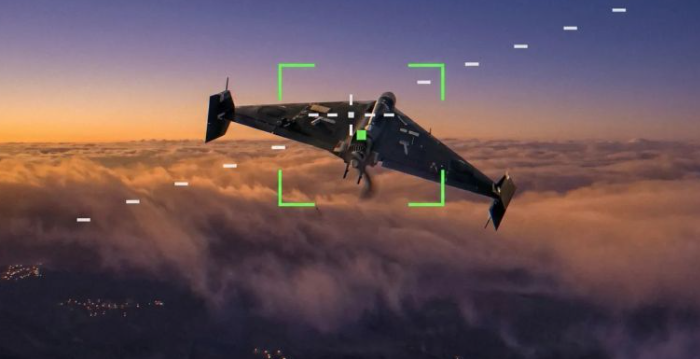
Instead of broadly disrupting signals, the technology works at the drone communication protocol level. This allows operators to detect, identify, track and take control of unauthorized drones, guiding them to a safe landing without jamming, kinetic engagement or unnecessary interference with nearby infrastructure.
In simple terms: the system does not just shout louder than the drone. It understands the drone’s communication and uses that understanding to act with precision.
Integrated into Sanctum, this capability becomes one layer within a broader counter-UAS architecture. Lockheed Martin’s Sanctum platform is designed as a modular, open system that combines artificial intelligence, cloud-enabled data fusion, multiple sensors, effectors and command-and-control capabilities into a unified operational framework.
That modularity matters. No single counter-drone technology can solve every scenario. A drone over a military base, a swarm near a battlefield, an unauthorized UAV approaching critical infrastructure and a drone flying near a public event may each require different responses. The strongest systems are not built around one answer. They give operators a menu of layered options.
Sentrycs adds a non-disruptive, cyber-based detect-to-defeat capability to that menu.
For operators, this can mean better control over how a threat is handled. Instead of automatically escalating to broad electronic disruption or physical interception, they may have the option to identify the drone, understand its behavior, take control and land it safely. That can reduce collateral damage, preserve nearby communications and support more controlled decision-making in complex environments.
This is especially relevant as drones continue to move into both civilian and defense spaces. The line between commercial, public safety and military drone technology is increasingly blurred. The same low-cost airframes and communication systems that support legitimate operations can also be misused. Counter-UAS platforms must therefore adapt not only to new hardware, but to new behaviors, networks and tactics.
The collaboration also reflects a larger trend in defense technology: open architectures are becoming essential. Instead of relying on closed, single-vendor systems, defense organizations are prioritizing platforms that can integrate new sensors, effectors and software capabilities as threats evolve. Sanctum’s ability to incorporate Sentrycs’ Cyber-over-RF layer is a strong example of that shift.
For Sentrycs, the collaboration places its technology inside one of the most advanced C-UAS frameworks being developed by a major global defense company. For Lockheed Martin, it expands Sanctum’s layered sensing and mitigation options with a precise, non-kinetic tool designed for controlled engagement.
The result is not just another counter-drone integration. It is a sign of where the industry is heading.
The battlefield, the border, the airport, the power plant and the public event all need protection from unmanned threats. But they do not need protection that creates unnecessary disruption. They need systems that can detect faster, decide smarter and respond more precisely.
In that sense, the Sentrycs and Lockheed Martin collaboration points toward a new generation of counter-drone defense: not louder, not heavier, not more destructive — but smarter, layered and controlled.
As unmanned threats adapt at speed, counter-drone systems must adapt even faster. And increasingly, the winning response may not be to jam the drone out of the sky, but to take control before it becomes a crisis.

.jpg)