Netflix, Soft Power and a Cartoon Bear. Why a Russian Children's Show Has Become a Geopolitical Battleground
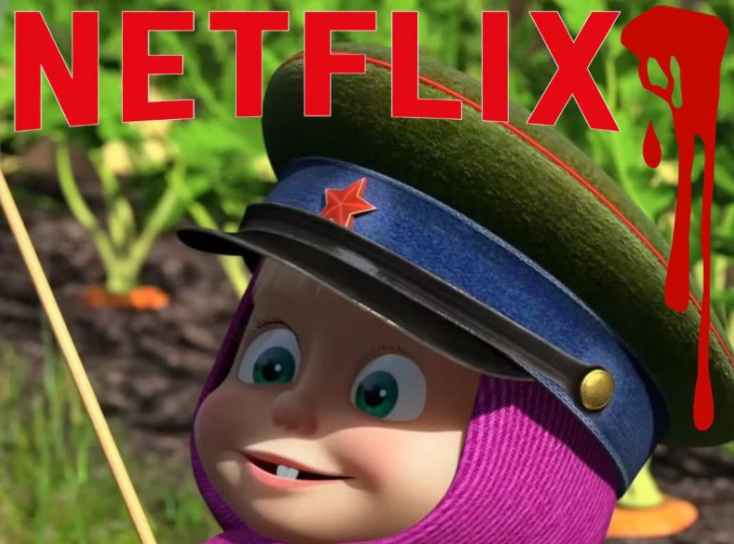
Can a children's cartoon become a geopolitical issue?
For many years, the answer would have sounded absurd.
Today, it sits at the heart of an increasingly fierce debate about influence, information warfare, and the power of entertainment in an age of global conflict.
The controversy erupted after the Australian Federation of Ukrainian Organisations (AFUO) publicly criticized Netflix for continuing to distribute Masha and the Bear, one of the world's most successful animated children's franchises. The organization argues that the show is not simply harmless entertainment but an example of Russian soft power being exported to international audiences, including millions of children.
Their campaign raises a provocative question:
Where does entertainment end and strategic influence begin?
The New Battlefield: Culture
Modern conflicts are no longer fought solely with tanks, missiles, and drones.
They are also fought with narratives.
Governments invest billions in shaping perceptions, influencing public opinion, and projecting an image of themselves abroad. This phenomenon, commonly referred to as "soft power," has become an increasingly important component of international competition.
Movies, television programs, social media, books, sports, and cultural exports all contribute to how nations are perceived.
The challenge is that soft power often operates subtly.
Unlike traditional propaganda, it does not necessarily tell audiences what to think.
Instead, it shapes emotional associations and cultural familiarity over time.
That is why children's content attracts particular attention.
Stories consumed during childhood frequently become part of a person's cultural identity long before they have the ability to critically analyze political messages.
Why Critics Are Concerned
Organizations supporting the cancellation campaign argue that Masha and the Bear should be viewed within a broader political context.
Their concern is not merely about one television series.
Instead, they argue that cultural products connected to Russia should face greater scrutiny while Russia continues its war against Ukraine.
Campaign organizers claim that certain themes, imagery, and symbolism present in the series deserve closer examination, particularly given the broader information environment surrounding the conflict.
They also argue that revenue generated from Russian-produced entertainment may indirectly benefit organizations operating within the Russian economy.
For supporters of the campaign, this transforms the issue from a question of entertainment into a question of ethics.
Their position is straightforward:
Consumers should be aware of the broader context behind the content they support.
The Netflix Dilemma
Netflix faces a challenge increasingly common for global media platforms.
Streaming companies operate across hundreds of markets, cultures, and political environments.
A show that appears completely uncontroversial in one country may be viewed very differently elsewhere.
Platforms must constantly navigate competing demands from governments, advocacy groups, audiences, investors, and content creators.
Removing content can generate accusations of censorship.
Keeping content can generate accusations of political insensitivity.
In a highly polarized world, neutrality itself often becomes controversial.
For global media companies, these dilemmas are likely to become more frequent rather than less.
The Growing Power of Consumers
The campaign against Masha and the Bear reflects another trend reshaping media and politics.
Consumers increasingly view purchasing decisions as political actions.
Subscription services are no exception.
Activist organizations around the world regularly encourage supporters to pressure corporations through public campaigns, customer complaints, and subscription decisions.
Whether these efforts succeed often depends less on immediate financial impact and more on their ability to shape public conversations.
In this case, the debate has already accomplished one objective:
It has transformed a children's cartoon into a discussion about cultural influence and international responsibility.
A Bigger Question Than One Cartoon
Ultimately, the controversy surrounding Masha and the Bear is not really about a bear.
Nor is it only about Netflix.
It reflects a larger global debate about how societies should respond to cultural products during periods of geopolitical conflict.
Some argue that art and entertainment should remain separate from politics.
Others believe such separation is impossible, especially when culture becomes part of broader national influence strategies.
As conflicts increasingly extend into information spaces, digital platforms, and cultural arenas, these debates are likely to intensify.
The real question is no longer whether soft power matters.
That argument has already been settled.
The question is how democracies, companies, and consumers choose to respond when entertainment, politics, and global security collide.
Because in the twenty-first century, influence does not always arrive in uniform.
Sometimes it arrives as a cartoon character.